ACH Transfer Security Controls for Financial Institutions
Nacha's 2026 rules require four linked control layers, backed by audit evidence.
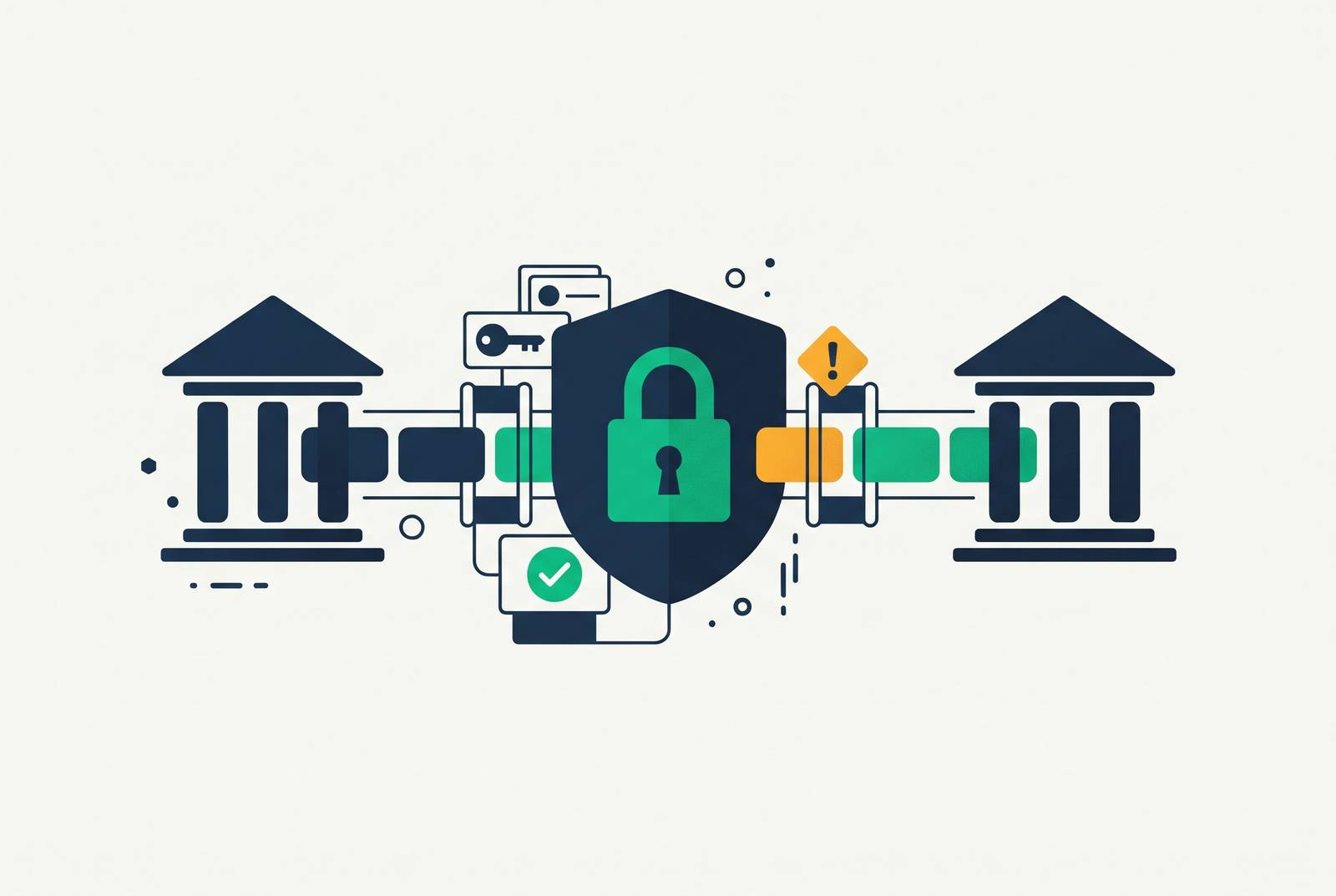
Effective ACH transfer security for financial institutions depends on layers of controls. The 2026 Nacha fraud-monitoring requirements give institutions a clear way to link transaction monitoring, authorization, access governance, and third-party oversight. Auditability ties those layers together, allowing an institution to show not only that controls exist, but that they work.
What the 2026 Nacha rule changes actually require and who must comply by when
Under Nacha’s 2026 operating rule changes, covered participants must have risk-based procedures to detect fraudulently initiated entries and payments made under false pretenses. The scope extends beyond WEB debits and micro-entries to the full ACH book. Authorization is no longer the dividing line. “False pretenses” includes payments a customer technically authorized after being deceived, including business email compromise, vendor impersonation, and payroll redirection.
America’s Credit Unions identifies March 20, 2026, as the Phase 1 deadline for receiving depository financial institutions, or RDFIs, with 10 million or more annual ACH receipts. All originating depository financial institutions, or ODFIs, are also covered in Phase 1, as are third-party senders and third-party service providers exceeding the defined 2023 ACH entry threshold. Phase 2 covers all remaining RDFIs, third-party senders, and third-party service providers, no matter how much volume they handle. Nacha’s official rule page gives June 19, 2026, as the effective date, with June 22, 2026, as the practical compliance date because of the federal holiday.
Nacha does not prescribe particular tools or thresholds, so each covered participant must design controls appropriate to its risk profile. That flexibility comes with an ongoing obligation. Participants must review and update their fraud monitoring at least once a year, so compliance is work that continues after the system is in place.
Why ACH credits are now the highest-risk surface and what that means for monitoring design
The broader rules address fraud that moves money through instructions that look legitimate. ACH credits, including payroll deposits, vendor payments, and disbursements, are attractive targets because the customer or employee may authorize the payment. Standard authentication can therefore pass even as fraud goes ahead. Both the person’s authority and whether deception shaped the instruction matter.
Business email compromise illustrates that distinction by redirecting payment instructions to a fraudulent account. Payroll diversion likewise tricks employees into changing direct-deposit details, while phishing can get hold of routing and account numbers. A valid credential does not establish that a new destination is genuine.
The receiving account supplies another part of the picture. Mule activity can involve high transaction velocity, rapid inflows followed by quick withdrawals, inconsistent behavior, and name mismatches. For RDFIs, warning signs include high-dollar or high-velocity credits that reach new or dormant accounts, multiple unrelated payroll credits that enter one consumer account, and corporate-coded credits that flow into consumer accounts. Abrupt changes in account use can also point to mule activity.
ODFIs face the corresponding risk on the outbound side, where monitoring must address both unauthorized activity and false pretenses across outgoing ACH payments. Their agreements with business originators and third-party senders must also make fraud-monitoring expectations explicit. The two perspectives complement each other. A receiving institution sees account activity that differs from what the originating institution sees in the payment instruction, so effective monitoring must compare activity with historical behavior and transaction context.
The four control layers a risk-based ACH framework must cover
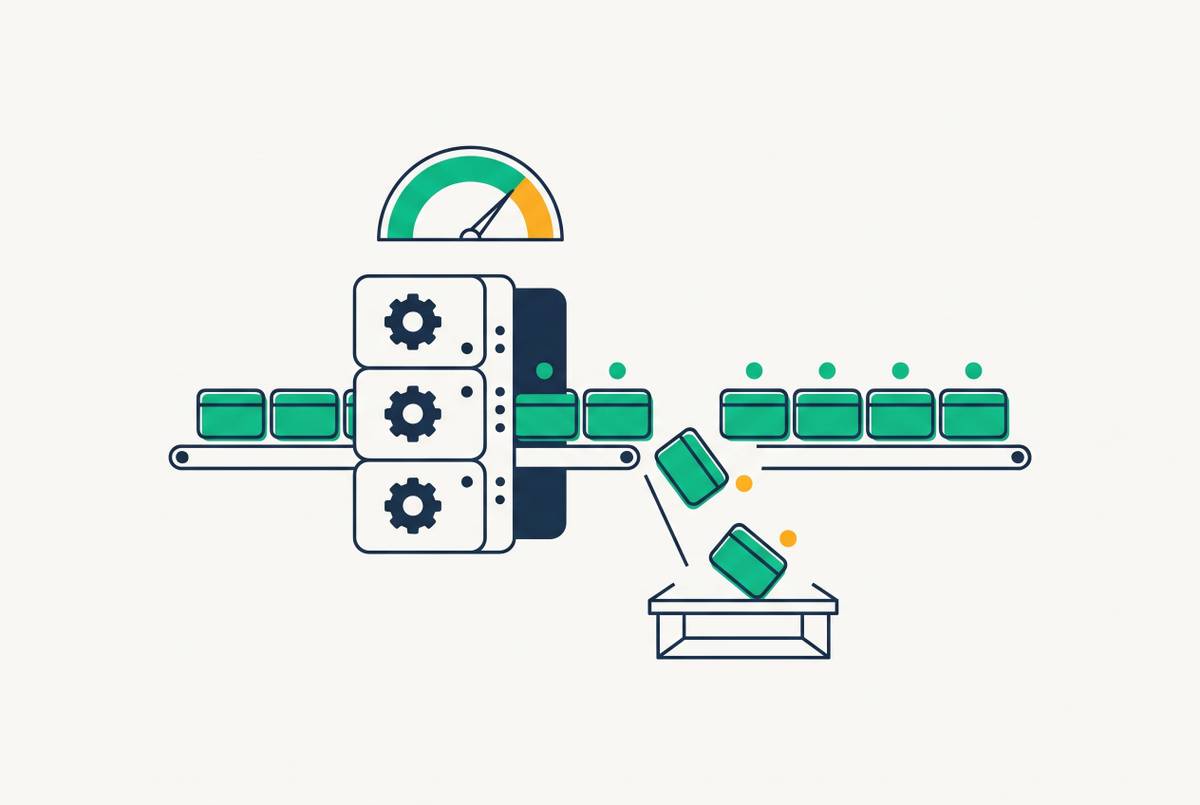
Behavioral transaction monitoring is the first layer. With a tiered design, large credits to new accounts, payroll changes, and vendor payment redirections get closer review by both systems and people, while routine low-risk entries can go through without full pre-processing scrutiny. For originators with predictable flows, ACH positive pay allows only pre-approved transactions to post. Monitoring must cover ODFI outbound and RDFI inbound activity, with a documented annual review cycle, because a program limited to selected transaction codes leaves part of the fraud chain outside its view.
Authentication and authorization form the second layer, but they serve different purposes from behavioral monitoring. Bravera Bank describes a move from account validation toward identity verification and suspicious-behavior detection before a payment is initiated. Multi-factor and out-of-band verification provide additional checks for destination changes and large one-time credits, where social engineering can defeat ordinary authentication. Originators must also obtain authorizations appropriate to the transaction type, retain them for two years past revocation, and make necessary payee account changes within six banking days of a returned-item notification or notification of change, or NOC.
Access governance is the third layer, separating who can initiate, approve, and release an ACH entry. Role-based permissions limit who can release files, change payment instructions, or approve exceptions, which lowers the risk from both insider fraud and credential compromise. Bravera Bank places responsibility on originators for compliance with Nacha Operating Rules and applicable regulations, making these permissions part of compliance. In their yearly reviews, treasury teams should check who has ACH access and whether each person should still have it.
Third-party oversight is the fourth layer, extending the institution’s view beyond its own staff and systems. Third-party senders originate for someone else, as payroll processors may do, while third-party service providers help with ACH processing. The institution is still responsible when these third parties are involved. ODFI agreements with business originators and third-party senders must state fraud-monitoring expectations, and oversight should compare third-party origination patterns with the institution’s own behavioral baselines. Reliance only on a provider’s description of its controls leaves the institution without that independent view.
Auditability as a structural requirement, not a reporting add-on
Each layer needs evidence that connects its design to its operation. Written risk-based procedures should explain the monitoring approach, the signals used, and how thresholds or rules are calibrated. Review records should show when controls were examined and updated. Records of authorization-retention, NOC responses, and third-party oversight then show whether the institution met those duties. These are different forms of evidence, but together they make the control framework open to examination.
Examiners increasingly look for test results, escalation workflows, and exception-handling records that demonstrate a live program. Did an alert reach the right review process, and what happened to the exception? Institutions should map controls to documented procedures and test escalation workflows before an exam. That preparation produces evidence of operation rather than leaving the institution to explain its intentions.
AI-assisted monitoring makes the distinction especially important. A transaction outcome or risk score does not, by itself, explain why the system flagged an entry. The audit trail must also capture the factors behind the decision so a person can understand the basis for review. Without those signals, the record of automation is incomplete even if the institution keeps the final output.
Where agentic AI fits into ACH execution and what controls it must carry
Agentic AI adds the need to control actions as well as explain decisions. In payments, these systems take autonomous actions toward a user’s goal, including initiating transfers, approving credits, and changing payment instructions. Those actions place agents within the scope of originator and ODFI monitoring obligations. The same control duties still apply to automation. It changes the actor whose permissions, behavior, and decisions the institution must be able to examine.
Authorization gaps are the central risk when an agent initiates or modifies an ACH entry. The institution must be able to demonstrate that the action fell within defined permissions and that a human stakeholder authorized that scope. The action must also be traceable in a human-readable audit trail. Permission-scoped access therefore limits what an agent can do, just as role-based access limits what staff can do. Broad authority to originate any ACH entry would bypass that boundary.
Behavioral monitoring and tiered review also apply directly to agents. High-risk actions, including large credits, payment destination changes, and new payee additions, need human-in-the-loop checkpoints that preserve oversight of possible false-pretense payments. An agent must not bypass those checks. Otherwise, the same deception that redirects a human-authorized payment can use automated execution to do so at scale. Kill-switch capability, allowing the institution to halt an agent’s ACH origination authority immediately, is the operational counterpart of revoking a human operator’s access.
Deploying agentic ACH execution on existing banking rails keeps the institution’s ODFI agreements, monitoring systems, and audit frameworks in the chain and places the agent within the framework governing other ACH originators. This does not replace permission controls or human review.
A practical audit checklist for institutions reviewing their ACH controls against the 2026 requirements
Institutions can use the following questions as a working self-assessment. For monitoring coverage, does the program include both debits and credits across all SEC codes, including WEB debits and micro-entries? Are behavioral baselines documented, and can reviewers identify the basis for an anomaly? High-risk entries need a clear escalation path. The review should also establish whether routine payments avoid unnecessary bottlenecks and whether annual records explain what changed in the monitoring program and why.
For authentication and authorization, can the institution produce the proper authorization for each transaction type and demonstrate retention for two years past revocation? Does a vendor-account or payroll-destination change trigger out-of-band verification before acceptance? Timing deserves its own evidence as well. Do records show that the changes needed after NOCs and returned items were made within six banking days?
For access governance, are initiation, approval, and release separated across roles, with logs tying each action to a specific user or agent? Has the institution reviewed current permission assignments within its review cycle and removed access that is no longer appropriate? Agent authority needs the same close examination. Where AI can originate ACH entries, is its scope explicit, are high-risk actions subject to human checkpoints, and is an immediate halt procedure documented? A description of the agent’s intended role is not a substitute for evidence of its permitted actions.
For third-party oversight, do agreements with third-party senders and service providers clearly state what fraud-monitoring they are expected to do? Can the institution show its own comparison of third-party origination patterns against behavioral baselines? Are procedures detailed enough to explain signals and threshold calibration, do AI-assisted flags retain their underlying factors, and have escalation workflows been tested and documented? The answers should come from operating records.
The 2026 rules are the floor. Institutions that build around this layered architecture will be better positioned to absorb future Nacha updates without starting over.