ACH vs Wire Routing Number Differences
Using the wrong routing number for ACH or wire means payment failure or misdirection.
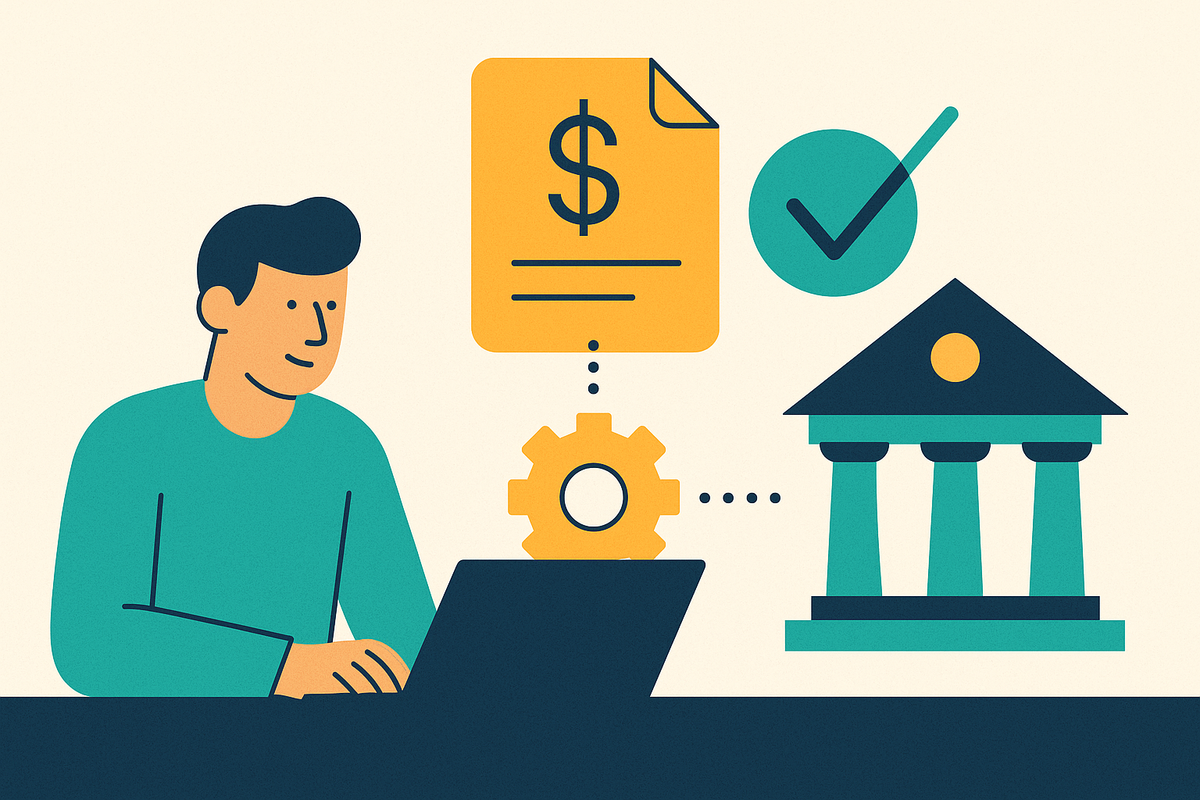
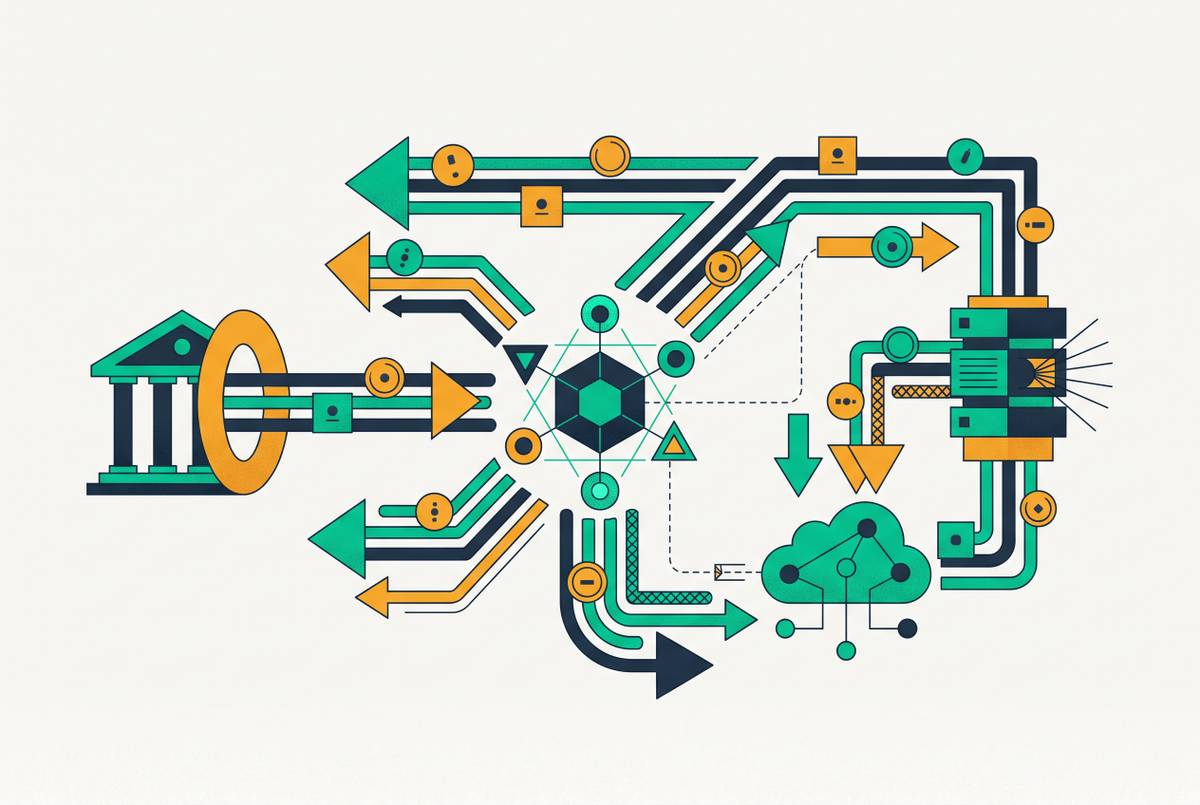
ACH and wire transfers both move money electronically from one bank account to another, which is why people mix them up. The systems underneath are built differently, cost differently, and settle differently because they were designed for separate purposes, and that difference appears first in the routing number. Get the wrong one, and the payment doesn't just run slow. It fails, or it lands somewhere it shouldn't.
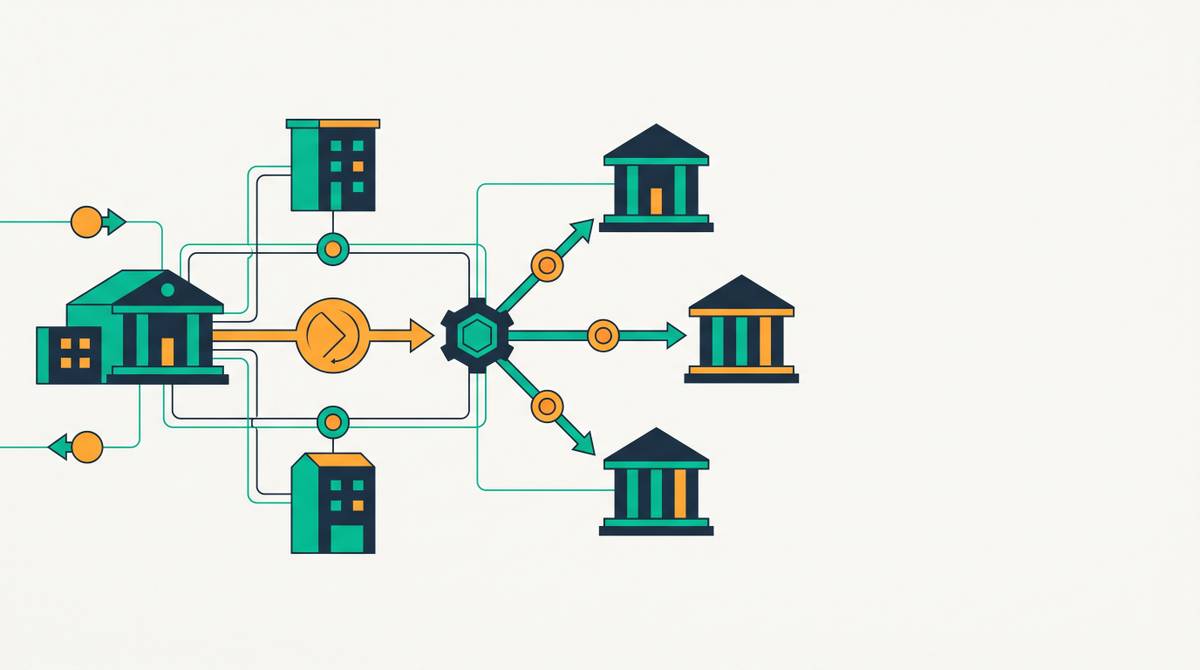
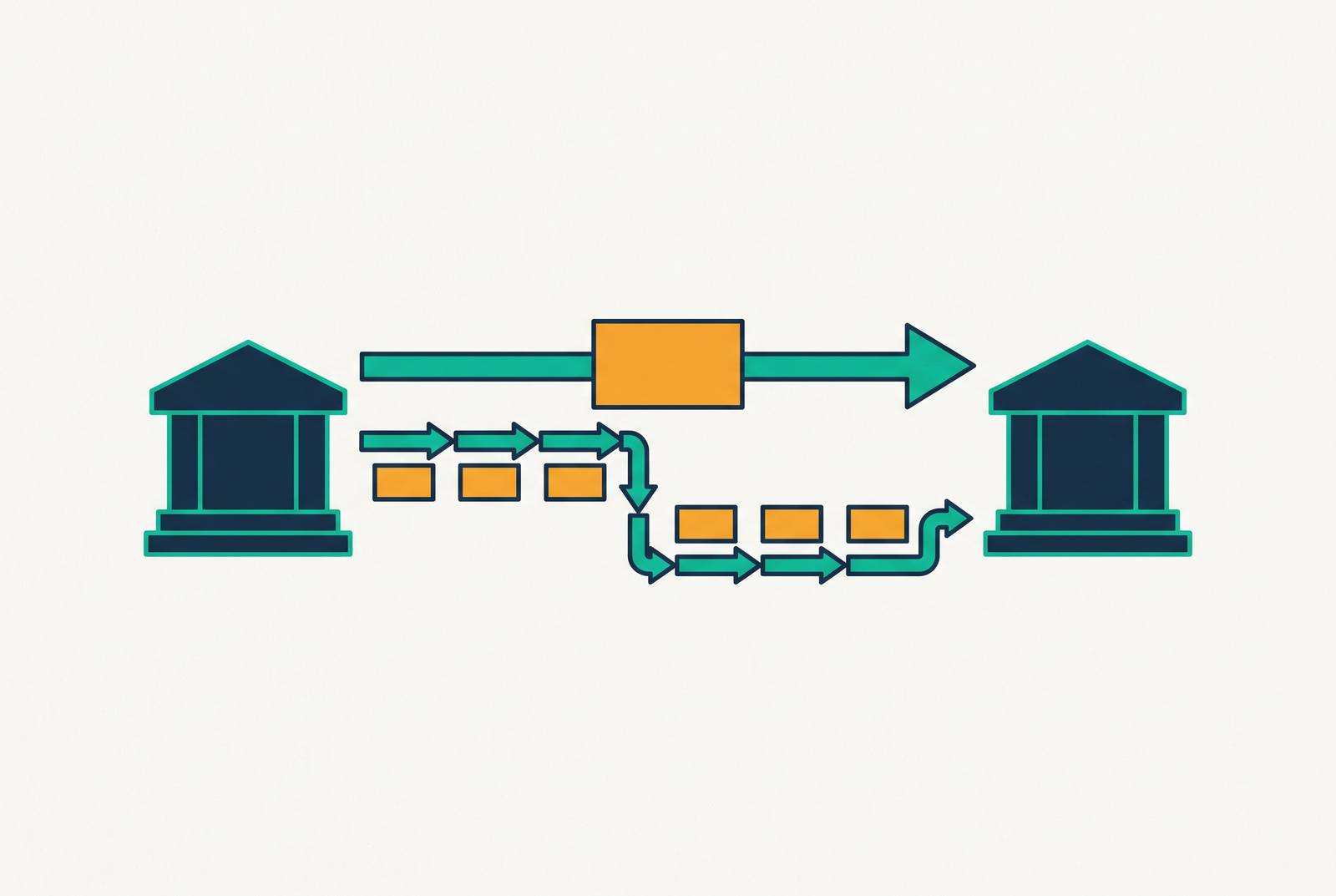
ACH runs on batch clearing: the Automated Clearing House network groups transactions and processes them in scheduled runs. Wire transfers move funds one at a time, bank to bank, with no batching. According to Nacha's full-year 2025 figures (cited in Dots, July 2026), the ACH network handled 35.2 billion payments worth $93 trillion. That kind of volume only works because of batch efficiency, not because ACH is trying to be a faster version of wire. Newer rails like RTP and FedNow complicate this picture some, and the piece will circle back to that at the end, but the ACH/wire split still explains most of what appears in a bank's payment queue on any given day.
What routing numbers do and where they came from
A routing number tells the payment network which financial institution to send funds to, before anyone even looks at the account number. Account numbers point to a specific account. Routing numbers point to the bank itself.
A national banking association created the system back in 1910 to standardize check processing across the country's banks. banks. Every ABA routing number in use today descends from that original numbering scheme.
The number itself is nine digits, and each part does a job:
- Digits 1 through 4: the Federal Reserve routing symbol, identifying the Federal Reserve district
- Digits 5 through 8: the specific financial institution within that district
- Digit 9: a check digit, calculated from the first eight digits using a set formula. If it doesn't match, the transaction gets flagged for manual review. It's a simple built-in defense against typos.
Look at the bottom of a paper check and you'll see three numbers in a row: the ABA routing number on the left (all nine digits), the account number in the middle, and the check number on the right.
One term to hold onto for the rest of this piece: ABA routing number is the parent category. ACH routing numbers and wire routing numbers are subsets of that category, not separate systems. Everything downstream, the confusion, the errors, the fees, traces back to that nesting.
How the first two digits reveal a routing number's rail
Both ACH and wire routing numbers run nine digits long. That's precisely why people assume they're interchangeable. They're not, and the tell is in the first two digits, not the length.
Domestic wires use ABA routing numbers whose first two digits identify the Federal Reserve district and processing path for the wire and check world. These are domestic bank identifiers, and they're the same numbers printed on paper checks. bank identifiers, and they're the same numbers printed on paper checks. ACH routing numbers, on the other hand, were built specifically for electronic transactions, and their first two digits fall in a distinct range that signals the ACH processing path.
That range isn't random. Digits 1 through 4, the Federal Reserve routing symbol, encode which processing path the clearinghouse should apply. So a number starting with 07 belongs to the wire and check world. A number starting with 67 belongs to ACH. Anyone can figure out which rail a routing number is built for just by glancing at the first two digits.
It's a structural feature baked into the ABA numbering structure itself, older than any individual institution's routing preferences. It's baked into the ABA numbering structure itself, older than any individual institution's routing preferences.
Why some banks use separate routing numbers per rail
Here's where it gets uneven. Some banks use one routing number that works for both ACH and wire. Others maintain two entirely separate numbers, one for each rail.
Large national banks like Chase, Bank of America, and Wells Fargo complicate things: they issue different routing numbers by state, and often maintain a distinct number just for wires. Regional banks and community credit unions can vary as well, sometimes using one number for both rails, sometimes keeping them separate.
The language banks use doesn't help. "Check routing number" usually refers to the ABA/wire number. "Electronic routing number" usually refers to the ACH number. Different banks label these different ways on their websites and statements, and that inconsistency is a real source of customer confusion, not a minor annoyance.
Here's the precise relationship: every ACH routing number is technically an ABA routing number, but not every ABA routing number works for ACH. The set is nested inside the other, not running parallel to it. Which means the safe move is never to assume the number on the bottom of a check is the number to hand over for a direct deposit or an ACH transfer. Call the bank, or check the routing number specifically listed for electronic transfers, before initiating anything.
Additional information each rail requires beyond the routing number
ACH keeps it simple: a routing number and an account number. That's the core data set, and it hasn't grown much over the years.
Wire transfers ask for a lot more. Beyond routing and account numbers, a wire needs the recipient's full legal name, their full address, and a stated reason for the payment. International wires add another layer: SWIFT/BIC codes, the messaging system that links banks across borders, plus intermediary bank details when the funds have to hop through a correspondent bank on the way.
Each intermediary in that international chain tends to charge somewhere between $10 and $25, and each hop can add a day to settlement. By the time funds land, sender fees, correspondent deductions, and currency conversion markups can shave $50 or more off the original amount. That's a fairly standard outcome for a multi-hop international wire.
Why does wire ask for so much more information than ACH? Reversibility is the answer. ACH payments can be reversed within Nacha's return windows if there's an error or a case of fraud. Wires, once settled, are effectively final. The heavier data requirement on the wire side exists partly to catch mistakes before the money moves, because there's much less room to fix things after.
Limits matter too. Same-Day ACH is capped at $1 million per transaction. Wire transfers can go well beyond that, which is why wire remains the only real option for very large single payments.
Cost and speed trade-offs: when ACH is the right rail and when wire is
Speed first. Standard ACH takes 1 to 3 business days, because Nacha groups transactions into batches, roughly three per business day, rather than clearing each one individually. Same-Day ACH moves faster, but it comes with submission windows and per-transaction fees. Chase charges 1% of the transaction value, up to $25, for same-day processing. Bank of America takes a different approach: next-business-day ACH transfers are free, while domestic wire transfers carry their own separate fee.
Domestic wires settle the same day through Fedwire. International wires through SWIFT take longer, adding days depending on how many intermediary banks the payment routes through.
Cost tells a similar story. ACH transactions typically run $0.20 to $1.50 through payment processors, and some banks offer ACH transfers for free outright (monthly platform fees and return fees can apply on top, separately). Wires cost more: $25 to $30 outgoing is a typical bank fee for a domestic wire. According to the Dots comparison, ACH wins on cost for high-volume payouts, while wire remains the only practical choice for same-day or international transfers.
So which rail fits which job? ACH handles payroll, vendor payments, direct deposit, bill pay, anything recurring and not time-sensitive. Wire handles large one-time payments, anything that needs same-day settlement, international transfers, and situations where reversibility isn't a concern one way or the other.
According to QuickBooks' 2025 Entrepreneurship report, 64% of business owners typically accept online payments, and most of them are making exactly this choice between two transfer methods, often without realizing it. Recurring digital payment workflows default to ACH because the cost gap between the two transfer methods compounds fast once volume climbs into the thousands of transactions.
Operational effects of using the wrong routing number
Feed a wire routing number, the kind starting with 00 through 12, into an ACH transfer request, and the clearinghouse generally can't route it. The payment gets rejected or delayed, because ACH infrastructure isn't built to process a wire/ABA-format code.
Run it the other way, using an ACH-format routing number for a wire, and the bank's wire processing system can't resolve the destination. The transaction fails, or it sits in manual review while someone sorts it out.
The check digit, that ninth digit calculated from the first eight, catches simple typos. Transpose two numbers by accident, and the check digit flags it. But it can't catch the deeper error of using a perfectly valid number meant for the wrong rail. That kind of mistake looks fine on paper. It just doesn't route.
The account number stays constant across both rails, but the routing number does not. Plenty of people assume routing numbers are just as fixed and interchangeable as account numbers. They're not, and that assumption is where a lot of failed transfers start.
Recovery differs too. A failed ACH transaction can often be corrected and resubmitted within Nacha's return windows without much drama. A wire sent to the wrong, but technically valid, routing number is a harder problem. Once it settles, pulling it back may require cooperation from a correspondent bank, and there's no guarantee that happens quickly. For institutions processing high volumes, one bad routing number in a batch can propagate through delayed, rejected, or misdirected payments before anyone catches it.
Agentic AI's role in payment routing execution in banking operations
This is precisely the kind of rule-based, repetitive, error-costly work agentic AI is suited to. Different routing numbers by rail, by state, by institution type, plus wire's heavier documentation load make the work rule-based, repetitive, and unforgiving of small mistakes. That's the profile of work AI agents are built to absorb.
The 2026 Cambridge Centre for Alternative Finance Global AI in Financial Services Report puts active agentic AI adoption at 52% among industry respondents, with 23% at more mature stages (what the report calls Scaling or Transforming) and 29% still piloting. That's mainstream deployment, not an early experiment confined to a few labs.
Fintechs are ahead of traditional banks here, 57% adoption versus 45%, the same CCAF report found. That gap points to real runway for community banks and credit unions to catch up, assuming they choose to.
What does an AI agent actually do inside a payment workflow? A few concrete things:
- Validates a routing number against the correct rail before the payment ever initiates
- Picks the right rail, ACH, wire, Same-Day ACH, or RTP, based on urgency, amount, and destination
- Executes the multi-step payment itself, not just flagging a recommendation for a human to act on
- Escalates exceptions for human review instead of letting an error propagate through an entire batch
IMF analysis cited in this space suggests autonomous handling of payment tasks can lower transaction and operational costs, improve liquidity, strengthen compliance workflows, and cut down on fraud. Fiserv's 2026 launch of agentOS is one concrete marker of where this is headed: an agentic AI operating system meant to help banks deploy and manage AI agents across their existing workflows, including payments, built natively on Fiserv's own platforms. Six financial institutions co-developed it, two ran agents in beta, and wider availability is expected by August 2026.
Getting routing numbers right, in miniature, makes the broader case for agentic AI in banking. The rules are known. Errors are expensive. Volume is high. And every extra second a human spends manually checking a routing number prefix is a second where risk sits idle in the queue.
Governance and auditability requirements when AI agents execute payment transactions
Banker skepticism on this point is earned, because weak controls undermine everything else. Grant Thornton's 2026 AI Impact Survey found only 18% of banking leaders fully confident they could pass an independent review of their AI controls within 90 days. That leaves 82% who couldn't say the same. Half of banks surveyed cited governance and compliance gaps as a direct contributor to AI underperformance or outright failure.
That gap isn't abstract. A 2026 governance analysis put the outright failure rate for agentic AI programs in banking at 94%, driven by governance holes, security exposure, and what practitioners in the space call "invisible failure": systems that pass every control they're subject to and are still quietly getting things wrong underneath.
Regulators are watching closely, and their signals are hard to ignore. The OCC's Semiannual Risk Perspective from May 2026 describes AI as "significantly transforming" the cybersecurity threat landscape, cutting both ways: it helps banks, and it lowers the bar for bad actors too. Federal Reserve Vice Chair for Supervision Michelle Bowman noted that the Fed's revised model risk guidance doesn't explicitly cover generative or agentic AI, leaving banks to close that gap through their own broader risk management. Treasury's Financial Services AI Risk Management Framework lays out 230 control objectives spanning a broad range of risk and compliance domains. The ECB's banking supervision arm said that banks need clear accountability for AI-driven decisions, real senior-management oversight, and challenge mechanisms with teeth, warning that AI initiatives without a clear strategic anchor tend to produce fragmented governance and risks nobody sees coming.
What does compliant agentic payment execution actually look like in practice? A few things need to be true at once:
- A full audit trail for every routing decision and transaction the AI initiates
- Configurable controls, so the institution sets the boundaries the agent operates inside
- Human oversight kept in place for exceptions and anything high-risk
- SOC 2 certification and compliance-readiness treated as a baseline requirement, not a future goal
- Deployment on the bank's existing rails, rather than a wholesale infrastructure swap
One example of what governance-forward design looks like: the AML agent built by FIS and Anthropic compresses anti-money-laundering review work into minutes, improves the quality of SAR narratives, and surfaces the highest-risk cases first, but a human investigator still reviews before any action gets taken. BMO and Amalgamated Bank are named as early adopters, with broader availability planned for the second half of 2026.
Automation and accountability aren't pulling in opposite directions here. AI can execute the routing decision while a human retains the audit trail, the configuration, and the final say on anything that looks off. That balance is what makes agentic payment AI workable inside a regulated environment, rather than a liability waiting to surface during an exam.
The future of payment rails and routing decisions
The split between two transfer methods isn't going away, but it's no longer the only choice on the table. RTP and FedNow both offer real-time settlement, sitting somewhere between ACH's batch economics and wire's speed and cost, and each comes with its own routing and identification requirements that institutions are still working through.
What stays constant, regardless of how many rails exist, is the underlying discipline: know which rail a payment needs, know which routing number that rail requires, and don't assume the number on a check works everywhere else. As more of that decision-making gets handed to AI agents, the reasoning behind each routing choice needs to stay visible and auditable, not buried inside a system nobody can question after the fact. The rails will keep multiplying. The need to get the routing number right, and to know why it's right, isn't going anywhere.