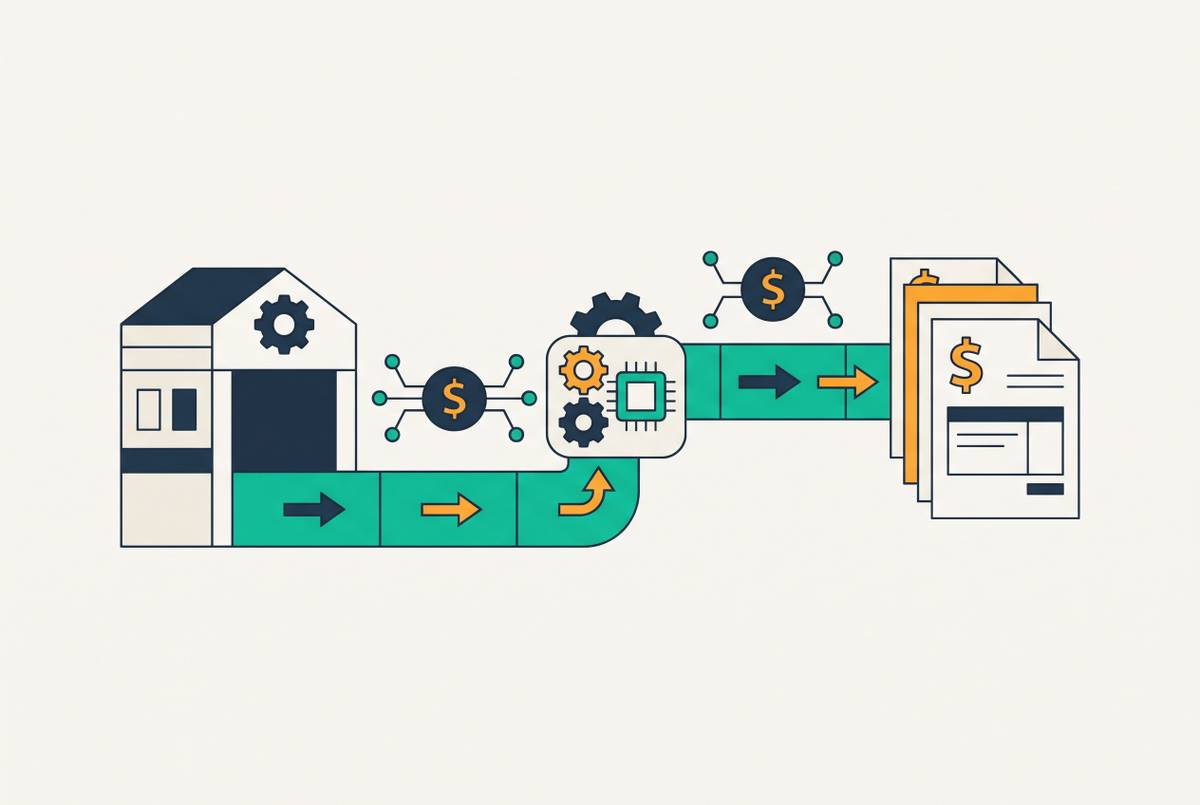
ACH Payment Meaning and How the Network Works
The network that moves 35 billion payments yearly across U.S. bank accounts.
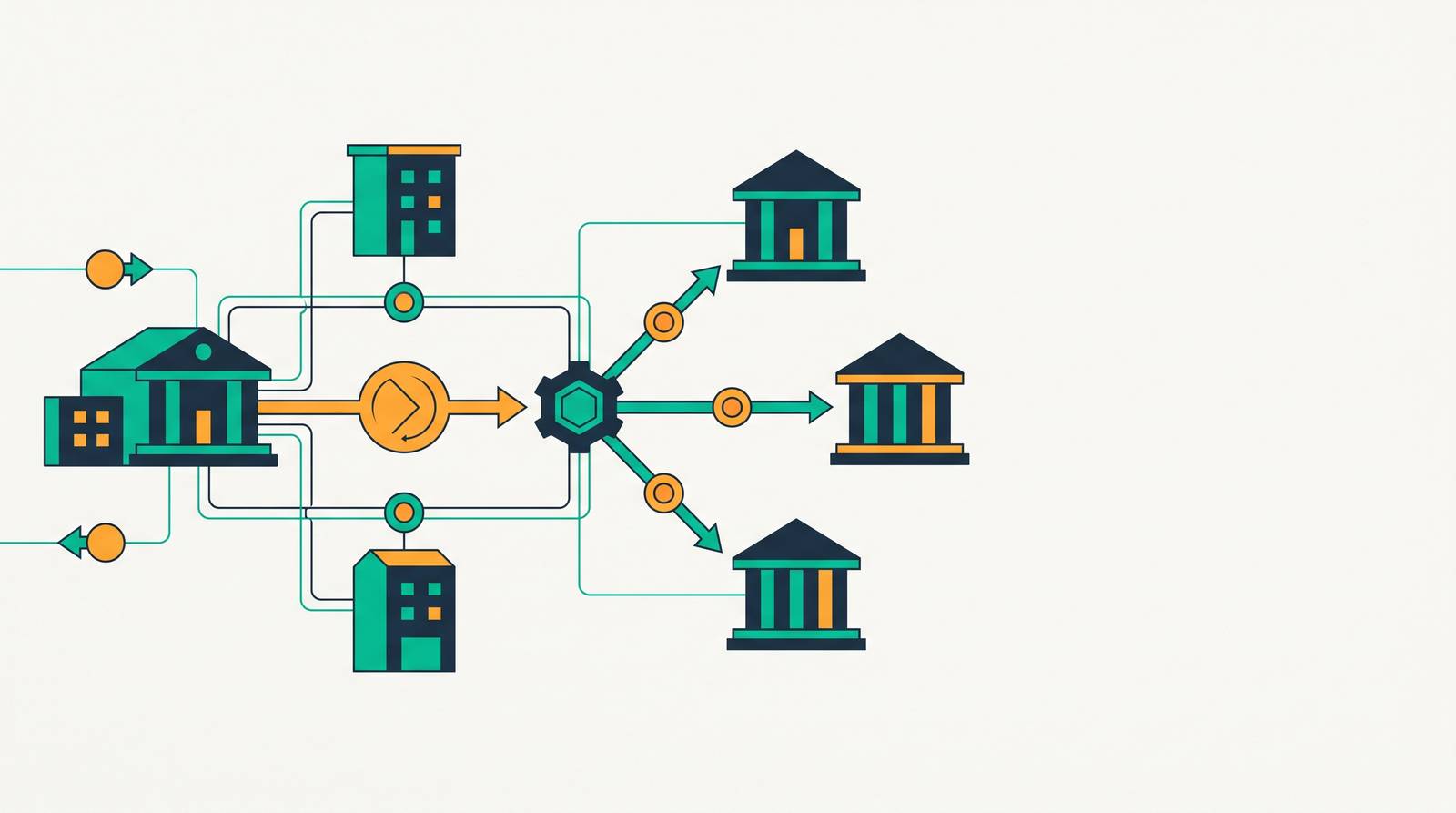
ACH stands for Automated Clearing House, the electronic network that moves money directly between bank and credit union accounts across the U.S. It runs separate from card networks, wire transfers, and paper checks, with its own rulebook and its own operators. Once you see how those rules shape the system, a lot of what looks confusing about ACH just falls into place, and I say that after spending a good chunk of my career untangling exactly this stuff for people who thought a wire and an ACH credit were the same thing.
Nacha, the National Automated Clearing House Association, writes that rulebook. It's a non-profit, and here's the part that trips people up: Nacha never touches a single payment. Two ACH operators actually move the money, the Federal Reserve and the Clearing House Payments Company, a private outfit. One entity writes the rules, two others carry them out, and a lot of ACH's design traces back to that split.
The network started as regional clearing houses in the early 1970s, went national in 1978, added Same Day ACH in 2016, and later raised the Same Day per-payment limit to $1 million. Batching, settlement timing, returns: all of it traces back to this same structure. Get that part down, and the rest of the network stops feeling like a black box.
The four parties involved in every ACH transaction
Every ACH payment, no matter how simple or messy it looks from the outside, runs through four roles.
- Originator: starts the payment. Could be an employer running payroll, could be a utility company pulling a bill payment out of your checking account.
- ODFI (Originating Depository Financial Institution): the originator's bank. Takes in the payment instructions, builds the file, sends it to an ACH operator.
- ACH Operator: sorts transactions and routes files to the right receiving bank.
- RDFI (Receiving Depository Financial Institution): the recipient's bank. Credits or debits the account based on what it's told to do.
"Originator" doesn't always mean the party sending money, and I've watched plenty of smart people trip over that exact point. In a debit transaction, the originator is the one pulling funds out of someone else's account. Your electric company is the originator when it takes your monthly payment, even though the money is leaving your account, not theirs.
The ODFI carries the compliance weight for whatever it submits into the network. That's the whole reason the fraud monitoring rules landing in 2026 fall so heavily on originators and ODFIs, not just on whoever receives the money.
The two banks in a transaction never talk to each other directly, since the ACH operator sits between them the entire time. Wires work differently: the banks communicate more or less directly with each other. That one difference explains a good chunk of how ACH behaves next to a wire, and we'll get to that comparison later.
How a payment moves through the network, step by step
Picture a payroll run. The employer authorizes it, and that authorization goes to its bank, the ODFI. That's step one.
Step two: the ODFI builds a digital payment file out of that instruction and sends it to an ACH operator, either the Fed or the Clearing House. Step three: the operator sorts everything by destination and routes files to the right RDFIs. Step four: each RDFI takes in its file and credits or debits the account on the scheduled settlement date.
None of this happens one payment at a time, since payments travel in batches, and that's the real reason ACH costs so little per transaction. Bundle thousands of payments into a single file and process them together, and the cost per payment drops to almost nothing.
The network runs 23 and a quarter hours a business day, with multiple processing windows across the day. There's a detail that trips people up constantly, though: settlement isn't the same thing as posting. An RDFI can make funds available to you before the formal interbank settlement even finishes. If you're watching cash flow closely, that gap between "available" and "settled" matters more than it sounds like it should.
ACH entries can also come back, since Nacha has defined return codes and rules for exactly that. Compare that to a wire, which is close to final the second it lands, and the ability to reverse an ACH entry starts to look like a safety valve wires just don't have.
ACH credits and ACH debits: two directions, different use cases
ACH moves in two directions, and each does a different job.
An ACH credit is a push: the originator sends funds out to someone else. Payroll, government benefit payments, vendor payouts, tax refunds all run as credits. "Direct Deposit" is just the everyday name for an ACH credit landing in your account.
An ACH debit runs the other way, and it's a pull that needs permission set up ahead of time. Utility bills, subscription charges, loan payments, insurance premiums, all debits. That prior authorization is the legal backbone of the whole setup; Nacha spells out exactly what counts as valid authorization, and an originator has to have that paperwork in hand before pulling a single cent out of anyone's account.
Why does this split matter so much for what's coming? Money going out is a different threat than money coming in, and the 2026 fraud monitoring rules treat them that way. A credit fraud scheme and a debit fraud scheme don't look anything alike, so the controls can't either.
The scale at which ACH operates today
The headline number: ACH volume rose almost 4.9% in 2025, hitting 35.2 billion payments, an average of 141 million transactions a day. Total value reached $93 trillion, up 7.9% from 2024. That's according to Nacha, and 2025 marked the 13th straight year total ACH value grew by at least $1 trillion, according to Nacha and Intellipay — thirteen years running. Sit with that for a second, because a lot of payment rails don't get anywhere close to that kind of streak.
Some numbers worth chewing on: roughly 93% of U.S. workers get paid through the ACH Network, 90.6% of Americans who got a federal tax refund this year took it as an ACH direct deposit, and 8.74 billion Direct Deposits ran through the network in 2025 alone.
Where's the growth actually concentrated, though? B2B payments grew almost 10% in 2025, closing in on 8.1 billion transactions. Internet-initiated payments, the fastest-growing consumer channel, hit 11.41 billion. Healthcare claim payments from insurers to providers came in near 548 million, up 7.3%.
December 2025 set a single-month record on its own: 3.22 billion payments, 172.1 million of them Same Day ACH. This is a network still climbing, and that climb is exactly why the mechanics behind it, and the rules governing it, matter more now than they did five years back.
Same Day ACH and what faster settlement actually changes
Standard ACH settles in one to three business days, which is fine for payroll and fine for the electric bill, but turns into a real constraint the moment you need money to move faster than that.
Same Day ACH closes that gap. It runs three processing windows per business day, and the per-payment limit was raised to $1 million, which opened the door to bigger business transactions riding the same-day rail. Banks and processors often set their own internal cutoffs earlier than the ACH operator's official deadline, since someone still has to build and send the file before the window shuts. Missing an internal cutoff by even minutes can mean waiting for the next window, regardless of when the operator's official deadline falls.
The growth curve is hard to argue with. Same Day ACH hit 1.4 billion payments worth $3.9 trillion in 2025, up 16.7% in volume and 21.4% in value over 2024. That followed an even sharper jump the year before, when volume rose 45.3% from 2023 to 2024, more than double the prior year's pace. Q1 2025 alone brought in 326 million Same Day payments worth $897 billion, up 19.1% and 24.8% respectively over Q1 2024.
So what does faster settlement actually buy you? Same-day payroll gets realistic for gig workers and hourly staff who can't wait three days for a check to clear. Emergency vendor payments stop requiring a wire fee just to move fast. Treasury teams get a same-day read on where cash actually sits, instead of guessing based on yesterday's numbers.
None of this rewrites the four-party structure or touches Nacha's rulebook. It just compresses the timeline inside the same system that's been running since 1978.
How ACH compares to wire transfers on cost, speed, and risk
Cost is where the gap is widest. ACH transactions typically run $0.20 to $1.50 each. A domestic outgoing wire carries a flat fee around $25 to $35, and an international wire runs $35 to $50 plus a 1% to 3% markup on the currency exchange.
Run a $10,000 payment through each rail and the difference gets concrete fast: ACH costs roughly $1 to $3 total, while the same amount on a credit card would run $250 to $350 in processing fees. That's not a small gap; it's the difference between a rounding error and a real line item on someone's budget.
On speed: standard ACH takes one to three business days, Same Day ACH settles within hours, and wires land same-day or same-hour, at a real premium for that speed. On reversibility, ACH entries can come back through Nacha's return code system, while a wire, once the receiving bank accepts it, is close to final.
So when does a wire actually make sense? Large one-time payments where same-hour finality matters and the fee is small next to the amount, or international transfers, where ACH doesn't reach at all. ACH wins on recurring payments, high-volume B2B flows, payroll, anywhere cost and a paper trail matter more than shaving a few hours off settlement.
That gap between returnable and final shapes how much fraud risk each rail carries, and that's exactly where the next set of rules picks up.
Nacha's 2026 fraud monitoring rules and what they require of ACH participants
March 2026 brought Nacha's risk management rule amendments into effect, the biggest compliance overhaul for ACH originators in roughly a decade.
The rollout comes in two phases. Phase 1, effective March 20, 2026, covers all ODFIs plus any Originator, Third-Party Sender, or Third-Party Service Provider whose 2023 origination or transmission volume topped 6 million entries. Phase 2 extends compliance obligations further, eventually covering non-consumer Originators, Third-Party Service Providers, and Third-Party Senders regardless of volume.
That's a real shift in who's on the hook. The rules explicitly extend monitoring obligations to Originators themselves, not only to their banks.
What's actually required? Risk-based fraud monitoring built to catch entries triggered by fraud, including what Nacha calls "False Pretenses": payments technically authorized, but only because someone was deceived into authorizing them— and The authorization in such cases looks clean on paper, which is precisely what makes these schemes effective. On top of that: expanded monitoring for ACH credits, new standardized entry description requirements meant to make fraud patterns easier to spot across the network, and updated return codes related to suspicious or fraudulent entries.
On the receiving side, Nacha points RDFIs toward risk-based monitoring signals designed to catch anomalous activity on the receiving side.
Manual review can't keep up with this at scale anymore, and the volume of modern ACH transactions makes that clear. The practical effect of the rules is that automated pre-payment scoring, covering velocity checks, anomaly detection, and beneficiary-change controls, is effectively required going forward. A four-eyes manual check, two people reviewing the same entry, still leaves room for human error, and it can't move at the pace modern payment volumes demand anyway. Catching a fraud pattern buried in 141 million daily transactions by squinting at a spreadsheet just isn't realistic.
Where automation and agentic AI fit into ACH operations at financial institutions
Real-time fraud monitoring across 141 million daily transactions isn't something a team of humans can do by hand. The volume alone rules it out, and the 2026 rules were written with that fact in mind.
What does agentic AI actually mean here, as opposed to the usual buzzword version? It's a system that reasons through a sequence of steps and actually carries them out: scoring a payment before it goes out, flagging a return code, reconciling accounts at the end of a batch cycle. That's a step beyond a chatbot that just flags an alert for a person to act on. The agent does the checking and takes the next step, not just the noticing.
Adoption is moving fast. As of late 2025, just over a quarter of banks had AI agents running in production. By the end of 2026, that number is expected to cross 70%, according to The Digital Banker, a jump driven in no small part by the compliance pressure itself. ACH operations, reconciliation, and fraud monitoring are widely cited among the first tasks in line for that expansion.
What changes day to day, on the ground? Pre-payment fraud scoring runs automatically against velocity and beneficiary-anomaly rules, no one manually triggering each check. Exception handling and return code routing move without a person sitting on a queue all day. Audit trails build themselves in real time, matching the documentation Nacha expects to see if it ever comes asking. None of this requires ripping out core banking infrastructure, since agentic tools run on top of the rails that already exist.
Automation and oversight look like they'd pull in opposite directions, but they don't, at least not here, or not if it's built right. Agentic AI in a regulated setting still needs full audit trails, configurable controls, and a human somewhere in the institution keeping watch, and those pieces have to be part of the design from day one, not bolted on after the fact.
Banks and credit unions treating this as a pure technology upgrade are missing what Nacha actually set as the bar. The 2026 rules made accountability and auditability the baseline, full stop. An automated system built with that in mind clears the bar, while one that wasn't built that way doesn't, and no amount of marketing copy changes that math.