Direct Deposit Processing Automation at Banks and Credit Unions
Straight-through posting and automated exceptions cut funds availability delays by hours.
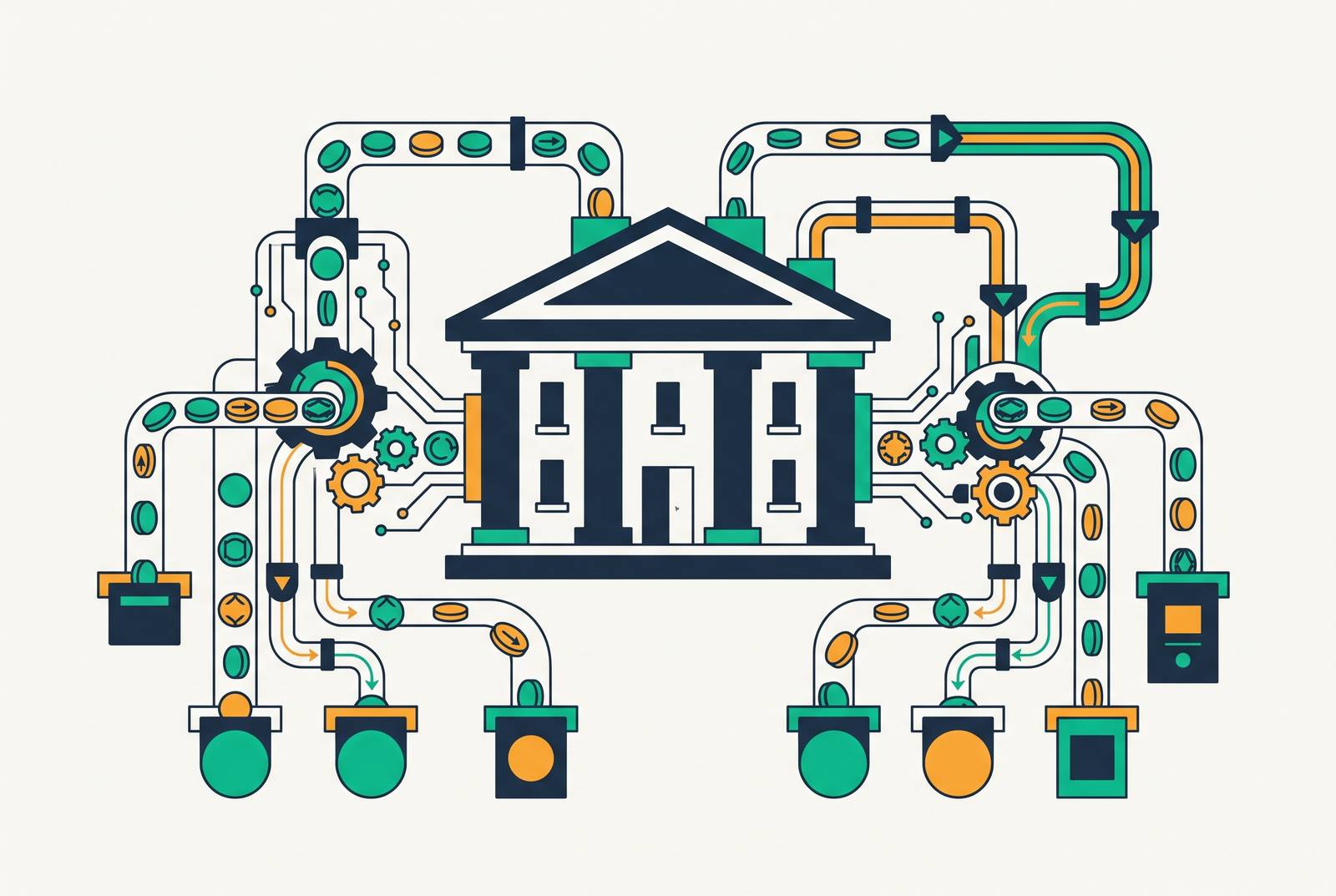
Direct deposit looks simple from the employee side: money lands in the account, no check to cash, done. On the bank's side, that same transaction runs through a layered sequence: receive the ACH file, match it to an account, post the funds, catch what doesn't match, reconcile the whole batch by end of day. Automation is rewriting each of those steps, and the difference shows up directly in how fast funds actually clear. Get this wrong, and the cost isn't abstract: it's a member calling the branch asking where their paycheck went.
Where manual work accumulates and why it slows funds availability
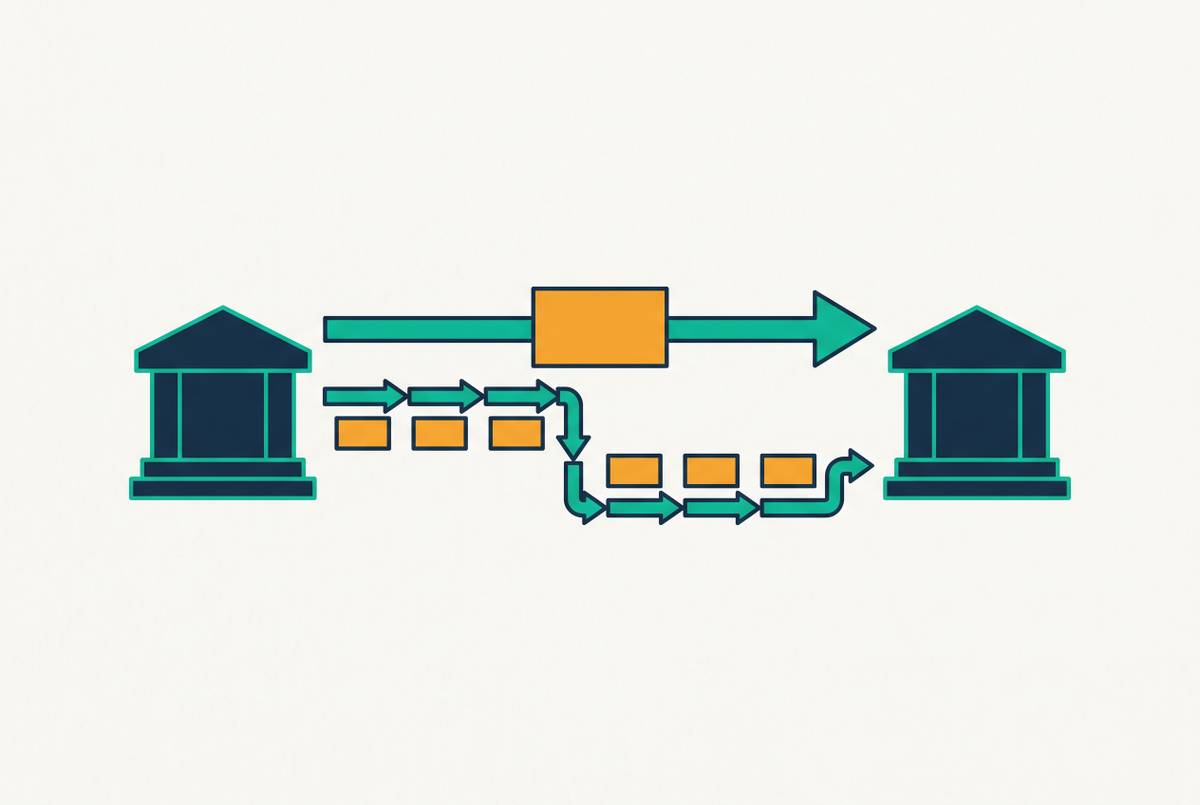
Exceptions are where things back up. An unmatched account number, a routing digit typed wrong, a name that doesn't quite match the file, a prenote that fails silently. None of that resolves itself. A staff member has to open the item, dig into the account history, and decide: return it, force-post it, or hold it for more information. Traditional ACH processing has no standard automated path for that decision, so it sits in a queue until someone gets to it.
Reconciliation carries its own drag. Somebody is still exporting the day's posted items and checking them against the ACH file by hand, flagging whatever doesn't line up, building the end-of-day settlement report from scratch. At low volume, that's tedious. At high volume, think end of month, or the days around a holiday when payroll cycles stack up, it turns into a real bottleneck.
There's an audit problem hiding inside this too. When a staff member decides to force-post an item or return it, that reasoning often lives in an email thread or a note in a ticketing system, not in the core banking record itself. Ask for that decision six months later, and someone has to go digging for it.
Manual processing inefficiency is the most common reason organizations give for wanting to drop paper checks, and the same failure mode shows up on the receiving end, inside the bank, as ACH files come in. The volume problem is real: a credit union processing payroll files for a few thousand members can watch its exception queue outgrow staff capacity on the wrong day of the month. Members expect their deposit to post the next morning, maybe same-day. Every hour an exception sits unresolved is an hour closer to a service complaint, or an NSF cascade nobody wanted.
How automation addresses ACH file receipt, account matching, and posting
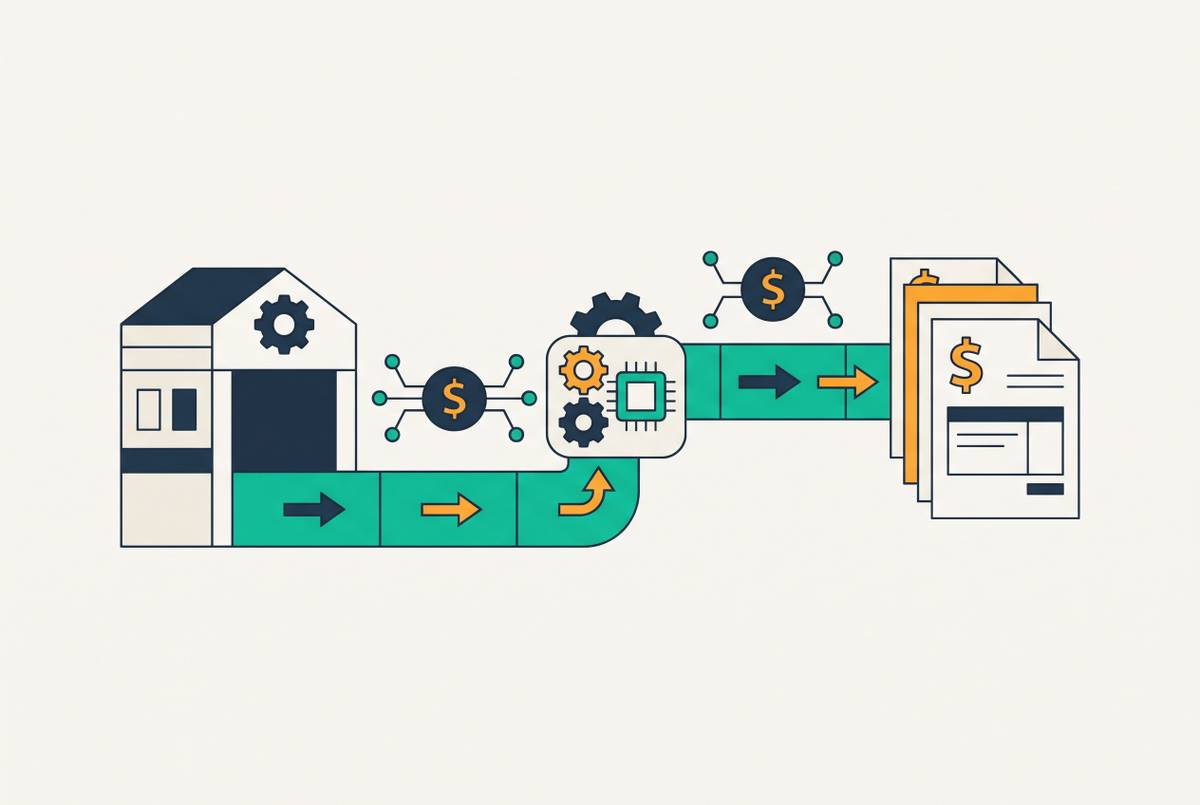
Automated ingestion changes the starting point. Instead of a file landing and waiting for someone to open it, the system receives and parses the ACH file on arrival, checking format and completeness before anything else happens. No manual touch needed just to confirm the file is usable.
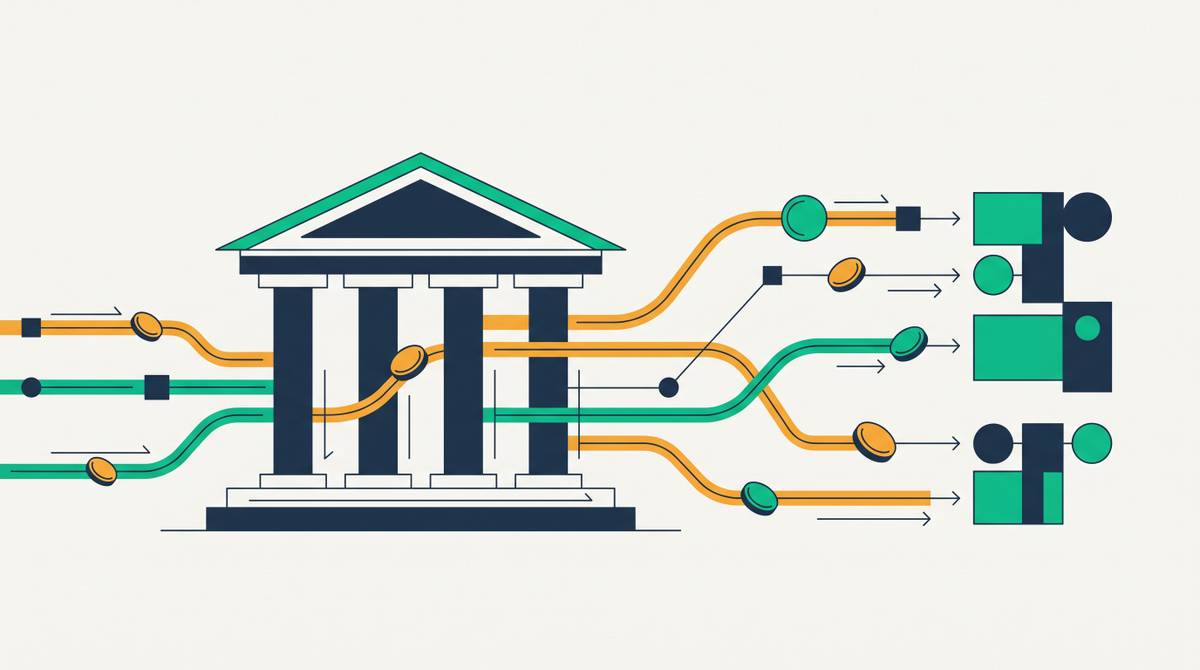
Matching works the same way underneath. The system checks account number, routing number, and name fields against core banking records, and assigns a confidence score to each entry. High-confidence matches move straight to posting. Anything below the threshold gets routed to a separate exception path instead of holding up the rest of the batch.
That's straight-through posting, and it's the piece that actually moves the needle on availability: items that clear the confidence threshold post without a staff member touching them, and funds land as early as the ACH rules allow.
AI sits on top of this, and its real strength is pattern recognition across structured account data, unstructured text, and increasingly voice. Fiserv has described this as the capability meaningfully changing how payment processes get automated. Worth being precise about what it's actually replacing, though: the "last mile" problems, exception handling, anomaly detection, routing decisions, reconciliation, that manual workflows have always gotten stuck on.
None of this requires ripping out the core system. AI tools sit on top of existing rails and existing infrastructure, improving what already runs rather than replacing it. Anyone pitching a core replacement to get this benefit is selling you something you don't need, and that's the line worth holding onto when a vendor demo starts drifting toward "rebuild."
Automated exception handling: routing, escalation, and resolution without a queue
The traditional exception queue puts the whole decision inside one person's head. They review the failed match, pull up the account record, and make a judgment call that may or may not get written down anywhere useful.
Automated routing breaks that apart. Confidence scoring separates near-matches that a rule set can resolve on its own from the genuinely uncertain cases that need a human. And when a case does escalate, it doesn't land as a raw file dump. It arrives with a research summary already built, so the reviewer starts from a decision point instead of a blank page.
Agentic AI pushes further still. An agent perceives the exception, reasons over the account's history and the incoming file, and proposes a resolution (return it, force-post it, hold it) while logging the reasoning behind that proposal. Staff approve or override. They're not starting the research from zero.
J.P. Morgan has described two useful modes for this kind of agent. A Transaction agent acts within defined parameters. An Orchestration agent manages and completes a more complex workflow on its own, based on a user's request. Direct deposit processing has a use for both, depending on how much latitude an institution is comfortable granting.
Fraud detection folds into the same moment. An unusually large payroll deposit, a new account paired with a payroll source for the first time, a routing number the system has never seen before: these get flagged before posting, not discovered afterward in a reconciliation report. HSBC's AI-powered fraud system scans roughly 900 million transactions a month and catches two to four times more issues while cutting false positives by 60%. That's the scale anomaly detection can hit when it's built into the pipeline rather than bolted on after the fact.
The record left behind matters as much as the decision itself. Every automated exception generates a timestamped, reason-coded entry, which is exactly the audit trail a manual queue rarely produces on its own.
Reconciliation and end-of-day settlement in an automated workflow
Reconciliation, at its core, means confirming that every posted item matches the originating ACH file, accounting for returns, and flagging anything that doesn't settle cleanly. In a manual shop, that's a spreadsheet exercise: export the day's activity, compare line by line, hope the volume stays low enough that someone can actually get through it before close.
Automated reconciliation matches posted items against the file entries as posting happens, in real time, rather than as a separate end-of-day task. Discrepancy reports build themselves instead of getting assembled by hand.
Return items get the same treatment. When something can't post, the system generates the return entry, standardized return code and all, automatically, with the reason and the original item details already filled in. That's one less manual data-entry step, and manual data entry is exactly where errors like to creep in.
By end of day, the settlement package (position, return count, exception log, posting confirmation) assembles itself and feeds straight to treasury and operations. Nobody's building that package from four different spreadsheets at 6pm. The reconciliation record doubles as the compliance record here: every posting decision, every return, every exception resolution lives in one log instead of scattered across systems.
The compliance and auditability requirements that automated direct deposit processing must satisfy
None of this operates outside the existing regulatory frame, and in some ways it adds a new layer on top of it. Bank Secrecy Act and AML obligations, transaction monitoring, suspicious activity flagging, SAR filing, still apply to ACH flows no matter how much of the process runs on its own.
On top of that sits a newer set of rules built specifically for AI risk. Current model risk guidance under SR 26-2 leaves agentic AI agents out of scope by name, which is less a loophole than a gap institutions need to close on their own before a regulator asks why they haven't. The FTC's updated Safeguards Rule governs how account-matching systems store and access consumer data. Institutions operating in the EU also answer to DORA, the Digital Operational Resilience Act, which sets ICT risk management requirements for financial entities.
Governance frameworks in banking AI generally center on accountability, transparency, auditability, and ongoing model validation as core requirements for responsible deployment.
A financial oversight body published a consultation report on June 10, 2026, setting out twelve sound practices for adopting AI responsibly. It makes an interesting concession: continuous human monitoring of every individual agent decision becomes impractical once volume scales up, so it sets out sound practices for managing oversight at scale. That's a notable acknowledgment of the practical limits regulators see in traditional human-review models as agentic volume grows.
Intention and readiness aren't the same thing, though. Plenty of institutions are planning to deploy agentic AI systems while a much smaller share say they're fully equipped to control and secure them. That gap is exactly where fragmented regulation gets expensive: the cost of not building governance in from day one, instead of bolting it on after something breaks.
How agentic AI platforms are integrating direct deposit and ACH workflows for community banks and credit unions
The vendor landscape for community institutions has taken shape fast. Fiserv's agentOS, built on AWS Bedrock AgentCore with strategic ties to OpenAI and AWS, is already piloting with First Interstate Bank and Boulder Dam Credit Union, with Salem Five, City National Bank, Bank OZK, and SouthState co-developing features. That puts agentic AI directly inside the platform a lot of community institutions already run day to day. FIS is building a Financial Crimes AI Agent with Anthropic, with BMO and Amalgamated Bank first in development and general availability targeted for the second half of 2026. Jack Henry extended its existing Google Cloud collaboration into an agentic security platform for its roughly 7,400 community institution clients, announced in June 2026.
Backbase launched its AI-native Banking OS in April 2026, built on three layers: Intelligence for signals, Nexus as a shared semantic record, and Sentinel handling permissions and logging authority. The platform serves more than 120 financial institutions and counts Navy Federal Credit Union, TD Bank, Techcombank, Standard Bank Group, Eurobank, and KeyBank among its named clients. A separate vendor runs a unified conversations platform across more than 750 community financial institutions and launched a governed agentic AI platform for credit unions in March 2026, backed by a $63 million raise in December 2025. Kore.ai was named a Leader in The Forrester Wave for Cognitive Search Platforms in Q4 2025, works with more than 400 Fortune 2000 companies, and offers pre-built banking agents with native core integrations.
Credit unions in particular are leaning into this hard, as member-service automation and back-office efficiency turn into real competitive advantages in the fight for deposits.
Most people evaluating these platforms get stuck comparing feature lists, and that's the wrong axis to judge on. What actually separates these platforms from each other is how much custom engineering, integration work, and compliance configuration sits between signing the contract and having a live workflow running in production. Readiness, not marketing copy, is the real differentiator, and most vendor demos won't tell you where that gap sits.
Connectors matter just as much as the agents themselves, and this gets underweighted constantly. Model Context Protocol (MCP) is emerging as the standard giving agents access to cores, document stores, and third-party data sources. CCG Catalyst has made the point plainly: a bank that inventories its agents but not its connectors has only accounted for half its exposure. The operational efficiency showing up in direct deposit processing is part of a wider pattern in agentic banking deployments, not a separate story confined to ACH files.
What deployment on existing banking infrastructure actually requires
The pattern that keeps showing up across nearly every vendor: AI sits above the core, not inside it. It pulls data from existing systems, processes that data, and writes decisions back through standard APIs. The core itself stays put.
That matters most for mid-tier and community institutions, where AI tools can plug into existing low-code systems and improve efficiency without demanding a full infrastructure rebuild. Most banks investing in modernization are choosing to layer new tools on top rather than rip out and replace what's already running, and ACH processing automation fits that same pattern. File ingestion, matching, and exception routing can all sit on top of the existing ACH rails without touching the underlying network itself.
The governance layer deserves just as much attention as the technical integration, arguably more. Backbase's Sentinel layer, for instance, checks every proposed action against bank policy before it executes and logs the action afterward. That's what governance built into the integration point looks like, rather than governance bolted on after something's already gone wrong. Banker skepticism here is fair, and it should stay fair: every connector granted to an agent is an access grant, full stop. Giving an AI agent reach into core account data and posting authority calls for explicit permission scoping, never an assumption that access is fine by default.
SOC 2 certification belongs in this conversation as a floor, not a selling point. For any AI system running on banking rails with access to account data and transaction authority, SOC 2 is the baseline. Anything less isn't a credible security posture to begin with, and no vendor pitch should get a pass on this one.
The governance controls that keep automated direct deposit processing within institutional boundaries
Human oversight looks different at scale than it used to. Regulatory guidance from mid-2026 accepts, plainly, that no institution can have a person review every single agent decision once volume climbs past a certain point. The proposal answers this with AI-monitoring-AI as a supplement. But that doesn't remove humans from the picture. It moves them: instead of reviewing each transaction, institutions need people governing the rule set itself, along with the confidence thresholds and the escalation criteria that decide when something needs a human at all.
That distinction is the whole ballgame, and it's worth being blunt about it. An institution can hand off the repetitive judgment calls, the near-matches, the routine returns, to an automated system with real confidence. What it can't hand off is deciding where the line sits between routine and exceptional in the first place. That's a policy decision, and policy decisions still belong to people who can be held accountable for them, in writing, with a name attached to the choice.
So here's the question worth sitting with: is an institution's governance structure mature enough to say, with confidence, exactly why the machine made the call it made? Automation can clearly process direct deposits faster than any manual queue ever could. But speed without an answer to that question isn't progress, it's exposure wearing a faster interface. Until an institution can answer it, the technology is ahead of the people running it, and that gap is where the real risk sits.