B2B Payments Automation for Financial Institutions
Banks can cut payment fraud and processing delays by automating the entire transaction lifecycle.
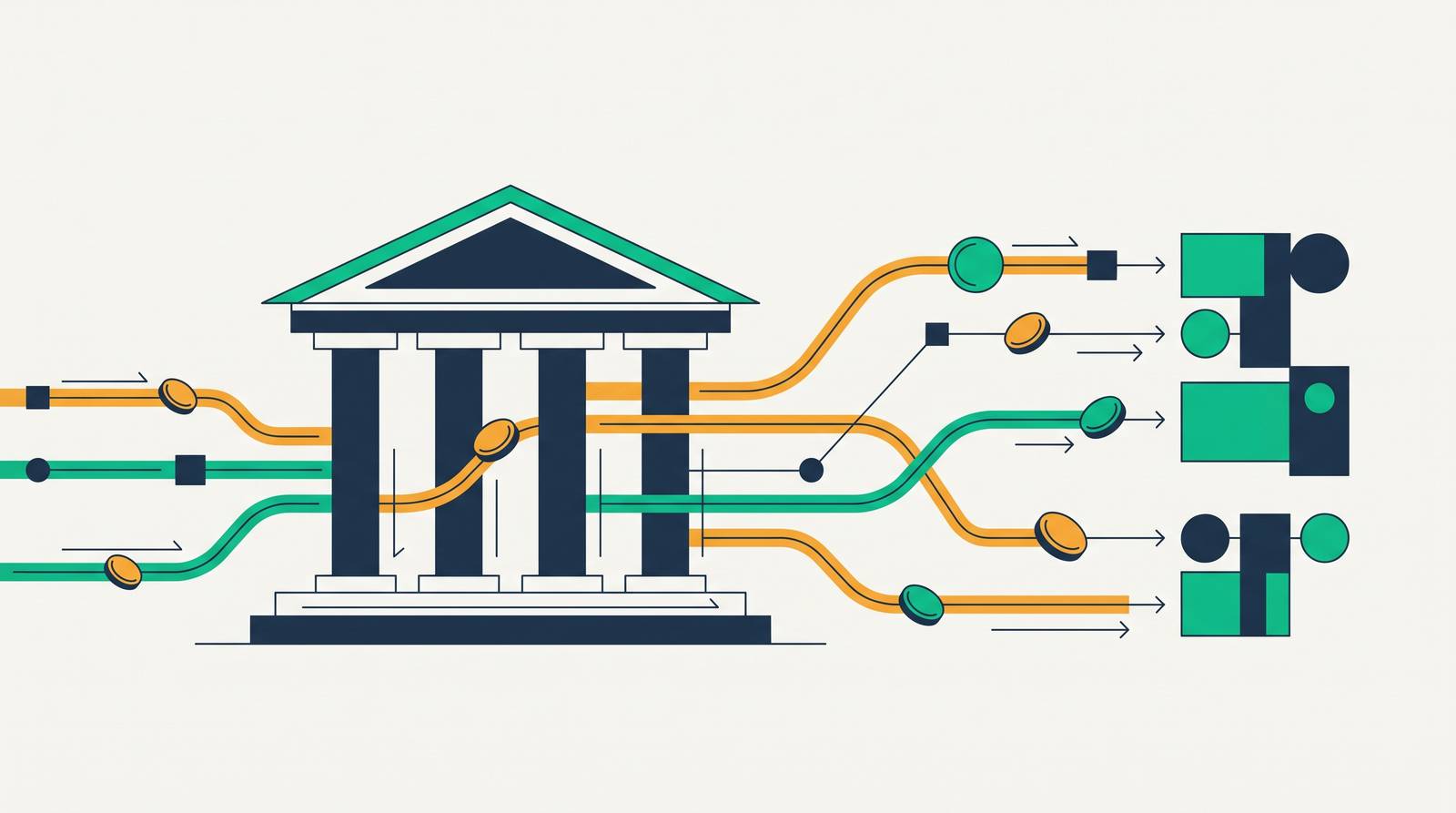
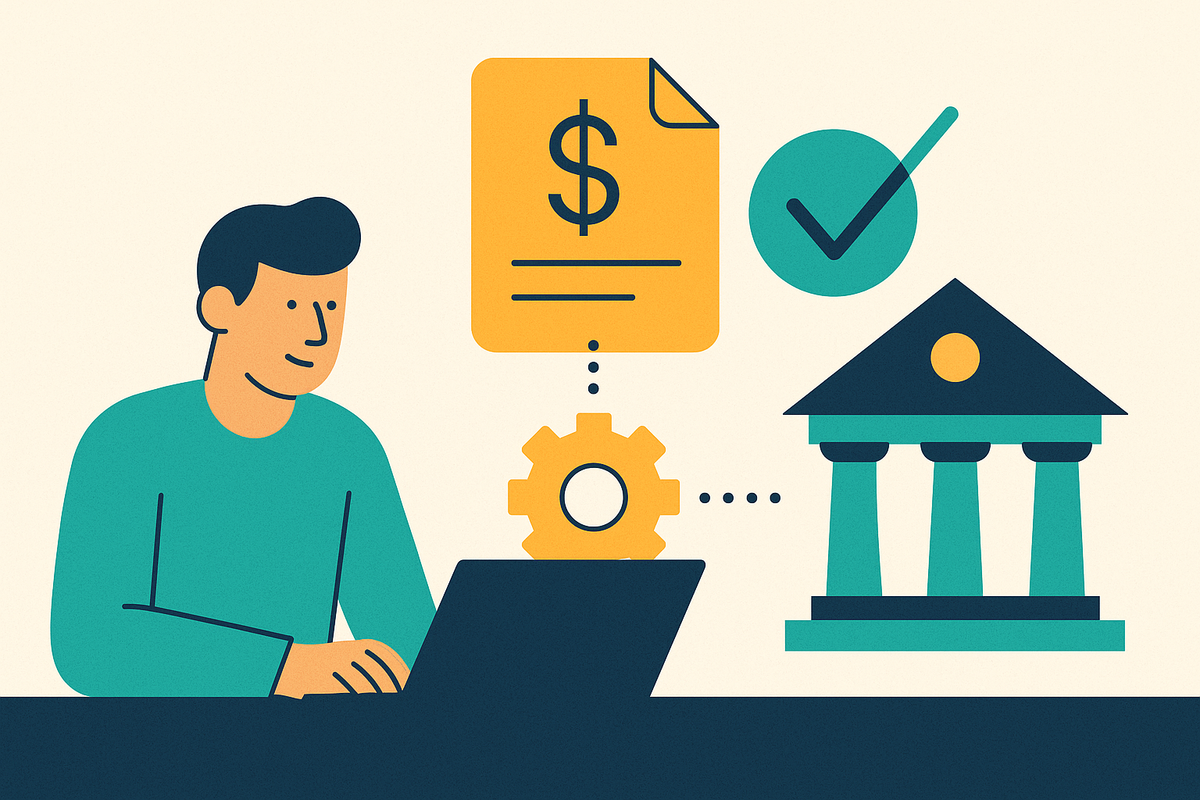
B2B payments automation is the infrastructure banks and credit unions need to move business money at real volume, without the errors, fraud exposure, and audit headaches that come from doing it by hand. This piece covers what the automation actually covers, where AI genuinely helps, and what it takes to run this safely once you're past the pilot stage.
Straits Research put the B2B payments market at $1,355.09 billion in 2024, growing around 9% a year through 2033. Big number. It tells you this is the plumbing of modern finance, not some side experiment a bank runs to look innovative.
And yet a huge share of that money still moves by check. The 2025 AFP Payments Fraud and Control Survey found checks remain the single biggest source of payment fraud, ahead of every other instrument, including wires. A lot of that risk traces back to someone hand-processing paper with no real-time view of where the money's going or who's touching it along the way.
Manual B2B payment workflows don't create one problem. They stack several, and they stack fast: slow settlement, reconciliation piling up in someone's inbox, suppliers annoyed about late payment, compliance teams who can't see what happened until it's already gone sideways. Banks and credit unions serving business clients inherit this every time a commercial customer routes a six-figure payment through a process built for a slower, smaller world.
What B2B payments automation actually covers across the transaction lifecycle
Automation spans several jobs spread across the payment lifecycle. Each one fails in its own particular way when it's left to manual hands, which is worth sitting with for a second before we move on.
Start with invoice receipt: pulling structured data out of a PDF or scanned document, matching line items against a purchase order, flagging anything that doesn't add up. Then approval routing, where a payment has to move through the right people based on dollar amount, vendor, or risk level, without someone chasing a sign-off over email for three days. Execution comes next, actually sending money over ACH, wire, virtual card, or a real-time rail, based on rules the institution set or the counterparty's stated preference. After that, reconciliation: matching what went out against open payables and the bank statement. Last, the audit trail, a timestamped record of every step, built for the day a regulator or internal auditor wants to see exactly what happened and why.
Here's the distinction that actually matters when a bank sizes up this space. A tool that only recommends an action still needs a person to go do it, and that gap changes everything about what the automation is worth to you. Automation that executes on existing payment rails compresses the cycle in a way you can measure in days, not in how good the demo looked.
Some of the infrastructure underneath all this is shifting too. As CHIPS, FedWire, and SWIFT move onto the ISO 20022 messaging standard through 2025, more structured data travels with each payment, and that makes automated matching and routing meaningfully more reliable. Virtual card issuance is growing fast, driven by companies wanting tighter control over individual transactions. E-invoicing is expanding too, part of a broader shift toward structured digital payment data across global markets. For institutions with multinational clients, that's increasingly a strategic priority, not a nice-to-have.
Worth flagging: automation bolted onto a single stage, invoice capture say, without any tie to execution, doesn't remove friction. It just moves the hand-off problem down the hall.
How AI changes what's possible in payment routing, exception handling, and fraud detection
Rules-based automation handles the predictable stuff fine. AI earns its keep in the exceptions, the cases that eat an analyst's whole afternoon: a duplicate invoice from the same vendor filed under three slightly different names, a cross-border payment missing half its counterparty data, a cash flow forecast that should nudge a payment date to protect working capital.
Fraud detection is probably where AI has matured furthest inside financial institutions. Continuous transaction monitoring, instead of periodic rule updates, catches shifts in fraud patterns that a delayed batch review would miss entirely by the time it runs.
Multi-agent setups are showing up more in complex payment workflows now. One agent parses the invoice, another checks it against approval thresholds, a third executes the payment. Each operates inside its own guardrails and logs back to a shared audit record, so nothing falls through a seam between agents. Moody's Analytics rolled out a version of this in 2024, multi-agent copilots that pre-screen applications and flag anomalies, cutting turnaround time while keeping the audit trail intact. Human oversight in that setup shifts toward interpreting results and setting policy, rather than doing repetitive checks by hand all day.
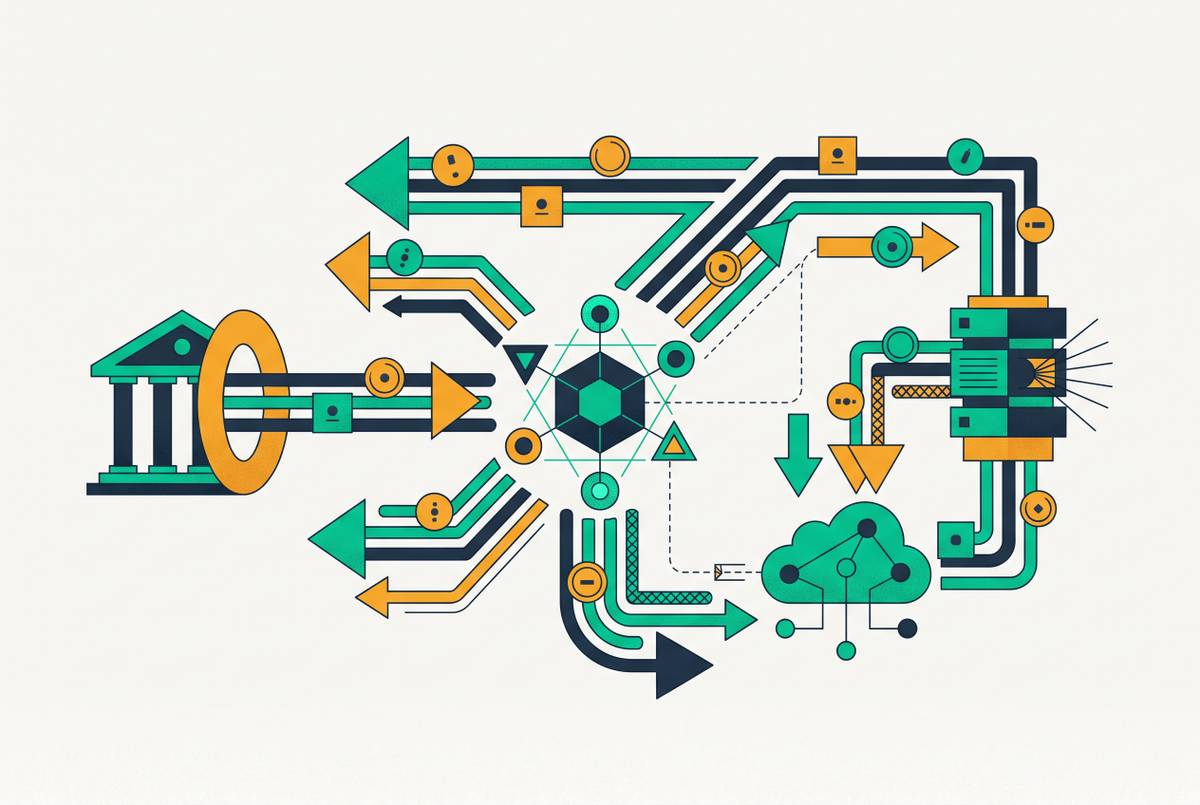
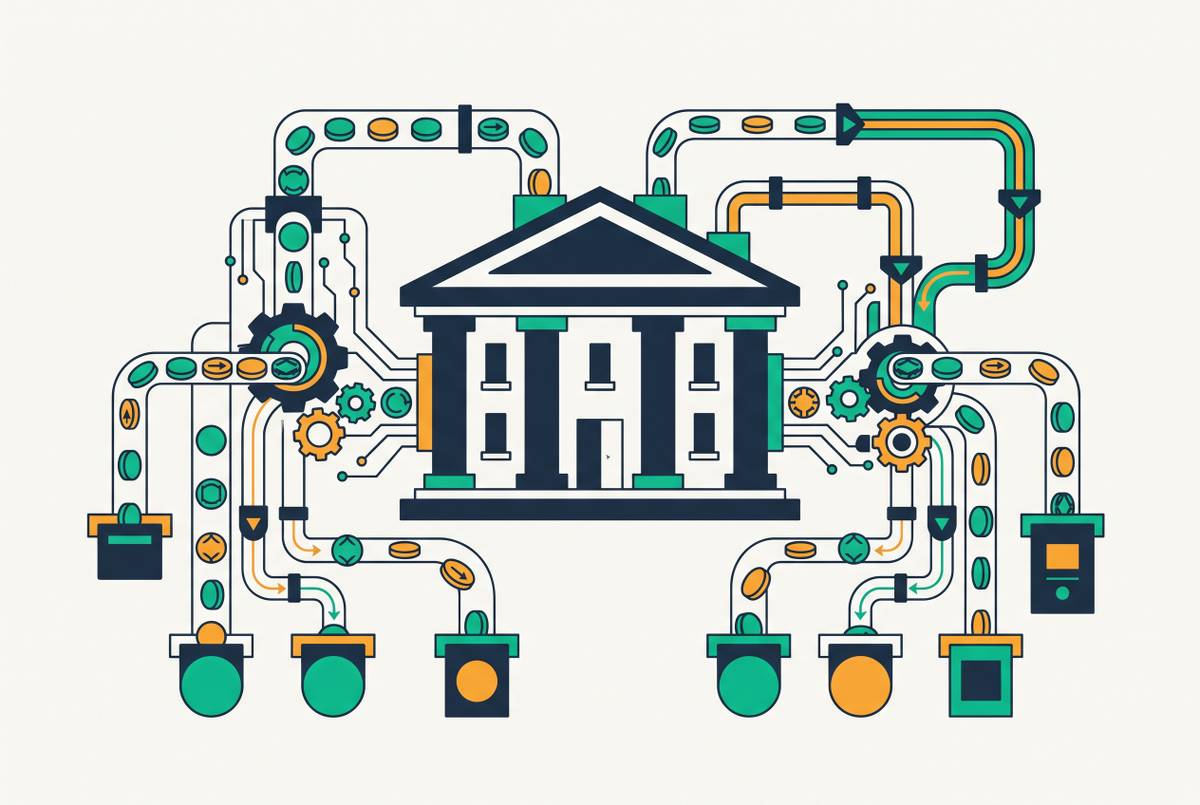
There's an orchestration benefit here too, and it's easy to miss if you're only looking at one channel at a time. Institutions running ACH, wire, card, and real-time payments as separate, disconnected channels can bring them under one decision layer that routes based on cost, speed, and counterparty preference.
Still, AI's limits show up fast in the data feeding it. Fragmented core systems and stale or duplicated counterparty records will undercut even the best model accuracy numbers on paper. Whatever's processing the data on the way out, if what goes in is bad, what comes out is bad too.
The governance architecture that makes automated payment execution safe to deploy at scale
The real question isn't whether to automate. It's how you structure authority, visibility, and the ability to step in, at every single point in that workflow.
Four things come up again and again when I talk to people who actually run these systems day to day. Accountability: a named executive owns the outcome of every AI-driven decision, not a vendor contract, and not the technology team by default. Transparency: the system can explain, in terms an examiner could follow, exactly how it landed on a given payment decision. Auditability: every automated action leaves an immutable, timestamped record, and that record is the real compliance posture, not a dashboard someone glances at once a quarter. And continuous model validation, because testing doesn't stop at launch; payment risk shifts over time, and models need recalibrating against live data, not just whatever they were trained on eighteen months back.
The gap between where institutions are and where they need to be is bigger than most would like to admit. McKinsey's 2026 survey found only about a third of organizations report mature governance in this area. Most are deploying automation faster than their governance can keep up, which is its own kind of risk sitting quietly in the background, waiting.
Configurable approval hierarchies are one of the more practical tools available here. Set a dollar threshold, restrict certain counterparties, define an escalation path, and the system enforces it without a human reviewing every single transaction, flagging only what falls outside the lines you drew.
Deloitte's 2025 research on agentic AI in banking makes a point worth repeating: compliance needs to be built into the operational logic of these systems from day one, not bolted on after something breaks. Guardrails, automated risk checks, monitoring hooks, all designed in at the start rather than stapled on once a problem surfaces at 2am.
Human oversight at the consequential moments isn't optional, and regulators are starting to say so directly. The Bank of Thailand's 2025 AI risk-management policy requires a human in the loop for credit approval, account opening, and approving deposits, withdrawals, or transfers. That's one country's rule, but the expectation behind it is spreading fast. The Financial Stability Board's June 2026 consultation report adds a useful wrinkle, though: once agent use scales up, having a person watch every single step in real time stops being realistic. Governance has to operate at the level of policy and permissions, not transaction-by-transaction babysitting.
The regulatory environment financial institutions are navigating right now
The EU AI Act is the biggest near-term event for any institution with European exposure. AI systems used for credit scoring, fraud detection, or payment risk assessment count as high-risk under the Act, and that classification brings a specific set of obligations: risk management processes, data quality standards, logging, documentation, human oversight, proof of robustness and accuracy. Full compliance for high-risk systems was due by August 2026, and the penalties aren't symbolic. Yet 2025 research found only a small minority of global financial firms felt actually ready for these requirements. That's a wide gap between what's legally required and what's sitting in production right now.
DORA takes a different angle but lands in the same spot. Any external AI API sitting somewhere in the payment path counts as part of the institution's ICT risk surface. Third-party AI vendors touching payment workflows are on the hook for incident classification, resilience testing, and third-party risk oversight, not just the bank itself.
PCI DSS compliance applies directly to any agent handling card data. That's not something to negotiate around if you're offering virtual card products. SOC 2 certification for AI vendors serving financial institutions signals that someone independent actually checked the vendor's controls instead of taking their word for it.
Across all these frameworks, the direction holds steady: explainability, audit trails, and human oversight are baseline, not extras. Institutions that don't fall under the EU AI Act aren't off the hook either. Domestic examiners, the OCC and the Fed among them, have had model risk management guidance on the books for years (SR 11-7), and AI-driven payment systems sit squarely inside that guidance whether or not anyone built them with AI in mind.
Where financial institutions actually stall when deploying B2B payment automation
Data quality trips people up first, and it trips up almost everyone I've watched go through this. Deloitte's 2024 Banking and Capital Markets Data and Analytics Market Survey found more than four in five bank data users named data quality as a top challenge. AI-driven matching and routing is only as good as what it reads. If payment data, counterparty records, and approval history live in three systems that don't talk to each other cleanly, no amount of model sophistication papers over that.
Then there's the human dynamic inside the institution, and it gets underestimated more often than it should. Community banks and credit unions in particular have real skeptics on staff, sitting right next to the people itching to move fast. The skeptics aren't wrong to worry: who's accountable when an automated decision goes sideways? What happens to headcount? How much visibility does a loan officer or ops analyst lose into a process they used to run by hand? Treat that skepticism as a PR problem to smooth over instead of a real source of governance insight, and you tend to get deployments that look great on a slide deck and break under actual pressure.
Gartner's 2025 AI in Finance survey of 183 CFOs and senior finance leaders found a quarter of finance organizations still don't know how to move from planning an AI pilot to actually running one. Even the ones that do get moving typically see low or moderate impact at first, before the gains start compounding. Worth setting that expectation early, so the third-quarter review doesn't turn into a reason to kill the project before it's had a chance to pay off.
Integration is its own quiet drag on progress. Ripping out core infrastructure to make room for AI isn't the goal, and it shouldn't be the requirement either. Connecting automated payment tools to existing ACH, wire, and card rails needs API reliability that a lot of legacy environments just don't offer out of the box.
Vendor selection can undo all of it too. Pick a payment automation vendor without SOC 2 certification, without configurable controls, without a real audit trail, and you've bought yourself a compliance problem that surfaces at the worst possible moment: mid-exam, or mid-fraud-incident, never before.
The institutions that get through this most smoothly tend to do roughly the same thing. They pick one contained, high-volume workflow where the cost of manual error is already obvious, instrument it completely, and build confidence in the governance before expanding to anything bigger.
What financial institutions should evaluate when selecting a B2B payment automation platform
The evaluation list should come straight out of the governance and compliance ground already covered here, not out of whatever categories a vendor's marketing team dreamed up last quarter.
Start with execution. Does the platform actually initiate payments on ACH, wire, real-time rails, and card networks, or does it just hand you a recommendation that a person still has to go carry out? That single question sorts vendors into two very different piles. Next, can the institution configure its own approval hierarchies, dollar thresholds, counterparty rules, escalation paths, and have the system actually enforce them? Does every automated action generate a complete, timestamped audit record that compliance and operations can pull up in real time, not after a data export request three weeks later? And can the system explain its own decisions in language an examiner would accept, not just an engineer?
On the compliance side, the minimums aren't negotiable: SOC 2 certification that's been independently checked rather than self-reported, PCI DSS compliance for any card workflow, and, for institutions with EU exposure, documentation that satisfies DORA's third-party risk requirements.
Integration posture matters too. A platform should sit on top of the institution's existing infrastructure without demanding a core system replacement just to get started. API reliability and documented paths into common core banking and payment systems make a decent practical filter for separating serious platforms from ones still figuring it out.
Worth looking too at voice and text interfaces for operational workflows. Institutions that let staff initiate or approve payment actions conversationally can shave real time off a cycle without opening up a new, uncontrolled approval surface. The platforms worth serious evaluation here are the ones built specifically to execute real transactions with full auditability, not just generate an insight and leave the execution to someone with a mouse and a login.
A few questions are worth putting to any vendor directly, and pushing on if the answer feels vague. Can you show me the full audit trail from one live transaction, start to finish? What happens when an action falls outside the approval envelope I've configured, who gets notified, and how fast? How do you handle drift in payment risk scoring as conditions change? What does your incident response actually look like under DORA or an equivalent framework?
Treat this whole evaluation as infrastructure you're building for the next decade, not a tool you're buying for this quarter. Governance capability is the foundation here. Efficiency gains follow from that; they don't substitute for it.