ACH Payment Safety Standards for Bank-Initiated Transfers
The 2026 Nacha rules make fraud monitoring a documented duty for banks.

ACH payment safety for bank-initiated transfers depends on layers of responsibility. The 2026 Nacha rule changes require all covered network participants to actively monitor for fraud based on risk. For banks, the test is whether controls can detect suspect instructions before transmission and produce a record that explains how decisions were made.
How the ACH network distributes responsibility across four parties
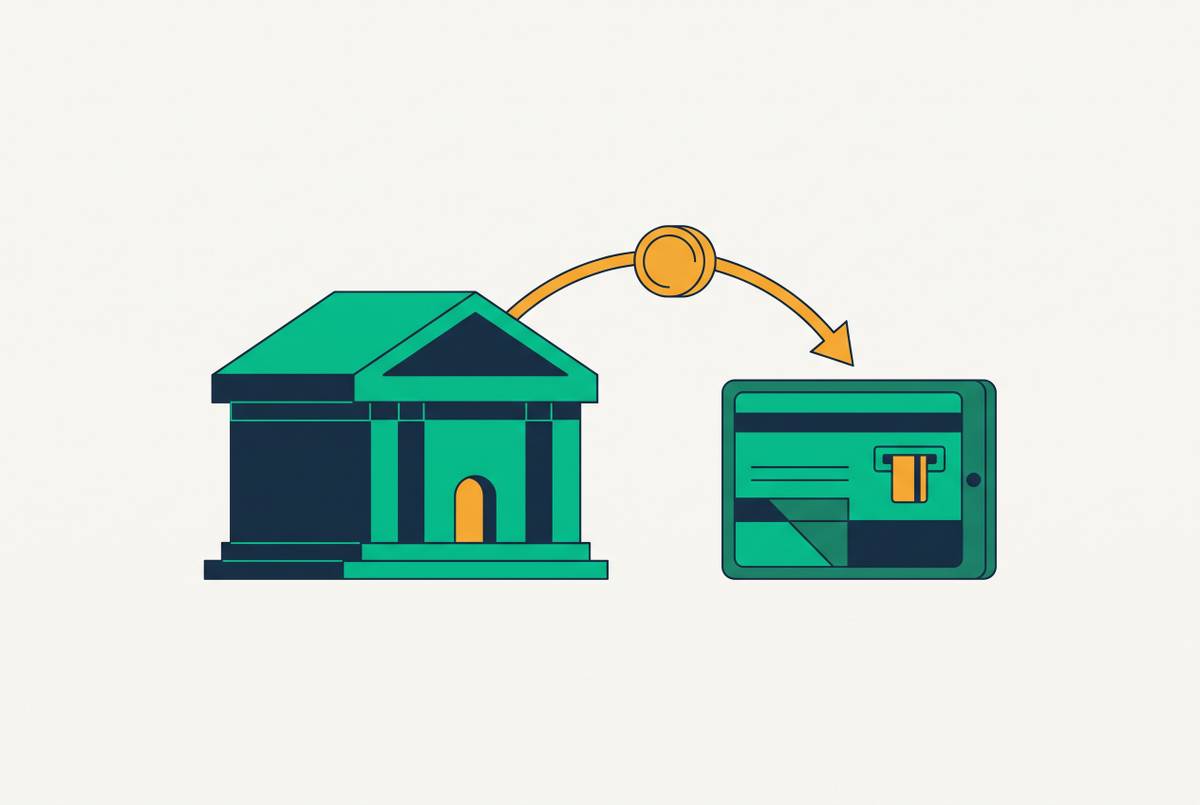
Nacha’s framework names five parties in every ACH transaction, though this section focuses on the work that four of them do. Those five are the Originator, the originating financial institution, or ODFI, the ACH Operator, the receiving financial institution, or RDFI, and the Receiver. The Receiver completes the chain as the payment’s recipient. Each payment passes through this structure regardless of its amount or type, so safety depends on how the roles connect.
The Originator must obtain valid authorization before initiating an entry. The ODFI accepts those instructions, validates them against Nacha’s technical standards, and transmits them into the network. That role brings direct legal exposure to Nacha for the transactions it sends. ODFI status is therefore a choice. Some financial institutions decline it because of the associated compliance requirements.
The ACH Operators, FedACH and EPN, are fully interoperable, allowing payments to cross between them without limiting a bank’s counterparty reach. The RDFI then receives and posts the entries. Its role does not end with posting. The 2026 rules expressly require receiving-side monitoring, so responsibility for fraud also falls on institutions that receive payments.
What "delayed finality" actually means for bank-initiated risk
The American Bar Association’s Summer 2026 analysis describes ACH as balancing payment speed with error resolution, including the ability to cancel or reverse a payment after it has posted, a feature known as delayed finality. For credit push and debit pull transfers, the reversal window extends for five banking days after settlement. That gives institutions a corrective window, but it also leaves recipients facing uncertainty for several days.
The practical limit is how quickly funds move. Fraudsters can move money out before the reversal window closes, so time allowed for correction is not the same as time available to prevent loss. Faster fraud makes that distinction more important. An ODFI cannot treat the existence of a reversal process as a substitute for detecting suspicious instructions before transmission.
Return-rate thresholds provide another view of origination risk. Unauthorized debit returns under Nacha return code R10 have a threshold of 0.5% of ACH debit entries. Administrative returns under codes R02, R03, and R04 are counted together and checked against a set percentage of debit entries. Breaches can signal systemic origination failure and trigger Nacha sanctions against the ODFI. These are useful tripwires, but they describe problems that have already reached the network.
What the 2026 Nacha rule changes actually require, and who they require it of
The 2026 amendments broaden fraud monitoring beyond WEB debits and Micro-Entries to all ODFIs, non-consumer originators, third-party service providers, or TPSPs, and third-party senders, or TPSs. They also establish a parallel obligation for RDFIs to monitor incoming ACH credits. Coverage is broader on both sides of a payment. Detection can no longer rest solely with the party that sends it.
Phase 1 took effect on March 20, 2026, covering large originators, third-party service providers, and large receiving institutions within its scope. The originator threshold uses 2023 origination volume, while large RDFIs fall under a separate, higher receipt-volume threshold. Phase 2 extends coverage to the remaining covered participants regardless of volume, with June 22, 2026 as the operational deadline. The phased application changes timing while preserving the underlying duty.
Covered institutions must set up and use risk-based processes reasonably designed to spot entries that may be unauthorized or authorized under false pretenses. They must review those processes at least annually and update them as risks evolve. “False pretenses” explicitly covers business email compromise, or BEC, vendor impersonation, and payroll diversion. The rules remain neutral about technology. They allow participants to work without automated screening or checking every payment, but procedures must fit the participant’s role, risk profile, and payment activity.
Separate changes effective March 20 standardize Company Entry Descriptions. PAYROLL applies to PPD credits for wages, salaries, bonuses, commissions, and independent-contractor payments, but excludes expense reimbursements. Nacha’s guidance says that retirement and pension payments made as PPD credits may also need PAYROLL. PURCHASE applies to WEB debits for e-commerce or online retail purchases of physical goods, excluding services, digital goods, and event tickets. Correct descriptions are part of compliance too.
The funds-availability change drops the 5:00 p.m. local time condition for non–Same Day ACH credits and requires the funds to be available by 9:00 a.m. local time on settlement date. That affects posting schedules and cash forecasting. Updated definitions also clarify when a payment qualifies as an International ACH Transaction, or IAT.
Why the shift from "commercially reasonable" to documented, annual-reviewed procedures is a meaningful compliance upgrade
The earlier “commercially reasonable” fraud-detection standard was narrow in both reach and specificity, applying to WEB debits and micro-entries. Its wording left room to defend a practice without showing a developed control process. The new standard asks for something more concrete. Written procedures and recurring review make the institution’s choices visible to an auditor, rather than leaving adequacy to an account of informal practices.
That changes what a compliance file must demonstrate. An ACH risk assessment needs to connect identified risks to controls and the 2026 requirements. Authorization procedures must address payee identity and changes to payment instructions, while monitoring must reflect typical behavior, seasonality, volumes, and counterparties. Responsibility and escalation paths must also be clear across banking and service-provider relationships. The annual review creates a recurring obligation even when no fraud has occurred.
A lower-volume originator and a high-volume institution will not necessarily need the same procedures, and documentation alone does not establish that either approach works. But written decisions and annual reviews give auditors records they can check. The compliance upgrade is therefore not the removal of judgment, but the requirement to explain it against a record of controls and evolving risks.
Where legacy ACH monitoring infrastructure falls short of what the new rules require
Legacy ACH systems were built to handle batches and review files at the end of the day, with no continuous checks against payment behavior. Their strengths do not necessarily match the new fraud scope. Technical checks can identify anomalies in an entry without determining whether a convincing instruction came from an impersonator. BEC, vendor impersonation, and payroll diversion take advantage of weaknesses in the authorization chain as well as the transmission process.
Same Day ACH makes that mismatch more consequential. When settlement happens faster, a review process built for overnight batches leaves less time to step in. The rules do not prescribe continuous automated screening, but risk-proportionate monitoring must account for the time available to act. A control’s speed therefore belongs in assessments of both its adequacy and its operational convenience.
RDFI systems built primarily to receive and post entries now have to support risk-based monitoring of incoming credits. Meanwhile, transaction-monitoring systems do not automatically create the governance record needed for annual review. Alerts are only part of the evidence. An institution also needs records of decisions and resolutions, so adding another detector cannot by itself close the compliance gap.
What a compliant, auditable fraud monitoring posture looks like in practice
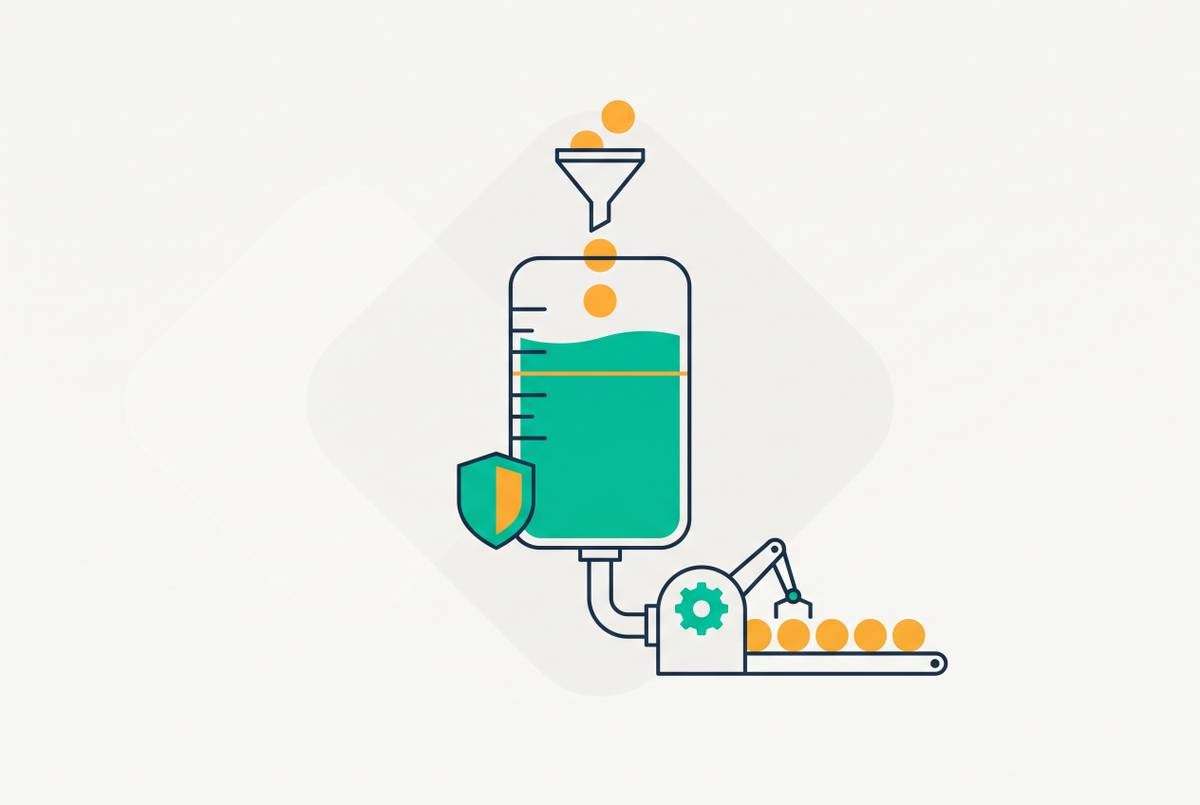
A defensible monitoring posture joins proportionate detection, pre-transmission authorization gates, and a complete decision record. The detection method can vary with the institution. Manual dual-control procedures may work for an originator that handles fewer payments, while automated anomaly detection may work for an operation that handles a high volume. The essential connection is between the chosen approach and the documented risk assessment, rather than between compliance and a particular product.
J.P. Morgan’s Nacha preparation guide lists account validation services, account confidence scoring, and Payment Control Center as tools that can help with monitoring. Those tools address parts of the problem. For BEC and vendor impersonation, monitoring also needs verification of payee identity and attention to sudden changes in payment instructions or beneficiaries. Volume and velocity checks alone do not address that authorization risk.
The most defensible intervention point is before transmission. Human review or system-verified approval of a suspicious entry allows it to be stopped without relying on reversal. That decision must then become part of the audit record. Flagged transactions, review decisions, overrides, and resolved alerts need documentation as a designed output, because an annual review requires records that can actually be examined.
SOC 2 certification is relevant to demonstrating the security of third-party tools in the ACH execution chain. It does not replace the institution’s own monitoring and decision records. A compliant posture connects the security of the tools with evidence of how those tools support the institution’s controls.
How the ODFI's governance responsibility changes when AI agents are in the payment execution chain
An AI agent can mediate a payment decision without changing who answers for the resulting entry. The ODFI remains legally responsible to Nacha for every transaction it transmits, whether a person or an AI system generated the instruction. There is no AI carve-out in the rules. Consequently, an agent’s payment decisions must be as auditable as a human operator’s.
An agent processing instructions without verification is vulnerable to the same kinds of deception as a person who fails to confirm a change. Automation does not establish that an instruction is genuine. Governance therefore has to authorize the action before execution through scoped permissions, human checkpoints for high-risk entries, and kill switches.
Federal agencies’ revised model risk management guidance, SR 26-2, became final and effective in April 2026 but explicitly excludes generative and agentic AI. Existing ACH accountability remains in force while comprehensive guidance for those technologies awaits finalization. Institutions must build controls and audit records into how they execute payments while they wait for an AI-specific framework.
Configurable controls set what an agent may do, while pre-transmission gates set when a payment may go ahead. The audit log must keep a record of those decisions for review.
The practical steps treasury and compliance leaders should take now
With Phase 2 already in effect, readiness is a present compliance test. Treasury and compliance leaders should first check whether a current ACH risk assessment clearly links controls to Nacha’s fraud-monitoring requirements. A general risk assessment is not enough. Institutions that have not documented and tested their monitoring procedures have a current compliance gap.
The next test is whether written procedures describe the controls actually in use and support a formal annual review. Leaders should schedule that review if none has been completed since the applicable March or June effective date. The evidence must extend beyond policy documents. It should include the decision records needed to examine how alerts were handled, including overrides and resolutions.
ERP templates and payroll files should populate PAYROLL and PURCHASE where applicable, and funds-availability posting should reflect the 9:00 a.m. local time requirement rather than the prior 5:00 p.m. condition. These are separate compliance obligations.
Finally, leaders should clarify responsibilities and escalation paths with the ODFI and third-party providers, and verify that tools meet the security standards needed for vendor documentation. Where AI participates, the same review should test permission controls, authorization gates, and the completeness of its audit record. With the June 22, 2026 deadline past, the institution’s procedures and evidence available today must be able to withstand a Nacha audit.