Board-Level AI Oversight Responsibilities at Financial Institutions
Directors must tie each AI agent's authority to controls and owners.

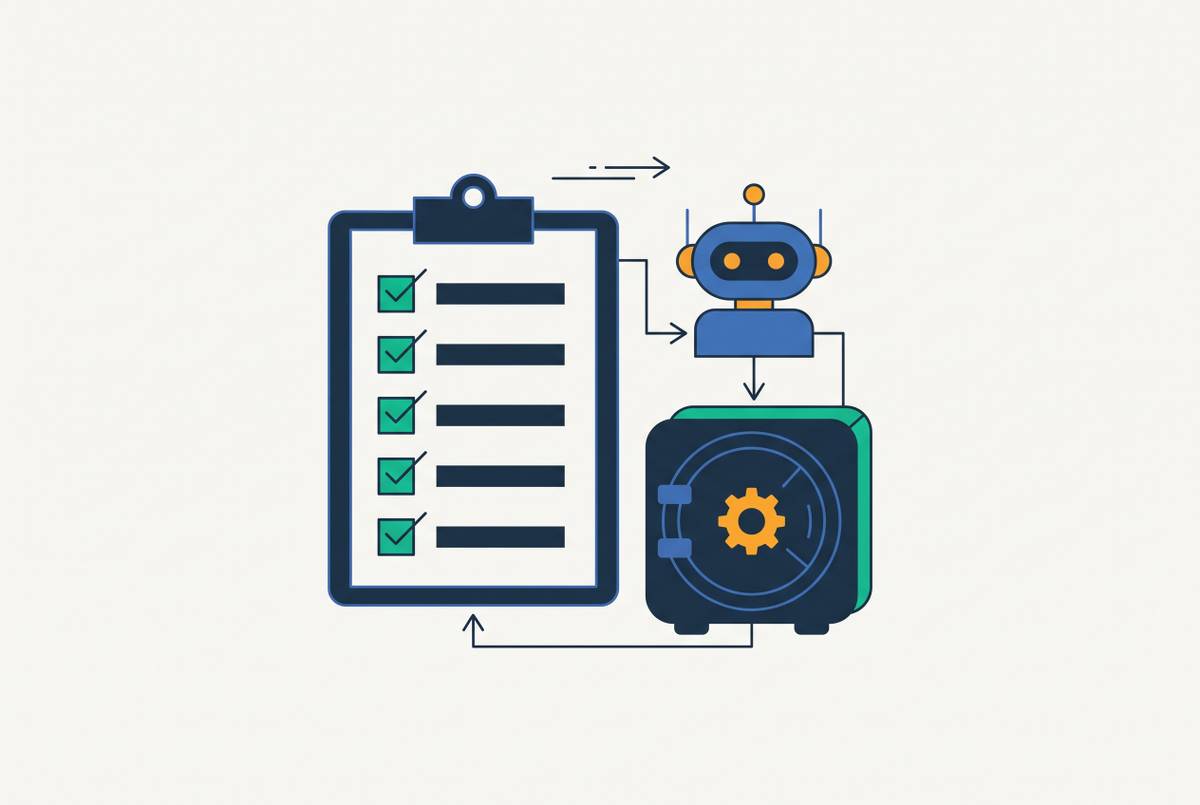
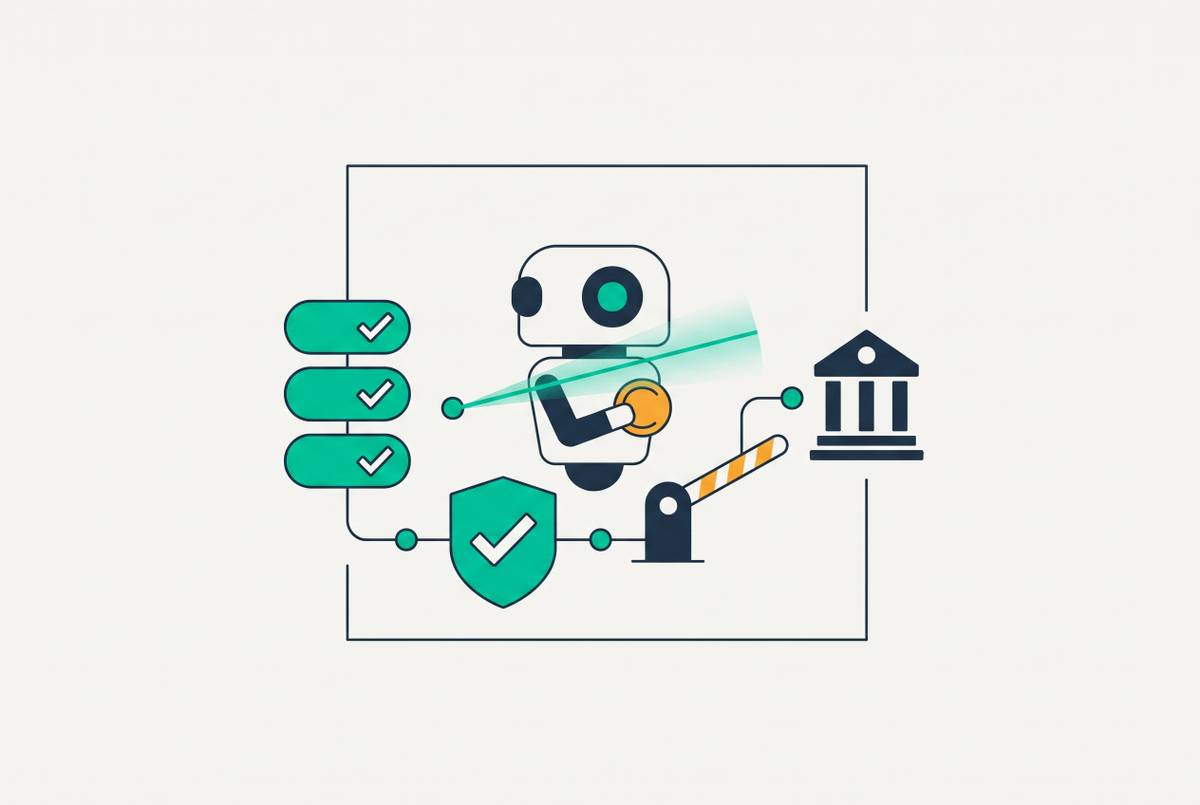
Board-level AI oversight at financial institutions is about more than approving a policy. When AI agents execute banking transactions, directors must be able to link what each system is allowed to do to its controls, the evidence, and the people who answer for it. The regulatory direction makes that responsibility explicit. The practical test is whether the bank can explain what an agent was allowed to do, how its actions were governed, and who authorized it.
Why the FSB's October 2026 guidance changes the board's position from advisory to accountable
On October 15, 2026, the FSB published its final report on Sound Practices for Responsible Adoption of AI. The report places the board and senior management at the center of decisions about whether AI adoption fits the institution’s business model, risk appetite, and strategy. Its 12 sound practices fall into two groups, organization-wide governance and the AI lifecycle from its start to its retirement. Oversight must therefore continue after a technology investment is approved.
The FSB explicitly encourages boards and senior management to reference the practices when developing and refining governance, risk management, and control frameworks. Glass Lewis research found that just over half of large-cap companies say they have board-level AI oversight, while fewer than one-third say they have both oversight and a formal AI policy. Disclosure does not establish how well a board governs, but the gap shows how uneven the visible foundations remain. Investors are already voting on AI governance disclosures, which puts more pressure on boards to spell out what they are responsible for.
What the U.S. regulatory picture adds and where it leaves banks exposed
For U.S. banks, the rules at home make this work harder to navigate while leaving it just as urgent. In April 2026, the FDIC, Federal Reserve, and OCC published revised Model Risk Management guidance that explicitly excluded generative and agentic AI from its formal scope. The agencies described these technologies as “novel and rapidly evolving” while still expecting appropriate governance and risk management for AI systems in use. The distinction is precise. Being outside formal MRM requirements does not put a system outside the expectation of sound governance.
Treating the exclusion as permission to do nothing creates legal and supervisory exposure because the underlying expectation remains. Banks cannot rely on formal scope alone to decide which risks deserve attention. State AI regulations are also proliferating, while courts will increasingly adjudicate matters involving AI risk. A board waiting for a single federal standard would therefore be waiting while other sources of accountability develop around it.
Why agentic AI in banking creates a different category of board risk than earlier AI deployments
The reason this gap matters becomes clearer when AI moves from recommending an action to carrying it out. Insight-generating AI can give a person an output to review before they act. Agentic AI can start payments, route transfers, and trigger compliance checks at machine speed across more than one system. It may have broader system privileges than any single human operator, so people cannot review every action before it happens at scale. Governance built around reviewing recommendations is therefore not enough for software with authority to act.
FIS introduced a Financial Crimes AI Agent in partnership with Anthropic, with BMO and Amalgamated Bank among the first institutions to deploy it. Fiserv launched agentOS, providing another example of agentic systems entering banking environments. Both vendors emphasize governed environments where agent decisions are traceable and auditable. These examples make the issue concrete without suggesting that every agent has the same authority. The board needs to understand the actions permitted in its own deployment.
The FSB’s practice (x) calls for human oversight that fits the task and works, while practice (v) calls for materiality and risks to be assessed in a systematic way at the start and afterward. For agents, that later assessment matters because a foundation model update, an orchestration change, or an external API modification can alter behavior without changing the visible interface. Authorization must therefore be reconsidered as the system changes, rather than treated as permanently settled at deployment. AI cannot bear legal responsibility or exercise professional judgment as contemplated by law. Accountability runs through the people and governance structures that authorized and validated it.
The six specific oversight duties the board must own when AI executes transactions
The first duty is strategy and risk appetite alignment. The board must set and monitor whether AI adoption fits the bank’s business model, strategy, and tolerance for risk. That requires an inventory of the AI systems executing transactions and the authority each holds. The inventory connects a broad statement of risk appetite to actual permissions. Without that connection, directors cannot judge whether the authority granted to an agent is proportionate to the risk the institution has agreed to accept.
The second duty is a governance framework with clearly allocated roles. The FSB’s second practice calls for well-defined responsibilities. Banks must identify who owns each system, who may authorize changes, and who answers when it misfires. Committee accountability also needs to be clear. Glass Lewis research found that most large-cap companies assigning board AI oversight gave it to a specific committee, most commonly audit or technology. That choice matters because it shapes the questions asked and the depth of scrutiny, rather than merely deciding where a report appears on the agenda.
The third duty is to bring AI risk into the institution’s existing risk management framework. The FSB’s third practice pairs that integration with thorough documentation of how AI is used. For a bank, AI-driven payment execution risk belongs in the same framework as credit risk, operational risk, and liquidity risk, with the same escalation paths. A separate AI silo would detach the technology from the financial and operational consequences of its actions.
The fourth duty is to set explainability standards and understand the compensating controls used where appropriate. The FSB’s practice (viii) addresses explainability and compensating controls, recognizing that the issue cannot be reduced to a demand for a clearer model. A compensating control is a structural check on errors. In lending, regulators are examining adverse action explanations, fair lending bias in machine learning models, and auditability within agentic workflows. Directors therefore need to know which systems rely on which controls and what those controls are intended to catch.
The fifth duty is ongoing performance evaluation. The FSB’s practice (ix) calls for evaluation proportionate to materiality and risk, including performance assessments, testing, and ongoing monitoring. For agentic payment systems, uptime and transaction volume alone do not answer whether execution is reliable. The bank must also check the system’s exception-handling logic, settlement failure rates, and regulatory edge case handling. These questions about how the system behaves when execution becomes difficult make validation a recurring board-level agenda item.
The sixth duty is third-party AI dependency risk. The FSB’s practice (xii) addresses providers whose models, APIs, or embedded tools support the bank’s agents. A vendor update can change agent behavior without the institution’s knowledge or authorization, so provider dependence is also dependence on someone else’s change process. Visa’s Intelligent Commerce program and Mastercard’s Agent Pay initiative cover agent authentication and authorization within the card network rails already in place. Boards must track these layers of dependence even when AI uses financial infrastructure that is already in place.
What a real audit trail requires when AI initiates or executes a financial transaction
These six duties become defensible only when the bank can produce evidence of how they worked for a transaction. A complete audit trail must identify which model version produced the output and which policy and authority governed the agent at that time. It must capture the data consumed, the execution decision and its reason, and when each element was last authorized by a human with appropriate authority. Together, those records connect the action to the conditions under which it was permitted. A record of the outcome alone cannot establish that connection.
The FSB’s practices on explainability, compensating controls, and human oversight provide the basis for this evidence requirement. If the bank cannot reconstruct those elements, the board has only a partial view of the transaction it is responsible for overseeing. Because legal responsibility stays with people, the trail must lead back to a human authorization chain. The board’s reasonable reliance runs through the people who validated the system and the controls they established.
Transactions that flow through core infrastructure already pass through systems that keep audit records. An AI execution layer can be designed to append its evidence to those records rather than bypass them or create a parallel record structure. That is an opportunity to preserve the link between execution and oversight, with the completeness of the required fields still to be established. A SOC 2 reference likewise belongs at the compliance floor, alongside the requirement for transaction-level evidence.
How voice and conversational interfaces for banking transactions change the oversight calculus
Voice and text interfaces that execute banking transactions make the need for clear authorization especially easy to see. Banks are already using interfaces this way. Consumer acceptance is higher for fraud-alert calls and authentication than for AI-initiated transactions or personalized recommendations. That difference matters because trust in one task does not establish trust in another. Governance demands the most when an interface gains authority to move money as well as share information.
Voice biometric authentication also faces a concrete threat from AI voice cloning. A significant majority of U.S. banks are reassessing voice biometric authentication because of that risk. The FSB’s practice (xi) covers AI-related cyber and information and communication technology risks, including their incorporation into tests and exercises. Voice cloning therefore belongs within the board’s cyber and ICT oversight, rather than being treated only as an interface concern. The board must check whether the identity controls are strong enough for the transaction authority it grants.
Before a voice agent executes a transfer, the board needs to be able to trace the authorization chain. That means knowing who approved the agent’s authority to act on a voice instruction, what identity verification applies at each transaction threshold, and how exceptions are logged and reviewed. Speed does not require abandoning this evidence. A voice interface can log the instruction, verification result, governing policy, and outcome as it executes the payment.
Why the board's AI literacy gap is itself a governance risk, and how to close it
The strongest objection is that directors are being asked to govern technology that regulators themselves have not fully scoped. That legitimate concern increases the value of board-level AI literacy while leaving accountability intact. Practical literacy means understanding enough about authority, change, and evidence to probe management’s assurances. A board unable to distinguish an agent’s recommendation from its permission to execute cannot adequately judge the controls around it.
The FSB’s fourth sound practice, organisational adaptability, applies to directors as well as technical staff. Governance that does not change as AI changes can become structurally outdated within months. At the same time, banker skepticism reflects a genuine tension between fintech-speed deployment and the risk and compliance frameworks governing financial institutions. Dismissing either side makes that tension harder to manage. The FSB’s commitment to monitor developments and update its practices reinforces the need for living oversight.
Directors can bring that responsibility into their next meeting through four practical questions. They should ask which AI systems are carrying out real transactions today. They should ask what authority each holds. They should ask who can change that authority and under what process. Finally, they should ask what the audit trail looks like and when it was last tested.