Robotic Process Automation Limitations in Modern Banking
Why bots stall in banking, and the architecture that gets past them.

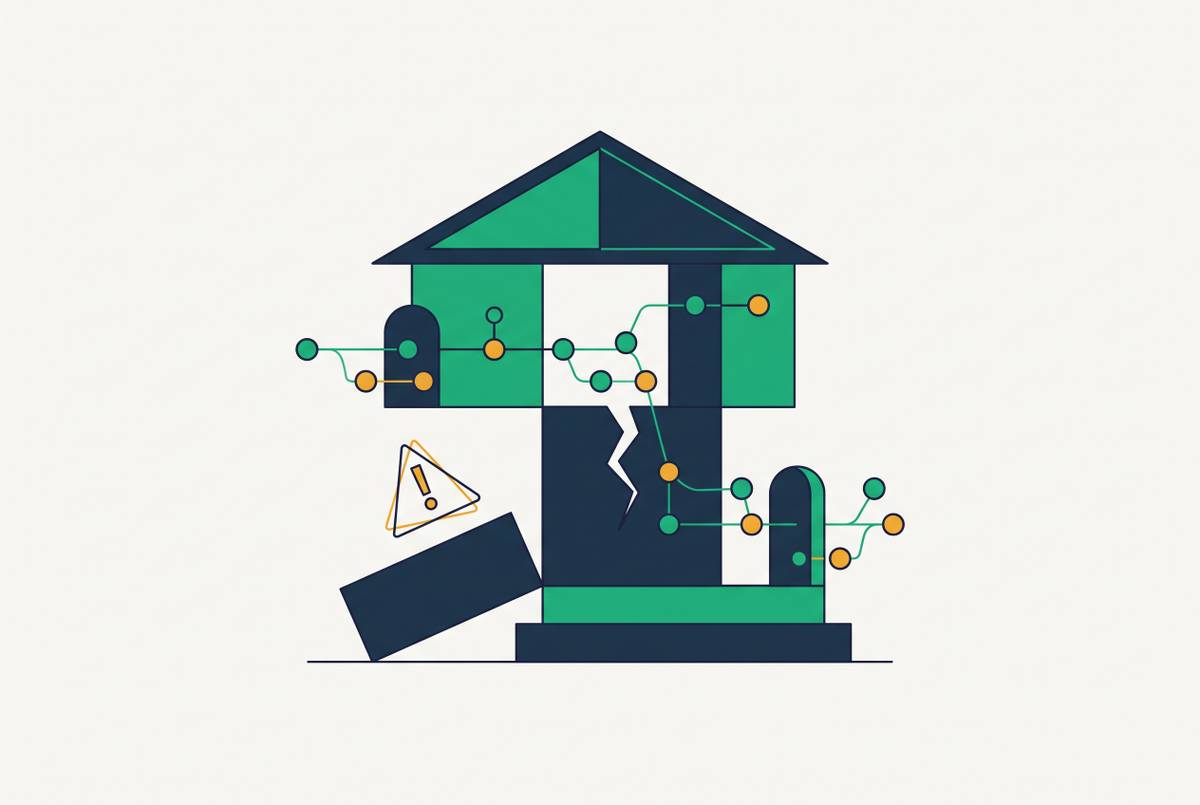
RPA’s limitations in modern banking come from the same design that made it easy to adopt. A bot can repeat a fixed process without rebuilding the systems beneath it, but it cannot absorb the variation that banking work produces. Moving past that ceiling means separating routine execution from interpretation and judgment, while making every consequential decision reproducible and auditable.
What RPA actually does in banking and why banks adopted it
RPA bots mimic the actions people take on existing screens. They enter values, move between fields, and carry out predefined steps without requiring API integration or core system replacement. For banks with legacy cores, that was a quick way to automate work while keeping the technology stack in place.
Banks deployed attended bots to help staff with parts of a process and unattended bots to run batch work overnight. Both modes depended on stable, structured inputs. Account reconciliation, report generation, payment file handling, regulatory report assembly, and standard customer correspondence fit that pattern when their inputs and screen layouts remained predictable. The bot did not need to understand the work because someone had already specified the path through it. That dependence on a prescribed path was both its appeal and its limit.
The four structural failure modes that define the RPA ceiling in banking
The first failure mode is dependence on structured data. Emails, scanned documents, PDFs, and handwritten forms hold information that has to be read and understood before a process can use it. RPA alone cannot reliably turn those varied inputs into the predefined fields its script expects. When information departs from the expected pattern, a person must intervene because a system built to repeat instructions faces work that first requires reading.
The second failure mode is screen and interface fragility. A bot is bound to the interface its script was written for, so a changed field label or a moved button can stop it. Format changes create a related problem when a document no longer puts information where the bot expects to find it. A changed invoice template can lead to incorrect extraction or send the document into an exception queue. Either outcome shifts work back to people, while repeated repairs erode the return on the original automation.
The third failure mode is exception handling at scale. A fixed script follows the path it knows, but banking cases often depart from that path in ways that require context and judgment. A three-way match between purchase order, goods receipt, and invoice can encounter partial shipments, quantity variances, price discrepancies, or currency mismatches. If each case that leaves that path goes to a person, the exception queue turns from a place where work waits briefly into a backlog. Staff remain embedded in the process, and the volume completed automatically says less about value than the cost of what remains.
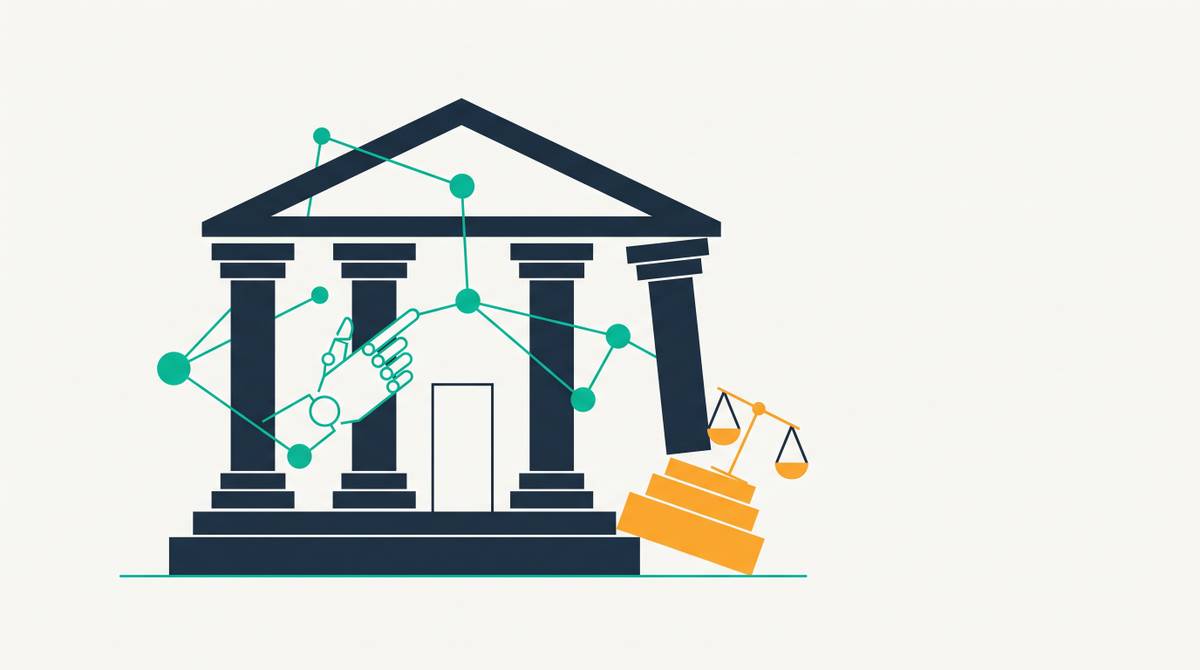
The fourth failure mode is limited auditability for consequential decisions. A bot’s execution log records its actions, but that is not the same as recording the rule applied and the data used. An entry showing that a value went into a field does not explain why an invoice was coded to a particular cost center. An examiner needs the basis for the decision as well as evidence that an action occurred. The gap in recorded business reasoning compounds the other failures because the institution must be able to explain the outcome of a difficult case after completing it.
Why the RPA ceiling is hit faster in banking than in other industries
How regulations are read changes over time, as do reporting formats and compliance requirements. Each change can mean that bots need to be reconfigured, and that work can spread across a large bot estate. In industries with more stable processes, a script can remain useful for longer without intervention. In banking, maintaining the script is a recurring part of operating it.
Loan applications include scanned pages, handwriting, and paperwork that varies from case to case, while replies and attachments in customer correspondence do not follow a fixed schema. AML and fraud work needs context as well as field matching. Finance operations also receive documents in different formats from vendors and counterparties, including structured EDI, PDFs, and scanned paper. These are not unusual inputs at the edge of the workflow, but part of the work itself.
More maintenance can fix individual failures, but the bot still depends on the process staying the same. A bot must be reconfigured when the process changes because it has no mechanism for learning a new layout through experience. As complexity grows, maintenance consumes developer time and becomes another layer of technical debt. The predictable plateau is a program that completes the easy majority while leaving the costly exceptions and judgment calls with staff. Once that ceiling is understood as structural, the next question concerns the architecture that can move beyond it.
What a post-RPA automation architecture looks like in practice
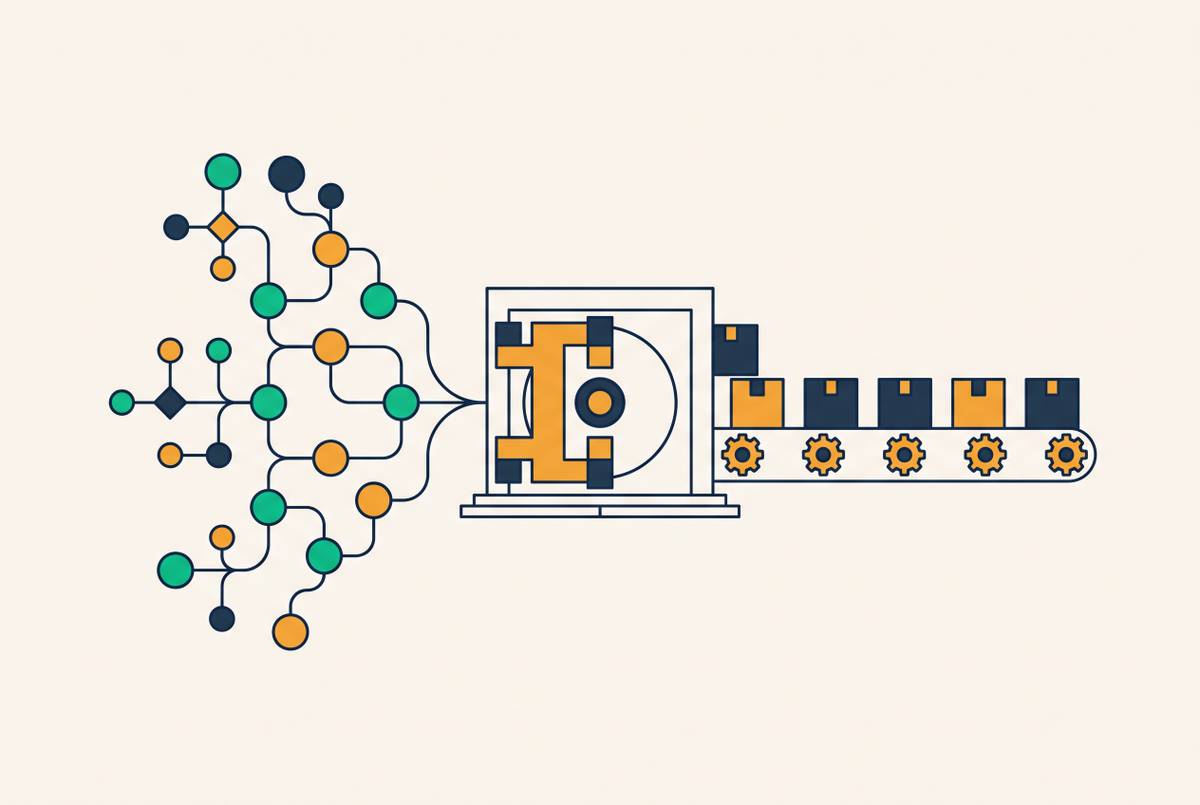
An execution layer carries out repetitive, structured tasks, an intelligence layer interprets data and reasons through cases, and an orchestration layer manages the workflow across systems. RPA can remain in the execution layer where its scripts are stable. AI takes on work that requires reading documents or understanding deviations. Orchestration connects those roles so that interpretation and execution belong to the same process without being confused with each other.
Intelligent process automation is an intermediate step in that direction. It adds document reading and machine-learning confidence scores to the scripts already in use, so they can handle more inputs. Items with low confidence scores still go to a person, so the script can handle more inputs but still relies on people for exception handling. That distinction matters when deciding what an unusual case means costs more than extracting a field.
Agentic automation goes further by taking a goal, planning the steps, and adapting when a case differs from the expected path. In banking, however, adaptation cannot mean unrestricted improvisation. AI can read documents and reason through deviations while the decision remains governed by written rules. Those rules must give the same result for the same input and leave a record that can be audited. The important distinction is between flexibility in handling the case and discretion over the rules that govern its outcome.
Banks can use this keep-wrap-replace approach with the bot estates they already have. Bots that run reliably in processes with few exceptions can stay in place. Bots that complete the routine path but generate steady exceptions can be wrapped with intelligence that handles the work around them. Bots that consume the most maintenance relative to the value they deliver are candidates for replacement.
What agentic AI does that RPA structurally cannot, and where it is already live in banking
The capability gap is clearest when work begins with an input that does not specify its own route through the process. RPA needs that route to have been written in advance. An agentic system can interpret the input, work through deviations, and plan the steps needed to pursue the goal. Responsible banking deployments constrain that ability through predefined permissions and human checkpoints on consequential decisions. Their record must cover the decision, its basis, and the resulting action.
FIS announced on May 4, 2026, that it was working with Anthropic to bring agentic AI to banking, beginning with the Financial Crimes AI Agent. FIS’s October 2026 general availability announcement provides a concrete example of that transition in financial crime investigations. The significance is the type of work involved, since an AML investigation requires context that a fixed sequence of field matches cannot supply. This puts agentic automation in a process where the limits of scripted execution are directly relevant. It does not make the governance of that process any less important.
Other banking deployments carry out real transactions through voice or text on institutions’ existing systems. This differs from an assistant that only provides information because the workflow ends in an action that the bank must control and explain. Credit unions are moving into agentic deployment faster than community banks because they have fewer legacy integration dependencies to work through. The ability to interpret and act is available, but the ease of putting it into production still depends on the systems and controls around it.
Why governance and auditability requirements make the agentic design constraints non-negotiable
The Federal Reserve, OCC, and FDIC jointly issued SR 26-2 in April 2026, superseding the long-standing SR 11-7 model risk management framework. The revised guidance reaffirms model inventories, independent validation, ongoing monitoring, and governance of third-party models. These requirements make the basis of an automated decision part of the architecture from the outset. A bank needs to know which models are involved and how their use is governed. A bank would still have that duty if it replaced a brittle script with a decision process that was harder to explain.
Agentic systems also introduce a different audit problem from RPA’s missing reasoning record. An agent might get an applicant’s file, price the risk, and issue credit terms, while another might triage an AML alert. Each workflow can conclude with an action the institution must later substantiate. Delegating that authority therefore requires a record of why the action was permitted and how the decision followed the applicable rules. A record of successful execution cannot answer those questions on its own.
Ncontracts’ 2026 TPRM Survey Report found that only 9% of organizations have identified and documented which of their vendors use AI. That is a foundational gap in the knowledge needed to govern third-party models. Grant Thornton’s 2026 AI Impact Survey of banking leaders found that banks are being held back from AI results they can measure because they lack centralized, tested governance. Together, these findings point to execution of governance requirements as a binding constraint. Knowing that controls are needed is different from having them documented, tested, and operating.
This is why reproducibility is more than a preference for cautious system design. Independent validation requires decisions that can be examined against written rules, rather than improvised outcomes without a decision record. SOC 2 certification is a minimum credentialing baseline in this environment, alongside the requirement for independent validation. The institution still needs to substantiate the actions taken under its authority. The system’s reasoning record and the bank’s governance process must therefore support the same account of what happened.
Where banks actually stall between recognizing RPA's limits and deploying what replaces it
Recognizing the ceiling does not by itself prepare a bank to cross it. Among banks actively adopting AI, only 25% have moved proofs of concept into production, and only a small fraction have launched a scaled, governed AI program. The stall is driven more by organizational and governance readiness than by the availability of technology. A pilot can demonstrate a capability without establishing how the institution will operate and oversee it. That unresolved work becomes decisive when the pilot is expected to carry real responsibility.
McKinsey’s banking and AI explainer says an AI transformation involves more than a change in technology. It places the technology component, including agents and the agentic layer, at no more than roughly a fifth of the total value. More of the value comes from process redesign, change management, and putting governance in place. Internal resistance compounds the gap when employees see AI as a threat to their expertise and implementation remains unclear.
The keep-wrap-replace approach offers a lower-risk entry point because it preserves working automation while addressing the most costly exceptions. Running agents on existing banking rails also removes the need for a parallel core replacement. PaymanAI is one option in this category, executing payments, transfers, and account analysis on existing systems with configurable controls, complete audit trails, and institutional visibility into decisions. That design makes it easier to adopt agents, but banks still have to do the governance work. Moving past RPA requires deciding how to do so without recreating the governance exposure its audit gap left behind.