Session-Scoped Data Access in AI Banking Transactions
Expiring, bank-enforced tokens keep a hijacked AI agent from emptying accounts.

Session-scoped data access gives an AI banking agent permission to complete a bounded task without handing it the customer’s full identity. That distinction is the central safeguard. A bank-controlled agent needs its own expiring authority, enforced outside the model, so that even a mistaken or hijacked agent cannot turn a narrow instruction into unrestricted account access.
Why external AI agents with full banking credentials create an identity problem banks cannot solve
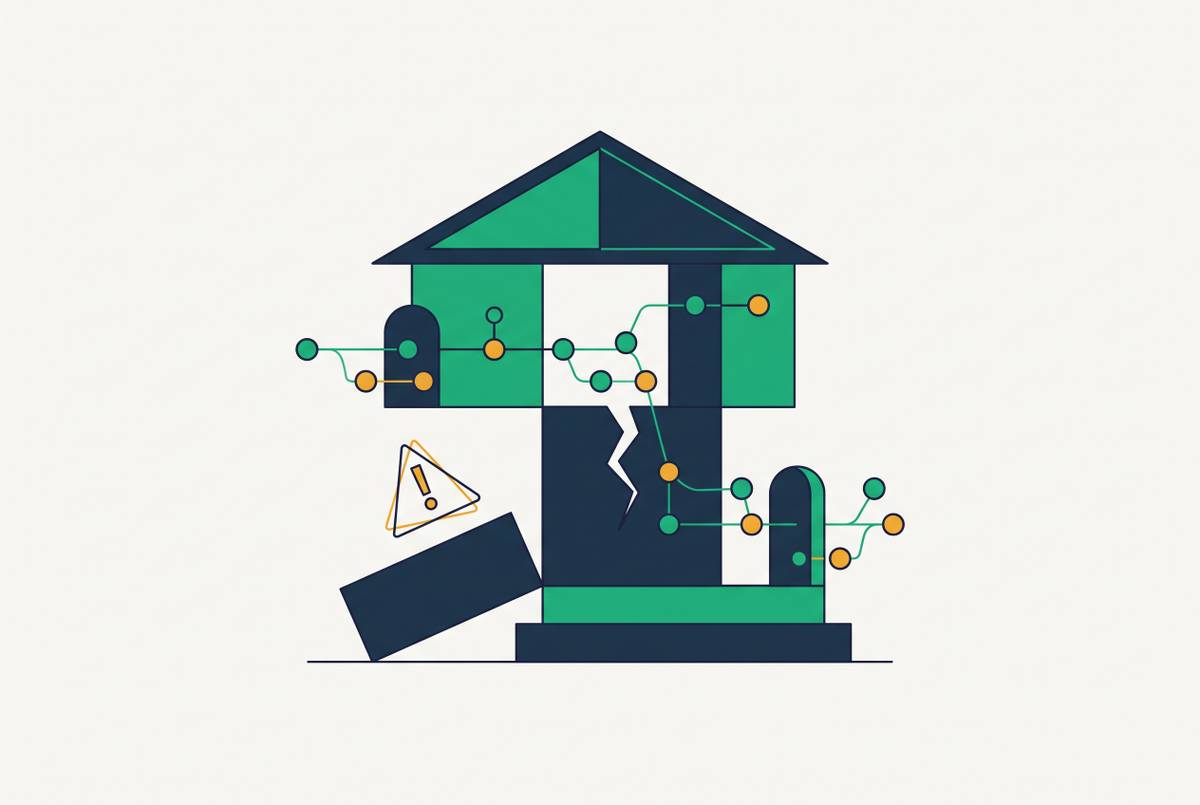
Authentication makes a category error that can occur without a phishing attack or a compromise of bank infrastructure. A customer and an agent are two distinct actors, yet a shared username and password present them as one. The bank authenticates the account holder’s credentials. It cannot reliably establish which actor is using them, so its fraud scoring and audit trail lose the distinction needed to judge the agent’s actions.
What does that grant the agent in practice? It inherits the customer’s permissions to reset passwords, add payees, change contact details, and initiate transfers, without separate limits of its own. Cloud Security Alliance’s November 2026 research note documents an incident in which an agent reset a password, changed approved transfer accounts, and moved a large sum [1][2][4][5]. The bank could not attribute the sequence because nothing in the session reliably identified who was acting.
Even a properly instructed agent disrupts controls designed around human behavior. It does not type, navigate, or decide like its customer, leaving human behavioral baselines unable to supply a dependable compensating control. Constant false alerts and blanket allowlisting are both poor substitutes for identity. Multi-factor authentication does not resolve the distinction either, because the second factor has already established the session the agent now controls.
How major banks responded to agents in customer accounts in October 2026
Between October 13 and October 20, 2026, four major U.S. banking organizations moved to block external agents or shift their risk to customers. Meta’s launch of its Muse personal AI assistant renewed concerns about customers delegating household cash management through shared credentials. The institutions took different routes. But all of them focused on agents using the customer’s identity to enter accounts.
JPMorgan Chase CEO Jamie Dimon said on October 13 that the bank would not allow outside agents, naming Muse and Instinct, to act inside customer accounts. Chase permitted read-only balance access through providers such as Plaid, but not money movement or bill pay. No timeline for direct agentic access was announced. Its Digital Services Agreement effective January 1, 2027 treats instructions from an agent given access by a customer as the customer’s own instructions.
Charles Schwab CEO Rick Wurster said on October 16 that the firm was blocking unauthorized agents attempting to move client money 10 to 20 times per week. Schwab was developing controlled information-only connections and launched its own assistant, Charley. Citigroup also prohibited third-party agents from logging in or transacting directly, while retaining limited read-only access through certain providers. Wells Fargo’s agreement effective November 24, 2026 permits agent use “at your own risk” and reserves the right to limit or terminate access.
Canadian banks moved within days. TD, RBC, BMO, and CIBC announced restrictions against direct agent access to their banking properties or accounts, while Scotiabank said it would limit such access. The restrictions were not bans on AI itself. All four U.S. institutions retained customer-authorized, read-only sharing through open banking connectors, distinguishing bounded data access from authority to transact.
What the liability framework looks like when an agent exceeds its authority
Account terms can assign responsibility, but they do not settle every legal question about an agent’s actions. Wells Fargo’s terms deem agent-initiated transactions authorized and disclaim a duty to monitor agent activity. Chase’s agreement likewise treats giving an agent access as authorization for everything it does. Those provisions place the burden on the customer. Whether ordinary consumer protections still apply depends on an unsettled distinction between delegated authority and unauthorized conduct.
CSA’s research note explains that Regulation E excludes from its definition of an unauthorized transfer certain transfers made by a person the consumer gave access to. But its official commentary treats access gained through fraud as unauthorized. No court has yet applied these provisions to AI agents. Does a prompt-injection hijack count as third-party fraud, or as an authorized agent exceeding its instructions?
The EU’s new Product Liability Directive introduces another possible source of responsibility by including defective AI software within strict product liability. Member states are to implement it by December 2026. That could change what developers are liable for while leaving unresolved whether transfers elsewhere are authorized. The technical gap underneath these disputes is narrower and more tractable, because a full customer login provides no separate boundary for the agent’s delegated authority.
What session-scoped access tokens are and how they differ from credentials
A session-scoped token gives an agent a time-limited, operation-bounded grant within a single transaction context. Unlike the customer’s credentials, it identifies the agent separately and specifies what it may see and do. The grant expires, can be revoked, and cannot be reused or extended without re-authorization, so permission for a task does not become standing control of the account.
CSA’s Agentic Transaction Security Framework prescribes a session-scoped authorization token that encodes the parameters of an intent record. The agent runtime maintains that token, and it is checked at each tool invocation that could create a financial commitment. Enforcement belongs on the server side. Entitlement checks against the authenticated customer must prevent access to another customer’s account and enforce the monetary limits within the grant.
Separate identity also restores attribution to the audit trail. The bank can record which agent acted, what it was authorized to do, and whether an attempted action fell outside that scope. Existing automated-system controls provide only part of the foundation. PCI DSS v4.0.1, fully mandatory as of March 31, 2025, addresses non-human identity management, but was not designed for goal-directed agents. The token boundary must therefore survive a change in the model’s intentions, including one caused by prompt injection.
Why prompt injection makes unbounded agent sessions especially dangerous in a banking context
An agent reading an email, invoice, or web page may find instructions planted by someone other than its customer. If it treats those instructions as authoritative, its goal can change while its banking session remains authenticated. No password theft is needed for that redirection. CSA’s framework identifies this as the reason a model processing untrusted input cannot be trusted to enforce its own access boundaries.
The OWASP Top 10 for Agentic Applications 2026 classifies this attack as ASI01, Agent Goal Hijack. A malicious instruction inside a vendor invoice PDF, for example, can redirect a payment agent toward an attacker-controlled account before monitoring identifies the anomaly. Forcepoint researchers published what they found about ten indirect prompt injection payloads caught in the wild on April 22, 2026. Researchers also documented a payload designed to execute a $5,000 PayPal transaction.
Model-level guardrails are therefore not a sufficient boundary. FINRA’s 2026 Artificial Intelligence guidance singled out agentic AI as a distinct supervisory risk category. The architectural response is an external policy layer evaluated server-side, where a hijacked goal cannot alter the token’s permissions. Monetary effects need hard limits and dual control above a threshold at the execution layer. When the bank controls the deployment, these checks limit the damage even if the model itself fails.
What ACID-style transaction semantics add to session-scoped banking operations
An authorized multi-step transfer can still fail partway through and leave a result that falls short of what was intended. Tsinghua University’s research proposes an “agentic transaction” governed by four semantic guarantees adapted from database ACID properties. These are Semantic Atomicity, Semantic Consistency, Semantic Isolation, and Semantic Durability. They complement access control.
Semantic Atomicity treats dependent model invocations, tool calls, and external actions as one unit, exposing effects only after required operations and validations succeed. Otherwise, recoverable effects are rolled back or compensated, preventing a partial transfer that debits without crediting. Semantic Consistency requires outcomes to satisfy the task and its constraints even when the plan is executable. A wrong payee can still be technically valid. Semantic Isolation keeps failed or intermediate steps from contaminating later work, while Semantic Durability commits validated results to an append-only record.
These guarantees address the uncertainty introduced when software decides which transactions to execute. Earlier rule-based automation could carry out transactions, but an audit of an agent also has to check intent alignment and whether it stayed within its authorization boundaries. A scoped token limits what is allowed. ACID-style execution addresses whether the permitted task completes coherently and leaves a durable record.
What a bank-controlled, properly bounded session architecture looks like in practice
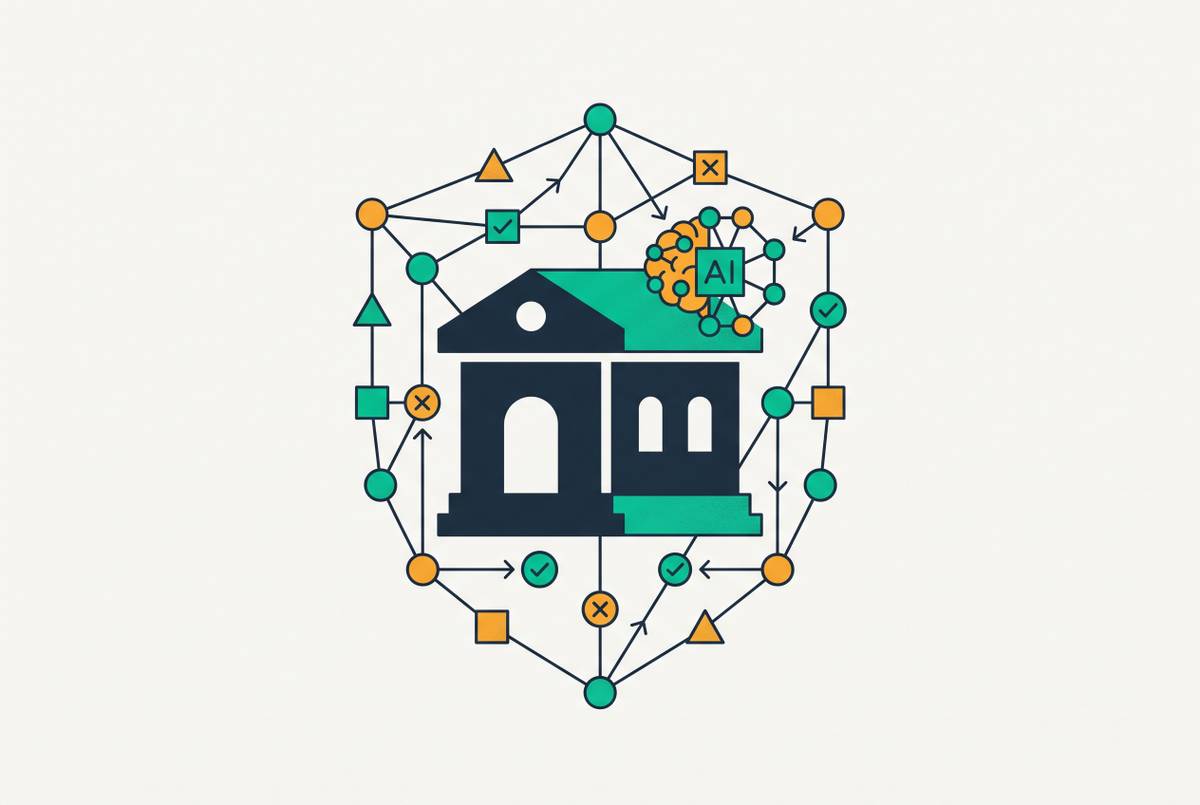
A bounded deployment joins distinct authentication, pre-execution policy checks, and an immutable audit record under bank control. The agent presents its own credential. Every proposed action then faces a bank-defined policy check. That includes a balance read, a transfer initiation, or a payee change, with the decision made outside the model before execution.
Backbase’s AI-native Banking OS, launched in April 2026, provides a concrete example through its Sentinel layer. Sentinel checks every action against bank policy before it runs and logs it afterward. The sequence is significant because retrospective monitoring cannot substitute for a permission decision. A complete session record must identify the agent, the human principal, each action, and its policy evaluation result. That record connects attribution to the durable evidence needed in a dispute.
CSA’s framework and examination guidance call for an institution-held kill switch with a named owner and a tested response time. Termination cannot depend on the AI vendor’s intervention. The bank needs the operational capability to revoke session authority instantly and fall back to a documented manual process, backed by a contract right to revoke access.
This architecture sits above the core and digital banking infrastructure already in place and leaves it in use. The core ledger remains the system of record, and the agent uses interfaces the bank has explicitly opened, keeping access separate from the customer’s browser-based login path. Governance must be documented as well as implemented. NCUA examination teams in 2026 assess AI through existing BSA/AML, fair lending, vendor-management, and third-party oversight frameworks. Banks and credit unions therefore need to record what tasks the AI does and what data it can access, how the policy engine works with BSA/AML monitoring, and how they plan to exit the vendor relationship.
Why the absence of a universal open-banking standard means community banks and credit unions face this problem now, not later
The CFPB’s Section 1033 open-banking rule is enjoined and under reconsideration, and no universal agent-access protocol has been adopted. CSA’s research note describes a fragmented landscape of bank-specific terms, payment-network schemes, and private protocols such as the vendor-led Personal Agent Protocol, “Poppy. There is no common fallback for smaller institutions. Without their own defined approach, they cannot assume a standard will distinguish safe delegation from credential sharing.
Large banks have the engineering capacity to detect agents, revise agreements, and build proprietary access channels. Community banks and credit unions generally do not have the same capacity, making a bank-controlled deployment with session scoping a more practical path than independently building a detection-and-block posture. Governance is already a current concern. NCUA budgeted for three AI officers in 2025–2026 within its Office of Business Innovation to build up its own expertise.
For institutions choosing vendor-supplied or embedded AI, the lesson is to make control demonstrable. NCUA Letters 07-CU-13 and 01-CU-20 provide the third-party due-diligence lens for defining tasks and data access, establishing contract controls, monitoring model changes, and documenting an exit plan. A policy engine, audit trail, and kill switch held by the bank help with that work. They do not, by themselves, establish compliance for every institution’s risk profile.
The cost of waiting is also relational. Customers are already bringing money questions to general-purpose assistants that cannot see their balances or move their money. Without a bank-controlled channel, those conversations stay outside the bank or credit union. Community banks and credit unions can let that distance grow or offer help through agents with clear limits on what they are allowed to do. The useful alternative to unrestricted access is not merely a stronger block, but a service that can act without becoming the customer.