Setting Up Automated Recurring Transfers Between Bank Accounts
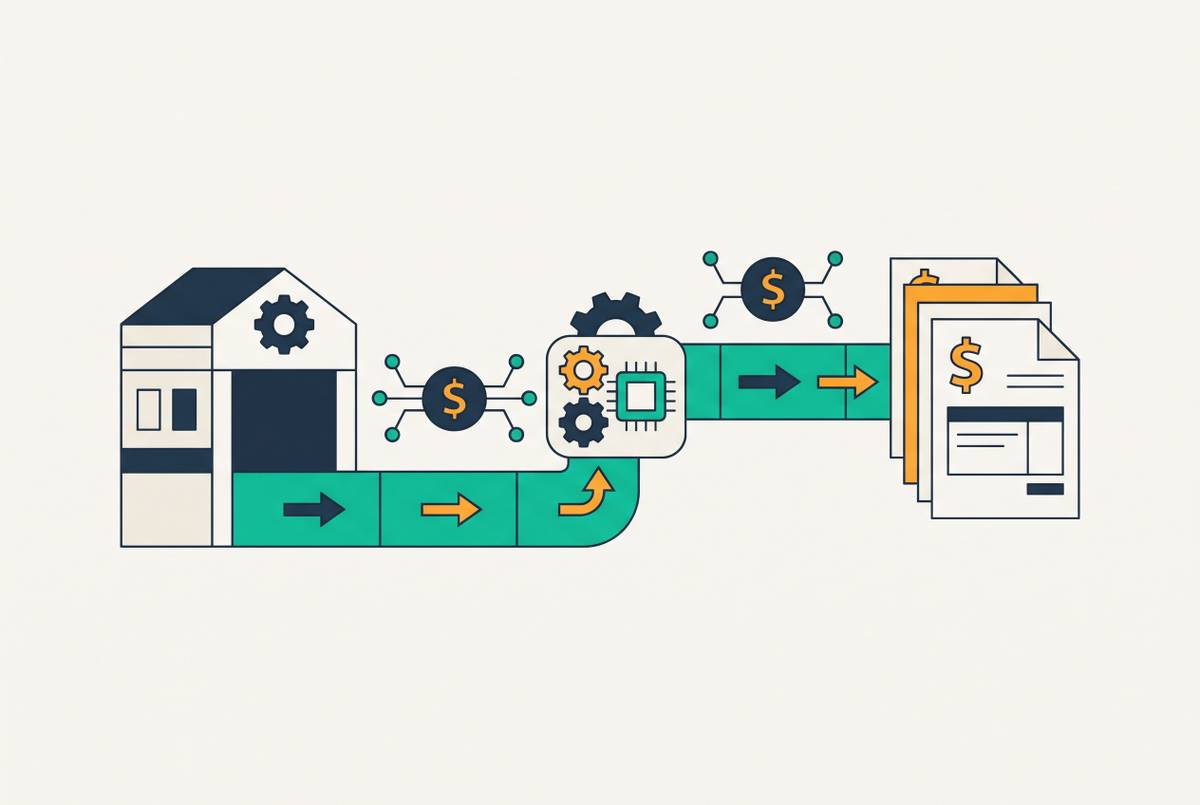
AI agents can execute transfers that adapt to current conditions instead of following fixed rules.
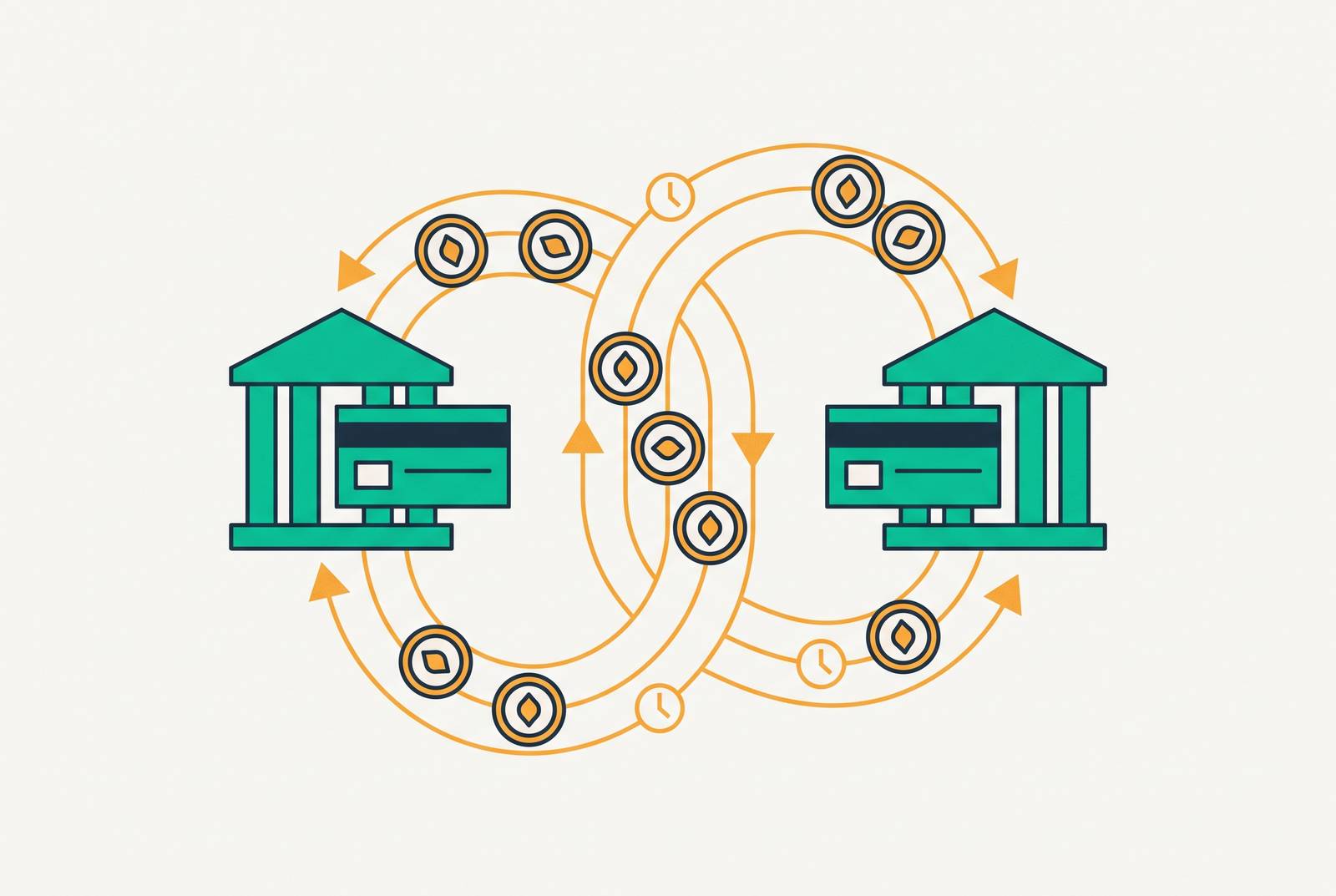
A recurring transfer is a standing instruction: move a set amount of money between two accounts, on a fixed schedule, without anyone touching a keyboard each time it runs, and the controls built into this simple process are the same ones that matter once automation gets smarter.
Setting one up takes four pieces of information. A source account and a destination account. An amount, either fixed or variable within a range. A frequency and a start date, weekly, monthly, on payday, on the first of the month. And an authorization: the account holder giving the bank permission to act on that schedule without asking again each time.
Execution happens inside the bank's own infrastructure. Most domestic transfers run over ACH rails, and each time the transfer fires, the bank runs its own fraud checks, confirms the balance can support the transfer, and checks the transaction against account limits, all automatically. None of that is new or experimental. It's been the backbone of how money moves on a schedule for years.
What separates a recurring transfer from a one-time transfer is who's deciding when to move the money, not the technology moving it. A one-time transfer is a decision made in the moment. A recurring transfer is a decision made in advance, delegated forward in time, with the bank obligated to honor both the instruction and the guardrails the account holder and the institution agreed on.
The common configurations are familiar to anyone who's used online banking for more than a year. Checking to savings on payday. Automatic loan payments that keep a balance from going delinquent. Sweeps between accounts for cash management. Scheduled bill payments. Different use cases, same underlying mechanics, different risk profiles depending on how much money moves and how often.
Where traditional recurring transfers break down under real conditions
Fixed rules work exactly as well as the conditions they were designed for, and the trouble starts when those conditions change. Paydays shift. Balances fluctuate. A savings goal that made sense in January looks different by June. A standing order has no way to notice any of that. It just runs.
The real cost occurs when a transfer fails: insufficient funds, a closed destination account, or a limit breach stop the transfer cold, and what happens next is almost always manual, someone has to notice the failure, investigate it, reach the account holder, and reprocess the transfer by hand. BCG's 2026 Global Payments Report points to exactly this kind of work, exception handling, payment investigations, trade documentation, and client service, as where manual effort still concentrates even though straight-through processing has matured for routine transactions. The routine case is solved. The exception is where the labor lives.
Corporate clients feel this more acutely than individual account holders do. Treasury teams managing cash pooling, FX exposure, and liquidity across multiple accounts are still logging into bank portals to execute transactions that, in principle, could be governed by a written policy and carried out without anyone needing to click through a screen. The policy exists. The automation to act on it, in most institutions, does not.
For individual account holders, the brittleness looks different but comes from the same root. A transfer that was right when it was set up can become wrong when income changes, an expense appears, or a goal gets revised. Fixing it means going back into the setup process and starting over, because the standing order has no way to recognize that anything changed.
None of this is a failure of the technology. Rules-based automation did what it was built to do: it removed the need for a human to manually move money every cycle. The question that follows is what a system would need to look like if it could also notice when the rule itself stopped fitting the situation, rather than waiting for a human to notice first.
Agentic AI versus autopay: from fixed rules to delegated decision-making
Agentic AI payments belong to a different category of system. Instead of repeating a fixed instruction, an agent pursues a goal the account holder defines, deciding how and when to act in order to get there. The IMF describes this in its note on agentic AI and payments as a shift from human-initiated instructions to agent-mediated decisions: the system interprets an objective, breaks it into tasks, and interacts with digital services on its own, with limited human input along the way.
BCG's 2026 Global Payments Report sketches what this looks like at the corporate level. AI agents acting directly on behalf of a CFO or treasurer, routing payments in real time based on cost, speed, and straight-through processing criteria, managing currency exposure and cash pooling within policies the institution has already defined. No portal login required. The agent is carrying out the policy, not waiting for someone to execute it manually.
Applying that same logic to a basic recurring transfer makes the difference concrete. Instead of moving a fixed amount on a fixed date no matter what, an agentic system can check the current balance, weigh it against the account holder's savings goal, confirm there's no pending obligation that would make the transfer unwise, and then execute the amount that actually fits the moment, all while staying inside the limits and rules the institution has configured.
Voice and text make this even more direct. A single sentence asking for a transfer between two accounts can, in principle, trigger an authenticated, policy-checked, fully logged transaction. That only works if the system behind the voice has two-way access to the bank's own systems, with the ability to act on account data as well as read and describe it.
A voice interface that can tell someone their balance but can't act on it is a sophisticated FAQ system. Real automation requires the system to authenticate the customer, pull the current account state, execute the transaction, and write a compliance log, all inside the same session, with no handoff to a human in the middle.
Earning a bank's trust with live transactions
A conversational AI that talks about transfers and one that actually executes them are separated by architecture, not by how convincing the conversation sounds. A bank's regulators, risk officers, and compliance team can sign off on the system only because of that architecture.
Platforms built for this kind of regulated deployment keep the language model and the decision engine apart on purpose. The language model's job is conversation: understanding what the customer wants, asking for anything missing, responding in a natural way. Every actual business decision, is this customer verified, does this transfer fit within the account's limits, runs through separate, deterministic logic, where the same input produces the same output every time.
The model talks. It doesn't decide whether money moves. Keeping the model out of the decision means execution can be inspected and reproduced after the fact in a way that a language model's own reasoning cannot.
A system trusted with live transactions needs several things working together: customer authentication before anything happens, real-time balance and limit checks, fraud screening built into the flow, execution on the bank's existing rails, and a timestamped compliance log written in the same session as the transaction. Missing any one of these means the system might still work most of the time, but it won't hold up under audit.
In production, systems built this way can handle a wide task list: blocking and replacing cards, executing transfers, changing limits, quoting FX rates, answering account questions, all without routing through a human. That's possible because the policy logic runs exactly as the institution wrote it, every time, with no interpretation drift.
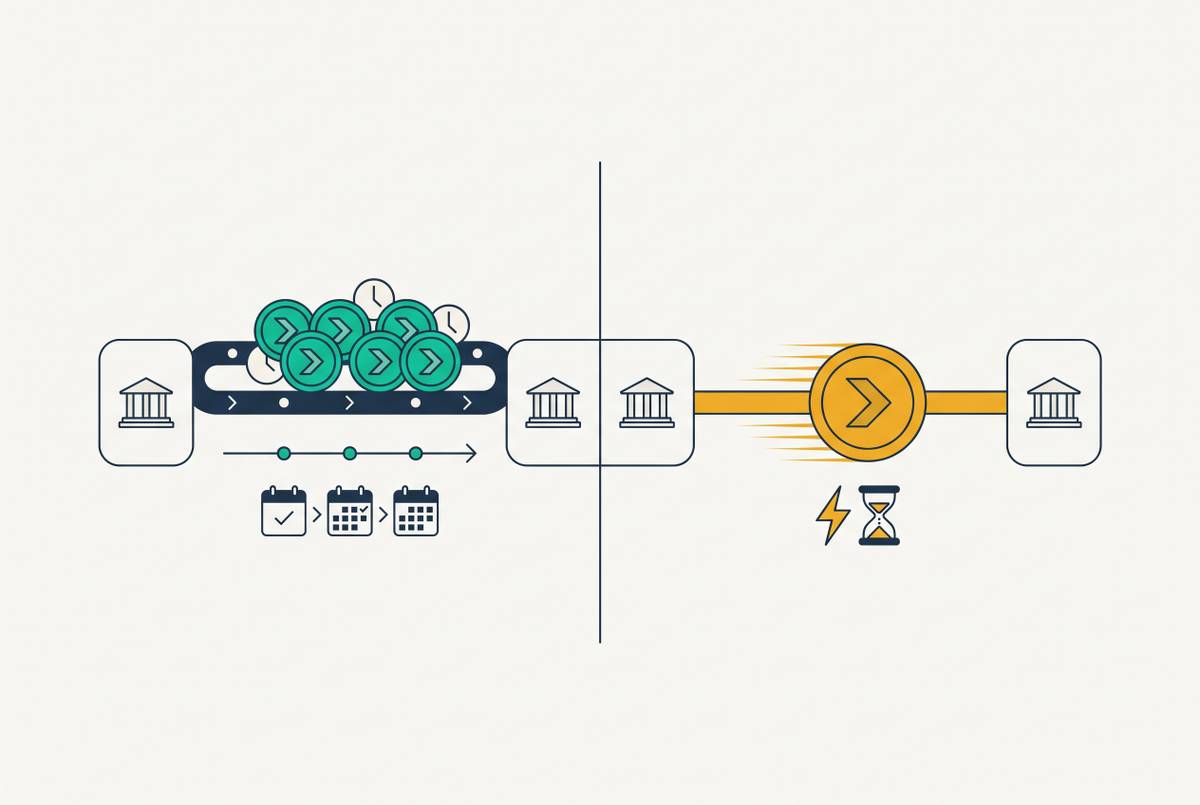
The system only works if the data underneath it is usable. BCG points to the ISO 20022 migration and the move from batch processing to real-time processing as what made this possible in the first place: the standardization forced rich, consistent data into every transaction layer. An agent can only act reliably on account state it can actually read cleanly, and that data standard is what makes the account state legible to begin with.
The compliance and auditability requirements that govern AI-driven transfer execution
The regulatory picture for AI executing financial transactions isn't a matter of waiting for rules to be written. Specific, binding standards already exist, and an institution deploying agentic automation has to be able to show it meets them.
For institutions with any EU exposure, the EU AI Act's transparency obligations for customer-facing AI took effect August 2, 2026. DORA has treated external AI APIs supporting critical functions as part of a bank's ICT risk surface since January 17, 2025. Incident classification, resilience testing, and third-party risk management aren't optional extras; they're part of the baseline.
The controls that satisfy these standards are specific and well understood: VPC isolation, immutable audit logging, data-residency controls, role-based access, and policy enforcement at the gateway layer. These map directly onto what a bank needs for SR 26-2 compliance and its own internal model risk governance. The work of meeting one standard largely satisfies the other.
SOC 2 certification confirms that security and availability controls exist, but it stops there. A bank also needs documentation at the model level, an explanation for any decision that touches account state, and a clear line of accountability running from an AI action back to a human who governs it. SOC 2 is the floor, not the finish line.
Oracle Financial Services, in extending its agentic AI platform to corporate banking in April 2026, built governance into the agent architecture itself rather than treating it as something added after the fact. That's the pattern across serious deployments: compliance and audit capability designed in from the start, not bolted on once the system is already running.
Deploying on existing banking rails as the practical path forward
The most common reason AI projects stall inside banks has little to do with model quality or regulatory ambiguity. It's the assumption that a bank has to replace its core infrastructure before it can add any of this, and that assumption doesn't hold up against what's already happened across the industry.
BCG's 2026 Global Payments Report points to the ISO 20022 migration and the adoption of real-time processing as the foundation that makes AI viable on rails banks already have. Institutions that have completed, or are in the middle of, that migration already have the data structure an agent needs to act on. The infrastructure work, in other words, is largely done before the AI conversation even starts.
Visa's approach to modernization makes the same point from a different angle: helping issuers modernize in pieces, adding capability at the edges of the system rather than asking them to wait years for a full core replacement. Incremental change, not a wholesale swap.
For recurring transfer automation specifically, this means an institution doesn't need a new core system to deploy agentic transfer management. It needs bidirectional API integration with what it already runs, policy configuration that reflects its own rules, and audit logging that satisfies its compliance team. All three can be layered onto infrastructure that's already in place.
Where banker skepticism about AI transfer automation is legitimate
Skepticism from bankers about letting AI execute real financial transactions isn't irrational, and dismissing it as resistance to change misses what's actually being raised. Some of that skepticism points at real, unresolved gaps. Some of it rests on assumptions that well-built systems have already answered.
Start with what's genuinely unsettled. Legal uncertainty around agentic payments is one of them: the financial and consumer protection laws on the books were written around human-decisioned transactions, and questions about who's liable when an agent makes an error haven't been fully worked out. Data quality is another real constraint, separate from how good any model is. An institution without a unified data strategy limits what AI can do no matter how advanced the model, and fragmented systems are why so many AI initiatives stay stuck in pilot mode instead of reaching production. Credit unions carry a specific version of this risk: member trust built over decades doesn't automatically carry over to AI-enabled interactions, and assuming it will transfer on its own is the most dangerous mistake an institution can make in this transition.
Now the objections that don't hold up as well. Systems built with deterministic execution are inspectable and reproducible: every decision can be traced, so regulators, staff, and account holders can see what the system decided and why. The claim that banks aren't technically ready doesn't match what ISO 20022 adoption and real-time processing have already solved, the primary data bottleneck is handled, and what remains is API integration, not core replacement. And the assumption that regulators simply won't allow this ignores that SR 26-2, the Treasury AI Risk Management Framework, and the EU AI Act already lay out a workable path for institutions willing to build to the standard.
The strongest objection left standing is systemic rather than institutional. BCG notes that automation now links trading, credit, and compliance systems across institutions through continuous data exchange, and that creates the possibility of correlated responses to shocks, reactions that amplify volatility instead of containing it. No single institution can fully manage that risk on its own, no matter how well it governs its own systems.
How institutions are configuring transfer automation responsibly
The institutions making real progress treated governance as part of the system's design from day one, rather than a layer added after launch to satisfy an audit.
This produces a specific governance pattern: controls configured by the institution itself, not hardcoded into the AI vendor's product. Spending limits, transaction types the agent is and isn't allowed to touch, thresholds that trigger a human review, all set by the bank's own risk and compliance teams, and all enforced through the same deterministic logic that keeps the language model from ever making a financial decision on its own.
The common thread across every piece of this, the execution layer, the compliance controls, the rails-first deployment strategy, is that auditability is treated as a feature of the system, built in alongside the automation itself rather than negotiated afterward. An institution that builds this way can show a regulator, a board, or an account holder what the system did and why, at any point, for any transaction. That's what distinguishes agentic transfer automation that's ready for live deployment from a demo that only looks ready.