Shared Branching Constraints on AI Agent Deployment
Credit unions must settle agent identity, authority, and audit trails first.
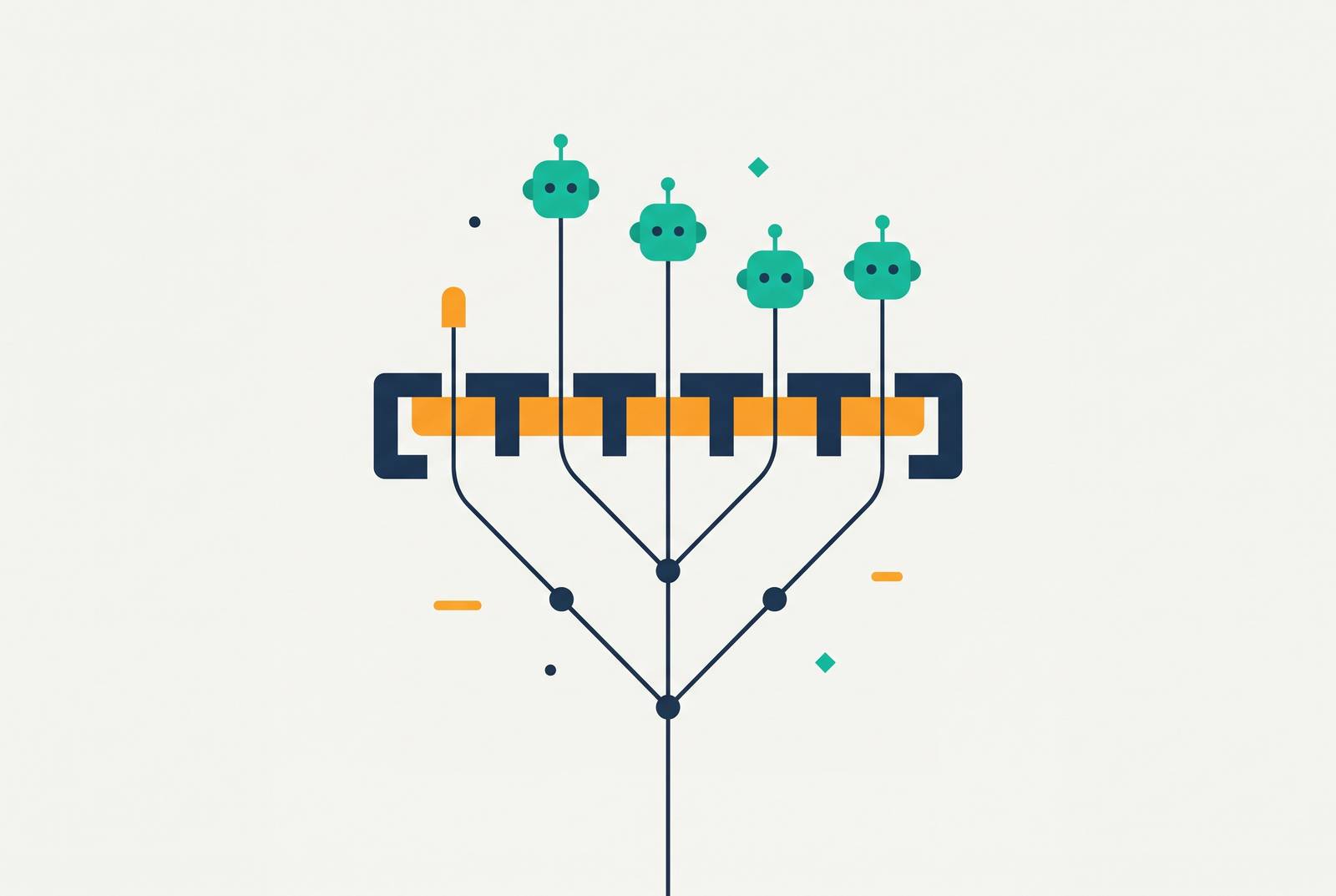
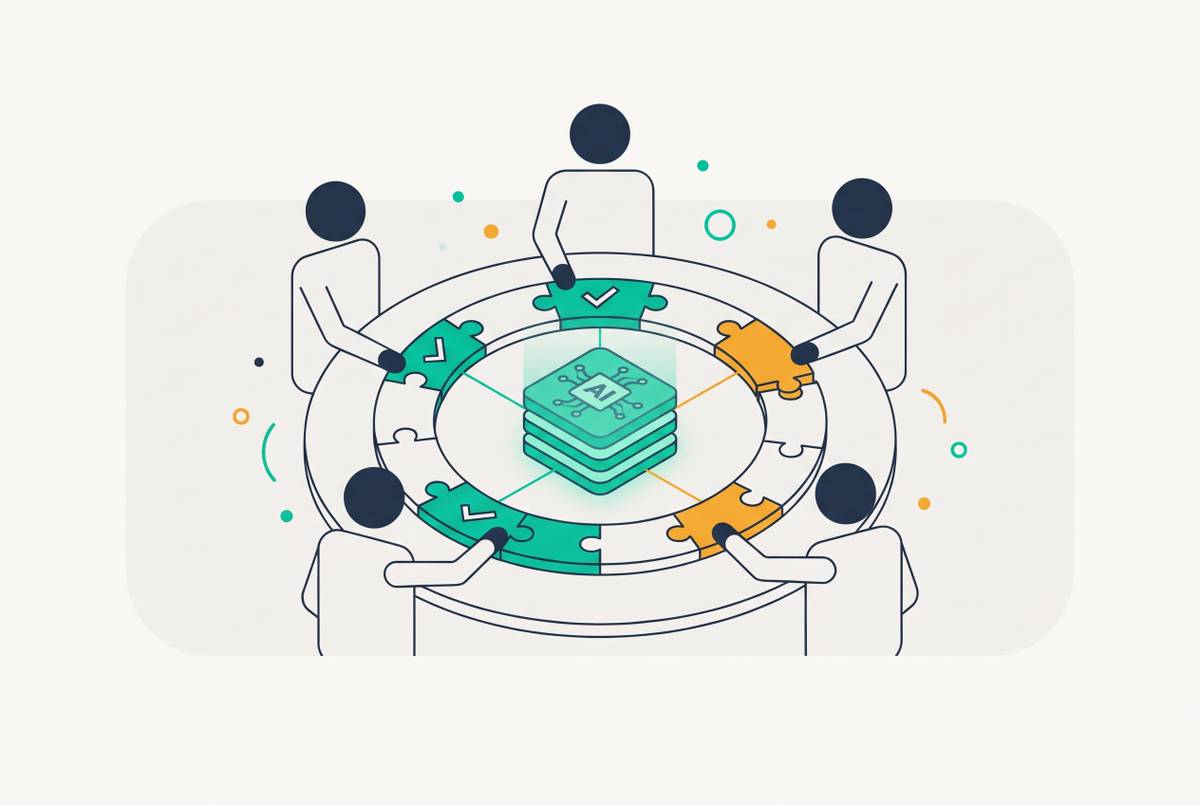
Shared branching puts AI agents into transactions that pass from one institution to another. That makes it a test of whether a credit union can govern autonomous action. Before an agent can be trusted with live transactions, its identity, authority, decisions, and audit record must remain clear across the network, even when the institution serving the member does not own the account.
What shared branching actually is and why it creates governance complexity that internal-only transactions do not
Shared branching lets a member of one credit union make account transactions at a branch of another, unaffiliated credit union. These can be withdrawals, deposits, and loan payments. The service is cooperative, but the institutions remain separate. A single transaction can therefore touch two core systems, two member data records, and two compliance programs governed by separate boards. What looks like one service to the member spans two sets of institutional responsibilities.
The servicing institution physically completes the transaction without having the account relationship with the member. It depends on credentials and authorization passed across the network from the home institution. Human tellers were the intended users of that arrangement. They verify identity against a printed or digital credential through a one-time, synchronous authorization check, rather than a continuously authorized, auditable session. The network establishes that a member may transact, but it was not designed to represent a separate actor exercising delegated authority over time.
Why AI agents break the identity and authorization assumptions shared branching was built on
An AI agent is that separate actor. Authenticating the member does not show who the agent is, what it may do, or whether it has authority to act across institutions. The distinction becomes concrete when credentials are shared. A large share of enterprises credential production agents with static API keys or shared username-and-password combinations, rather than distinct identities with individual audit trails. In shared branching, a compromised shared credential reaches every institution in the network that accepts it.
The question is therefore larger than whether a login succeeds. Which agent is acting, under whose authority, and with what limits at this particular institution? Current frameworks cannot reliably link an agent to the same identity as it moves between organizations or platforms. Access can fragment as a result. An agent might operate fully at one institution through a protocol token, receive only read access at a second, and be blocked at a third, creating uneven member experiences and governance exposure.
Even a stable identity would not explain every action. A consequential financial action can emerge from a sequence of model outputs, tool calls, and inter-agent handoffs. That sequence weakens explainability when the institution cannot establish why the action occurred and reproducibility when the decision process cannot be reconstructed under documented conditions. A one-time credential check cannot track those changing steps or show that each is still authorized.
How the existing regulatory framework handles — and fails to handle — AI agents acting across institutional lines
Existing obligations do not disappear when the actor changes. Regulation B’s adverse-action requirements, the Bank Secrecy Act, and fair lending rules remain indifferent to whether a human or an agentic model made a decision. Institutions still have to explain, document, and audit covered activity. Yet the shared-branching framework was written for human actors and has not been updated to address AI agents. It leaves liability questions unresolved where the home institution’s relationship with the member meets the servicing institution’s execution of the transaction.
The April 2026 model risk changes did not close that gap. The Federal Reserve, OCC, and FDIC replaced SR 11-7 and SR 21-8 with SR 26-2, OCC Bulletin 2026-13, and FDIC FIL-15-2026. The revised framework addresses materiality, validation, and documentation for traditional quantitative models, while excluding generative and agentic AI. The OCC explicitly states that those models are outside its bulletin’s scope. Moreover, this framework applies directly only to bank-supervised institutions.
The NCUA has not adopted SR 26-2. Its AI resources page, last modified April 28, 2026, states that it has issued no AI-specific rules and expects safe, sound, and compliant use under existing rules. GAO-25-107197 identifies limited scope and detail in the NCUA’s model risk guidance, as well as its lack of authority to examine technology service providers. The IMF flags authorization traceability, opacity, correlated agent behavior, cybersecurity, and unresolved liability as risks in agentic payments. For a participating credit union, the practical consequence is a governance gap.
What the data gap inside shared branching transactions means for an AI agent's ability to act safely
Even clear liability rules would leave the missing account data out of reach. An agent’s ability to authorize, execute, or audit a transaction safely depends on complete, real-time member information. The servicing institution holds the credential passed across the network, while the full account record remains out of reach. Without that record, an agent there cannot verify balance, hold status, or recent transaction history from the home institution in real time.
Core integration is the immediate engineering constraint. FIS, Fiserv, and Jack Henry shape deployment options, and a vendor without a production-tested connector to the major cores is not viable for live transaction execution. But the existence of a connector is only the start. Its documentation must identify the API endpoints used, the fields available in real time rather than batch, and whether write-back requires a separate API agreement. Those details decide whether an agent can carry out a shared-branching transaction or only view it.
Infrastructure is moving toward that need, but adoption remains early. Fiserv launched agentOS as an operating system for agentic AI in banking, while FIS introduced a Financial Crimes AI Agent. These infrastructure moves leave open whether every credit union has the data access autonomous execution requires. Credit unions are at roughly half data maturity, a directional indication of the work still needed for advanced AI applications. The constraint becomes especially acute when a transaction touches a system the deploying institution does not own.
The five governance requirements that shared branching forces any AI agent deployment to satisfy
The first requirement is per-agent identity with scoped credentials. Each agent must be a distinct non-human actor. Its scope must match the transaction type and institutional context. Read access must not silently become write authority. This addresses the gap between proving that a member may transact and proving that a particular agent may perform a particular action.
The second requirement is continuous authorization throughout the workflow. Authority must be re-verified at each consequential action. That includes actions that follow tool calls and inter-agent handoffs. Permission at the home institution cannot, by itself, settle what the agent may do at the servicing institution.
The third requirement is transaction-level decision lineage and explainability. The system must reconstruct the full decision path, including the model, tool calls, and data inputs behind each completed transaction. A final outcome alone does not explain the process. Retaining that path provides the evidence needed for Regulation B adverse-action obligations and supports Bank Secrecy Act documentation. It avoids relying on people to piece the sequence together after the fact.
The fourth requirement is a bounded action space with configurable institutional controls. The deploying institution must define and enforce permitted actions, rather than leaving them to the agent’s judgment or the servicing institution’s defaults. The home institution sets the bounds of authority. The network delivers the transaction, but its reach must not expand the agent’s permission. This separates access to another institution’s rails from authority to change an account.
The fifth requirement is a complete audit trail that the institution owns. The deploying institution must generate and retain the record, without depending on the servicing institution’s logs or the network’s records. That record must survive the transaction’s institutional boundary. Otherwise, the institution responsible for the agent may lack the evidence needed to account for its actions.
Why credit unions deploying AI faster than banks does not mean they are deploying it safely across the shared network
Credit unions are deploying generative AI faster than community banks, and a majority have moved it into production. Yet only a small fraction have an enterprise-wide AI roadmap. Most are therefore running tools without a documented strategy connecting them to risk management, data governance, and compliance. The concern is not that credit unions are moving, but that governance may not be advancing at the same pace.
The distinction turns on what an agent can do. A voice agent that handles FAQs and balance inquiries may never need to meet the shared-branching requirements described here. Once it can initiate or process a transfer, loan payment, or withdrawal through the network, those requirements become live. The interface may look much the same to a member. The authority behind it, however, has changed from supplying information to affecting an account across institutional lines.
Why should that require more than decades of shared-branching practice? Human tellers are held accountable through employment law, training, and oversight by their institution in real time. Autonomous agents instead need governance that is in place and enforced before they go live. With existing compliance duties still in force, a credit union can face examination exposure if it cannot document how its agent’s authority, decisions, and actions were controlled.
What responsible deployment actually looks like when an AI agent operates on existing banking rails across the shared branching network
The lesson for deployment is to place governance between the agent and the existing banking rails before granting live transaction authority. Replacing core infrastructure is not the requirement. The agent can operate through the institution’s existing API surface to the core, using the same connectors as digital banking rather than requiring a new integration layer for network certification. Existing access becomes a channel for bounded action.
Those controls belong at the institutional level. They set which transaction types are allowed, what dollar thresholds apply, and which member authorization signals are needed for shared branching. An audit log owned by the institution must record every action in real time, whether it was attempted, completed, or blocked. The record must preserve decision lineage so that it supports NCUA examination requirements and the evidence needed for Regulation B.
Commonwealth Credit Union and Zest AI launched the CU Lending Collective in February 2026 as a CUSO for AI-powered lending in a shared environment. Its model gives smaller institutions access to enterprise-grade AI through shared investment and governance. The relevant distinction is that technology can be delivered cooperatively while governance remains at the institutional level.
Vendor assurance is another threshold. SOC 2 certification independently verifies the security controls, data handling, and audit practices of a vendor that works on live banking transactions. The shared network increases the reach of a governance failure beyond the deploying institution. Voice and text interfaces can still be as fast as members expect, including younger members who are already comfortable using AI for financial planning and agentic transactions. The condition is that the control layer comes first, before the agent receives authority to act on live transactions.