ISO 20022 Migration Impact on Automated Bank Payment Operations
Richer payment data lets banks move from flagging problems to resolving them.
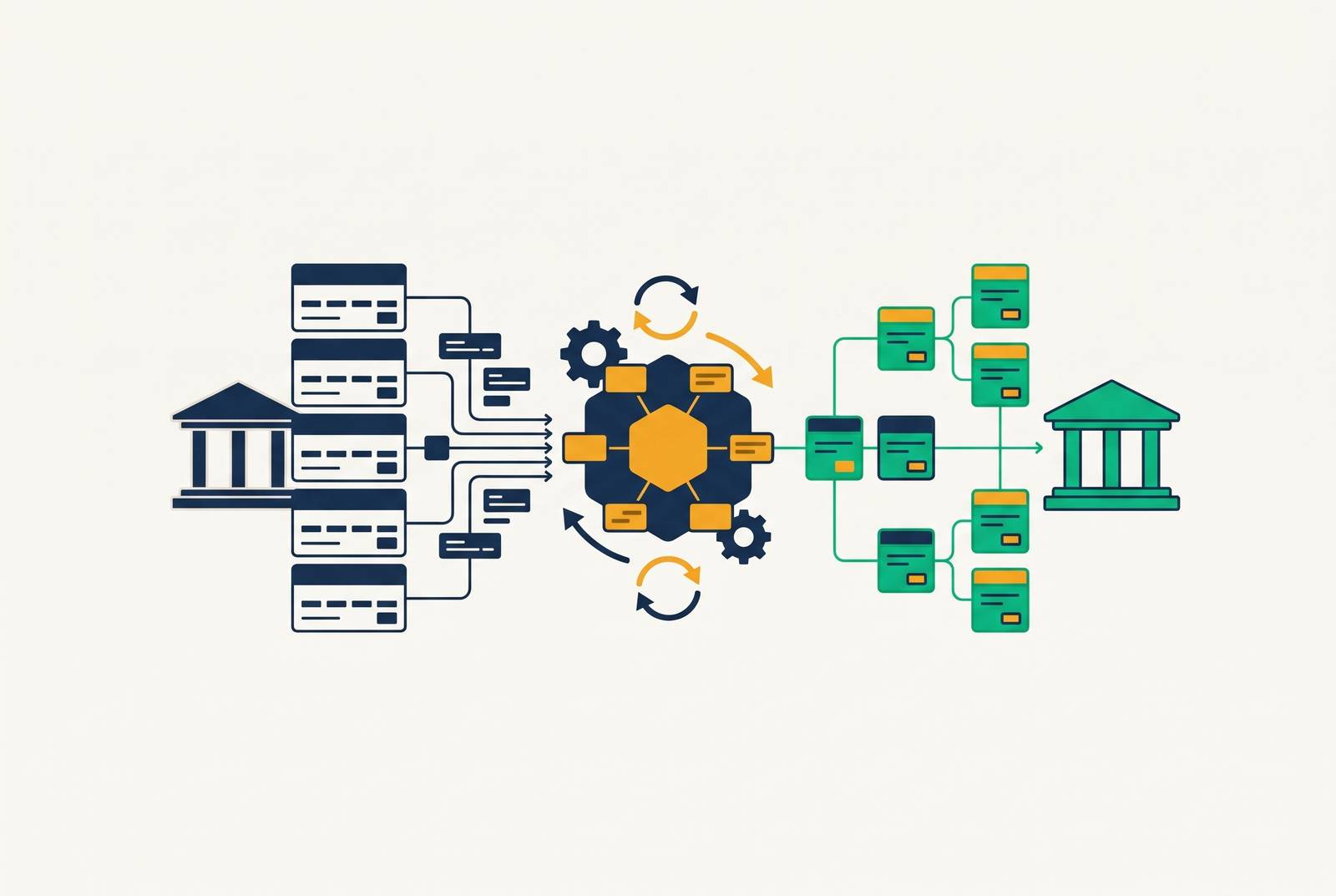
ISO 20022 changes how banks automate payments by giving their systems richer, structured data to act on. The migration is therefore more than a compliance exercise. It is an opportunity to move from automation that flags problems to agents that execute payment workflows, provided banks preserve the data and establish oversight before expanding autonomy.
Why ISO 20022 is not a one-time compliance event
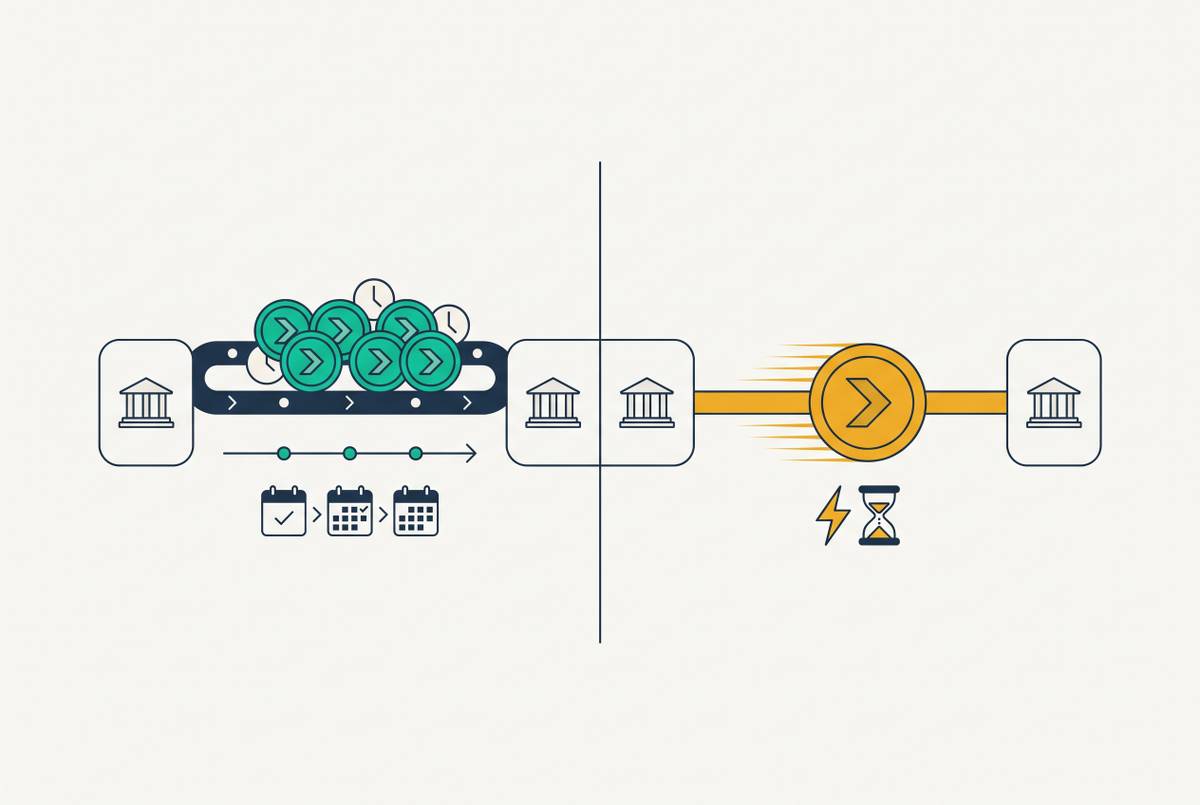
SWIFT completed its core cross-border payment migration on 22 November 2025, ending delivery of legacy MT102, MT103, MT201, and MT203 messages as MT over FIN between financial institutions. MT102, MT201, and MT203 are rejected outright. MT103 remains subject to a chargeable contingency service that converts it to pacs.008 on FINplus, so payment instructions move as MX messages.
SWIFT then deferred the next payments changes on 27 August 2026. The November 2026 wave had been set to end MT101 coexistence, requiring migration to pain.001v9 via FINplus, and to ban fully unstructured postal addresses in CBPR+ messages. SWIFT committed to publishing a new timeline by December 2026 at the latest. The requirements themselves have not been cancelled.
The Federal Reserve moved its related Fedwire release to November 2027, while the Bank of England moved its RTGS release on the same day. U.S. Bank’s migration resource says address enforcement will start in November 2027 and urges customers to keep updating their systems, files, templates, and processes. Fedwire, CHIPS, and SWIFT are converging on the same standard on essentially the same timeline, leaving banks without the former opportunity to stabilize one rail before tackling another. Banks must therefore keep preparing their automation through each release, even after they send the first compliant message.
What cascade failure looks like when payment rails converge
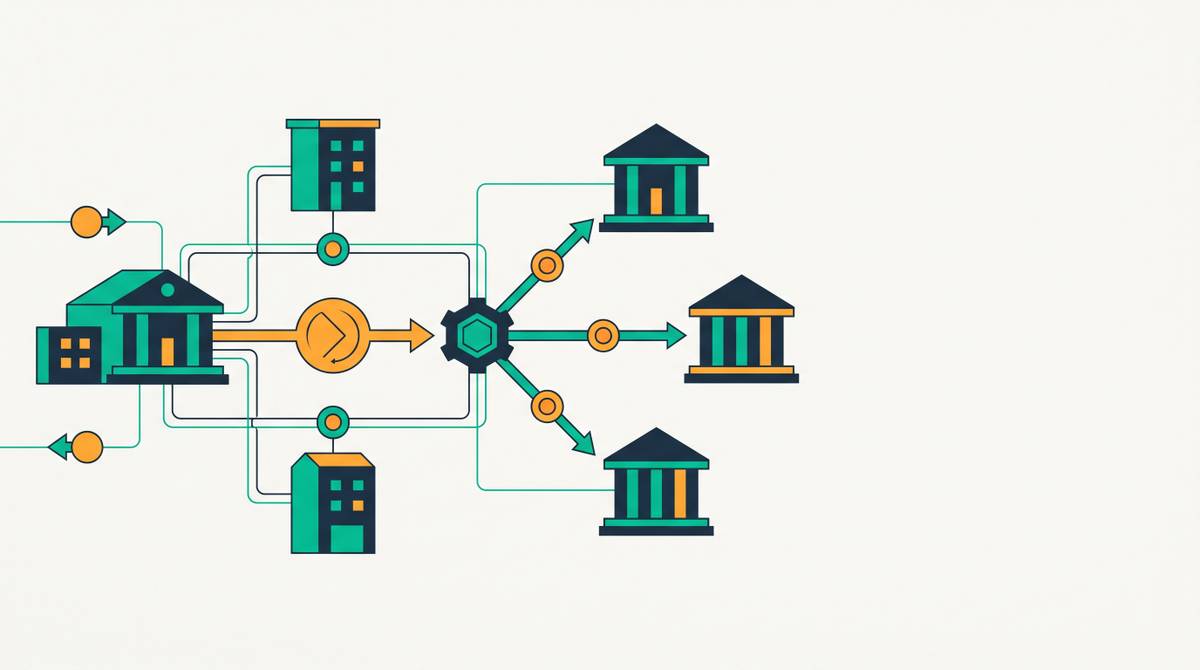
CHIPS intentionally aligns its ISO 20022 implementation with Fedwire, closely mirroring message types and core data elements while retaining limited rail-specific code lists and conventions. That alignment reduces design complexity. But it also means a wrong validation rule can affect both rails at once, turning a shared implementation choice into a shared point of failure. Operations must consider both whether a message passes validation and what depends on its acceptance.
If a bank cannot reliably send or receive Fedwire payments, even briefly, it becomes harder to move large sums for other payment types, including CHIPS. The same disruption can obstruct funding of its settlement account at the Federal Reserve Bank. A malformed XML field can therefore interrupt more than one payment. What starts as a formatting defect can become a settlement and liquidity problem because other flows depend on the bank’s ability to move funds.
Stricter network validation increases that exposure. The deferred SWIFT SR2026 payments changes tighten checks on identifiers, code sets, and mandatory fields, though some checks will let messages through at first. As enforcement increases, legacy systems that silently normalize or truncate data can produce outright rejections instead. A bank may have tolerated those transformations for years without an obvious operational consequence. Converging rails make that technical debt harder to contain within a single system.
What the richer data actually contains and why it has been underused
The structure that makes validation stricter also gives automated systems better data to work with. ISO 20022 provides unique transaction identifiers, explicit purpose codes, granular party fields, and detailed remittance information within a common language. These elements let systems distinguish information that legacy formats often mixed together or left unstructured.
U.S. Bank documents the change from Originator to Debtor and from Beneficiary to Creditor, together with new fields for Ultimate Debtor and Ultimate Creditor. A system can identify each party and reference in its own field, where it once had an amount and loosely organized text. That precision is useful only if the information survives the bank’s internal processing.
This is where institutions have diverged. Some process ISO 20022 natively and create camt.053 statements with the full structured payload, while others turn incoming MX messages back into MT-style data behind the scenes. Their output can be technically camt.053 yet functionally an MT940 in XML clothing. Translation preserves a route through migration, but it can strip away the granular fields that justify the change, and SWIFT’s contingency translation is chargeable. A bank can therefore appear finished while its automated operations still work within the limits of the legacy format.
How structured data changes what automated payment operations can do
Operations teams can validate payments earlier, route investigations through structured channels, and resolve client queries with clearer end-to-end information. Cleaner inputs help more payments go through straight-through processing because systems can make decisions before a payment reaches a manual queue. The gain comes from giving systems reliable distinctions between the data elements they must interpret.
Sanctions and AML screening illustrate both the opportunity and its limits. An institution needs to demonstrate more than that a payment passed through a screening engine. It must be able to show which elements of the original message reached that engine and what happened to each one. Structured fields make that traceability possible, so the institution can link a screening outcome to the information the engine checked.
Indiscriminately fuzzy-matching every field against every sanctions-list entry can generate more noise, so screening logic needs updating with the message format. Controls that are well tuned can use richer information more precisely, while those that are poorly tuned can create more work on exceptions. Investigations also depend on how the controls are tuned, as structured message types let systems route, escalate, and resolve cases through automated channels. With the data and workflow aligned, staff can spend less time interpreting repetitive cases and more time on exceptions that need judgment.
Why exception volume at scale demands automated governance, not more headcount
Even when the exception rate is low, a bank with a large volume of payments can have many cases to investigate. Each rejected or unresolved payment can take work beyond processing it, especially when tighter address and field validation leads to hard rejections for defects that used to pass. The workload does not stop at finding the error. Operations must also resolve the case and retain an account of how it was handled.
When structured references are missing or malformed, matching a payment to an invoice requires manual intervention. With properly structured ISO 20022 data, systems can make that match automatically.
Investigation messages extend that logic beyond matching. ISO 20022-based case management, including camt.110 and related message types, turns the investigation into a machine-readable workflow in place of a free-text exchange that a person must interpret. Agents can therefore execute parts of the process. Governance becomes essential at the same time, because institutions must demonstrate how data was handled as well as whether an exception was resolved. Adding specialists cannot sustainably absorb a documentation burden that grows with transaction volume, whereas a governed automated workflow can make execution and accountability part of the same process.
What agentic AI can execute on ISO 20022 rails that earlier automation could not
ISO 20022 defines messages for payment initiation, status, exceptions, investigations, and cancellations. Those schemas give agents a defined interface to act throughout the payment lifecycle, going beyond watching activity or flagging problems. An agent can start payments through pain.001, track their status, route investigation messages, and handle cancellations through Stop and Recall.
Existing deployments show related parts of this shift, although they should not be mistaken for identical capabilities. BBVA’s voice-agent production pilots in Peru and Mexico show payment-related interactions being resolved across geographies. Fiserv launched agentOS on 14 May 2026 to operate natively across core, payments, issuer processing, and servicing platforms. First Interstate Bank and Boulder Dam Credit Union are running pilots in commercial loan onboarding and operational reporting, illustrating deployment on existing infrastructure.
PaymanAI, an agentic banking platform, deploys AI agents that execute real banking transactions in chat on a bank’s existing rails, with native ISO 20022 fields providing the kind of input that can make execution more accurate.
These examples establish different pieces of the operational case. They do not imply that every pilot executes the full ISO 20022 lifecycle. The broader opportunity is to add an execution layer to infrastructure a bank has already migrated, using defined message schemas rather than treating agentic banking as a greenfield rebuild.
Why governance and auditability are not optional features for agentic payment execution
What happens to accountability when an agent can move money? Every action needs to be traceable to the relevant data, a decision rule, and a defined point of human oversight. Structured messages help make that possible, but they cannot supply the whole governance architecture. A readable message is not, by itself, a controlled decision.
The Federal Reserve, OCC, and FDIC replaced SR 11-7 with SR 26-2 in April 2026, explicitly excluding generative and agentic AI from the new guidance’s scope. Consumer protection laws and data-privacy rules still apply, but the exclusion leaves a governance gap as autonomy expands. It is not a final regulatory framework for agentic execution. The largest institutions have shared evidence of controls for specific AI uses, while smaller institutions are much less likely to have written down controls for each use.
Wolters Kluwer’s Q1 2026 Banking Compliance AI Trend Report says explainability and transparency are the regulatory concerns that financial institutions cite as most pressing in AI compliance reviews. ISO 20022 addresses part of that concern through field-level traceability, supporting a record of which payment elements reached screening and how they were treated. Governance-first deployment must supply the remaining controls, including configurable limits, complete audit trails, human oversight, and SOC 2 assurance. The EU AI Act’s requirements for transparency, traceability, and human oversight in high-risk financial-services AI point toward a standard institutions should build to now.
With those controls in place, autonomy need not weaken accountability. An agent executing on structured rails can produce a more complete audit record than a manual process documented after the fact. That advantage depends on recording the relevant parties, purpose codes, and routing decisions within the governed workflow. AI must be designed to provide that advantage.
How banks at different readiness levels should sequence the move to automated execution
The practical starting point depends on what the bank preserves today. For institutions already processing native ISO 20022 data, the next opportunity is exception and investigation workflows, including camt.110 and Stop and Recall. The decision is where governed execution can replace repetitive handling, rather than whether the underlying format can support it.
For institutions still converting data into MT-equivalent form internally, the first priority is to establish whether outbound camt.053 statements are generated natively or converted. Automation built on stripped-down information inherits the legacy gaps. The enforcement deferral gives these banks time to close those gaps. SWIFT’s commitment to a revised timeline by December 2026 should be treated separately from the November 2027 address-enforcement timing described by U.S. Bank.
Community banks and credit unions with less in-house knowledge of ISO 20022 have another way to start. Platforms designed for existing banking rails, together with the agentOS pilots, show that a complete infrastructure rebuild is not a prerequisite for exploring agentic operations. Deploying on existing rails requires assessing data quality and institutional controls to govern what acts on them.
Across these starting points, configurable controls, audit trails, and human oversight should precede any expansion of execution authority. The gap in model-risk guidance makes institutional governance the dependable backstop. The final decision is therefore not whether structured payment data makes agentic execution possible, but whether the bank has established the oversight that makes proceeding responsible.