Shadow AI Risk in Banking and Credit Union Operations
Unapproved AI leaves banks with records examiners can't audit.
Shadow AI risk in banking and credit union operations is a cybersecurity, compliance, and auditability crisis. When employees use unapproved AI, they create gaps in the institutional record that examiners and boards cannot reconstruct or defend. Bringing AI under institutional governance, with sanctioned tools, visible actions, and audit trails, frees employees from choosing between a ban and a workaround.
Why shadow AI in banking is a compliance crisis, not just a security incident
An account manager pastes a loan summary into a consumer AI chatbot to polish the wording. The task looks like routine writing help. But the tool has now processed customer information outside the bank’s approved systems, without the documentation that normally accompanies its handling. Even if no external attacker is involved, the bank faces a question it may be unable to answer. What happened to that information after the employee submitted it?
That uncertainty separates shadow AI from a familiar shadow IT problem. An unapproved storage service creates questions about where data sits and who can access it, while an AI tool ingests, analyzes, and potentially retains what an employee supplies. Processing changes the nature of the exposure under financial privacy law. The missing record is itself a compliance failure. A security investigation cannot substitute for documentation that was never created.
The enforcement history of unsanctioned messaging offers a useful comparison, though not an identical legal case. The SEC and CFTC levied fines against scores of broker-dealers, investment advisers, and banks for using unapproved communication tools. Those fines show how employees’ informal habits can leave their institutions with recordkeeping failures and penalties. The Federal Reserve, OCC, FDIC, CFPB, and NCUA have also flagged AI governance as within their remit. Banking institutions cannot treat unauthorized AI as an issue confined to the IT department.
How shadow AI use actually happens inside banks and credit unions
Shadow AI often begins with an ordinary pressure to finish work faster. Employees use it to summarize loan files, draft customer communications, generate suspicious activity report narratives, screen HR material, and prepare marketing copy. Each task introduces a different regulatory exposure. Yet the employee may see only a quick writing assist in a new way of processing protected information that requires institutional approval.
Personal accounts make that behavior difficult to oversee. Much of the pasting activity flows through unmanaged accounts, bypassing single sign-on, cloud access security broker monitoring, and identity controls. Data leaves through natural language prompts instead of the usual file transfers, so traditional data loss prevention tools have a harder time flagging the exposure. Informal oversight is also incomplete because employees may hide their AI use from colleagues and managers. A written policy does not make this activity visible.
Allied Solutions’ 2026 mid-year outlook found that credit union platforms shared little data in real time and still widely used a mix of APIs and manual processes. That fragmentation creates friction that consumer AI can appear to relieve. Across banking, concern about unapproved software is widespread, but implementation of technical controls is much more limited. Employees can easily get tools that help them do their work, while their institutions have no approved tools that do the same things and cannot see all the tools in use.
What regulators can see when shadow AI has been in use — and what they cannot
An examiner may be able to review a finished loan summary without seeing that an outside AI tool helped produce it. That leaves separate questions about the data submitted, the vendor that processed it, and the output used. Examiners need records showing what happened in a particular workflow in addition to an AI policy.
GLBA requires a written information security program and vendor contracts that bind those who handle customer data. A consumer chatbot accessed through a personal account may appear on no vendor list and have no data processing agreement with the bank. Its terms may also permit submitted data to be used for model training. Responsibility does not disappear with visibility. The institution remains liable for the handling of customer information even when it cannot trace where that information went.
An analyst who pastes details of suspicious activity into an AI tool to draft a SAR narrative may make an unauthorized disclosure under 31 U.S.C. 5318(g)(2), which provides for criminal penalties. Credit decisions raise another documentation requirement. The CFPB has been explicit that AI creates no exemption from the obligation to explain a credit denial, and an unrecorded AI-generated explanation leaves the bank with a recordkeeping violation.
The interagency revised Model Risk Management guidance, Federal Reserve SR 26-2 / OCC Bulletin 2026-13, issued April 17, 2026, explicitly excludes generative AI and agentic AI models from its scope. Smaller institutions still need written internal standards for approval, testing, human review, and logging. Without those standards and records to back them up, an examiner cannot trace how an approved use led to an outcome or who was responsible for it.
The CB Financial disclosure: when shadow AI becomes a material event
CB Financial Services’ SEC Form 8-K put a case of this exposure on the public record. On May 5, 2026, its wholly owned subsidiary, Community Bank, became aware of an internal incident involving certain non-public customer information and an unauthorized artificial intelligence-based software application. The exposed information included names, Social Security numbers, and dates of birth. The company determined the incident was material on May 7, 2026. Detection and materiality were separated by just two days.
Wilson Sonsini’s May 28, 2026 alert identified the filing as the first SEC Form 8-K under Item 1.05 triggered by unauthorized AI use without an external cyberattack. Its analysis described an employee’s misuse as the cause, while the filing itself described an internal incident without specifying an employee. That distinction limits what the filing alone establishes. It does not diminish the central fact that unauthorized AI use produced a material event and a public securities disclosure.
The timing also has practical significance for boards and general counsel. Institutions cannot assume that an extended investigation and remediation period will come before disclosure obligations attach. A response plan focused on outside attackers may not be designed to catch this kind of internal use. The case makes shadow AI a documented present exposure.
Why credit unions face a compounded version of this problem
Credit unions face the same obligations amid fragmented systems and reliance on outside providers. They are underweighting AI model risk relative to other categories of financial institution, while assuming that third-party vendors will manage that risk for them. That assumption leaves an ownership gap. A vendor’s involvement does not answer how the credit union approved a tool, assessed its data handling, or documented its use.
John Meyer of Cornerstone Advisors points out that even a meeting notetaker needs vetting. If it stores data in non-compliant jurisdictions or trains models on internal discussions about member services, the credit union has a privacy exposure it never documented. The tool need not execute a payment or make a lending decision to create that problem.
Brad Calhoun, President and CEO of Teachers Federal Credit Union, frames the issue more broadly. “The decisions credit unions make today about AI, governance, and risk will shape their competitiveness and their members' trust for years to come”. Member trust makes governance a strategic question as well as a compliance one. Size and resources influence the work required, but institutions of any size and resource level can accept undocumented use or bring it under accountable controls.
How agentic AI raises the stakes beyond what shadow AI governance alone can address
The same gap becomes more consequential when AI can also execute actions. An undocumented summary leaves uncertainty about how information was processed, while an undocumented autonomous action in a payment workflow also creates operational and financial risk. What was the system authorized to do, and can the institution reconstruct what it actually did?
Agent identities can make the first question difficult to answer. Agents may have more entitlements than they need for their tasks, and their service accounts and API tokens may have no link to a person who is responsible for them. That weakens segregation of duties and least-privileged access, both of which audits check directly. Approval to use an AI system is not, by itself, a defined boundary around the transactions it can initiate.
In an agentic system, a hallucinated policy, customer entitlement, or calculation rule can become an instruction that triggers an unapproved action. Tool chains and calls to other agents can then propagate an error through banking workflows. Duplicated payments, misrouted instructions, or privacy breaches can multiply before a human reviewer sees the first alert.
The IMF’s 2026 note on agentic payment systems identifies authorization traceability, opacity, correlated agent behavior, and unresolved legal and liability questions among the risks. It also flags non-determinism, meaning identical inputs can produce different outputs. Reconstruction therefore needs more than the original request. Yet prompts, tool calls, intermediate reasoning steps, and model responses may be scattered across systems or not captured at all, undermining both incident response and the institution’s ability to demonstrate governance.
What a governed AI deployment looks like — and what it makes possible
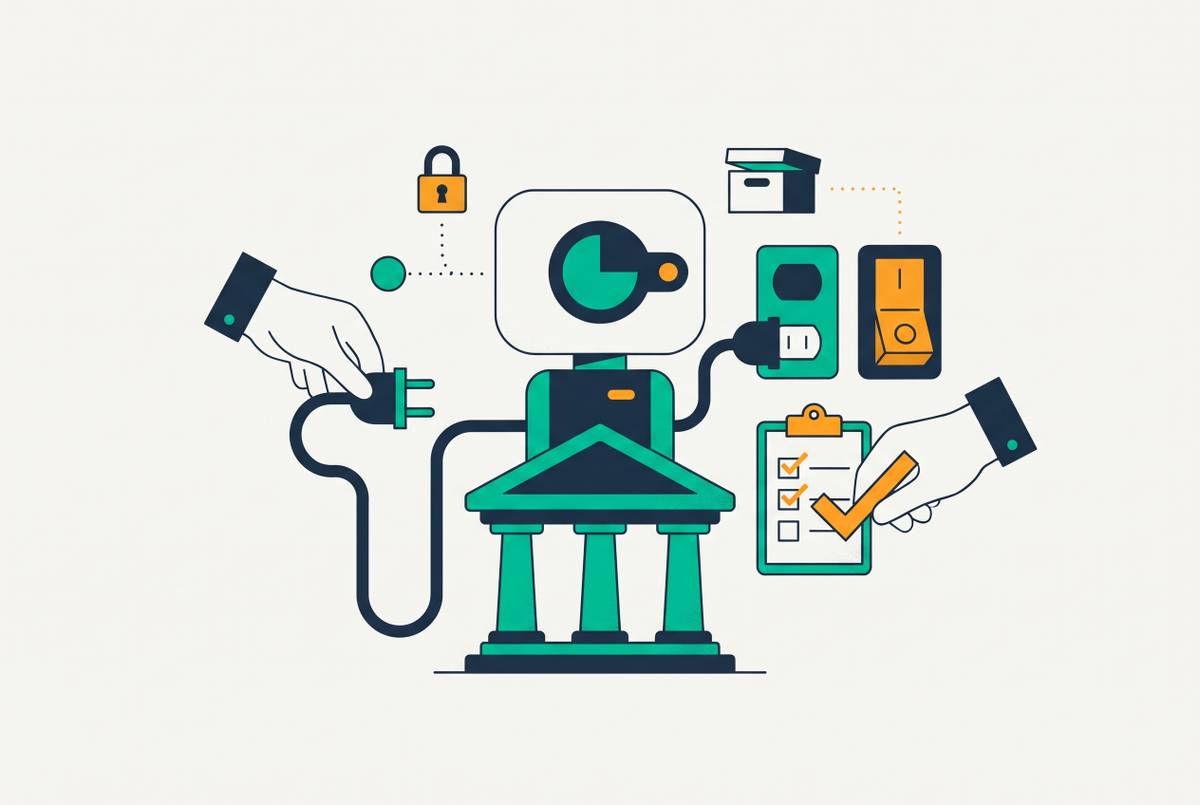
Institutions managing this risk audit the tools employees already use, create approved channels, and update their governance documentation to reflect actual workflows. A ban alone can drive usage underground. A “safe harbor” approach instead gives employees legitimate access through enterprise data protections, logging, and audit trails, bringing the work into view.
NatWest’s Cora shows that sanctioned AI can operate at scale. It handled millions of conversations in H1 2026, and by Q1 2026, generative AI handled 20% of Cora chats. Scale and governance are not opposing choices. The significance of this deployment is that a substantial conversational workload can run through an institution’s approved AI channel rather than depend on employees finding their own tools.
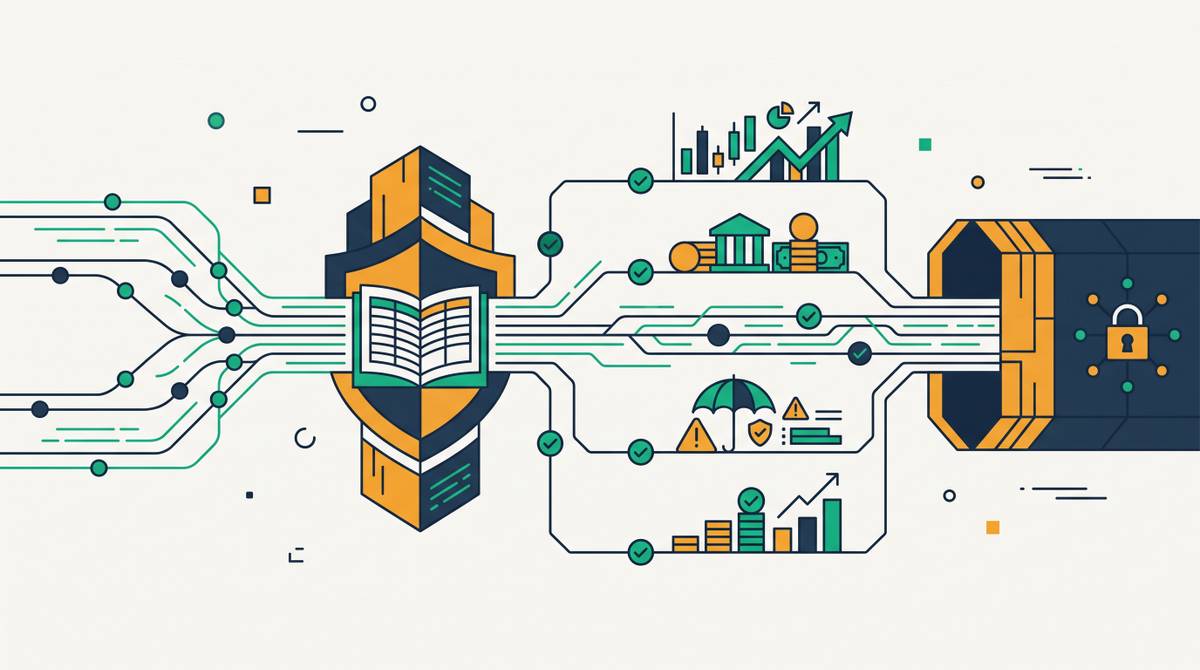
For institutions building that channel, the starting point is an AI usage audit that assumes employees may already be using tools regardless of policy. A written internal standard then needs to cover approval, testing, human review, and logging, including the AI delivery tools covered by OCC expectations for institutions outside SR 26-2. Vendor vetting must reach every AI tool that touches customer data, including informally adopted ones. Small tools do not warrant invisible treatment. Audit trail architecture must capture prompts, tool calls, and model responses in a form that examiners can review and incident responders can use.
Why deploying AI on existing banking infrastructure is the governance-compatible path
Employees will still feel the pull of shadow AI if approved tools cannot do what they need. When a consumer tool can finish in three minutes what internal systems make difficult, a ban leaves the gap between what the tools can do in place. Closing it requires usable, governed AI. A capable model is now a commodity, while the harder problem is connecting it to the core or lending platform where data lives, transactions execute, and the institutional record must be maintained.
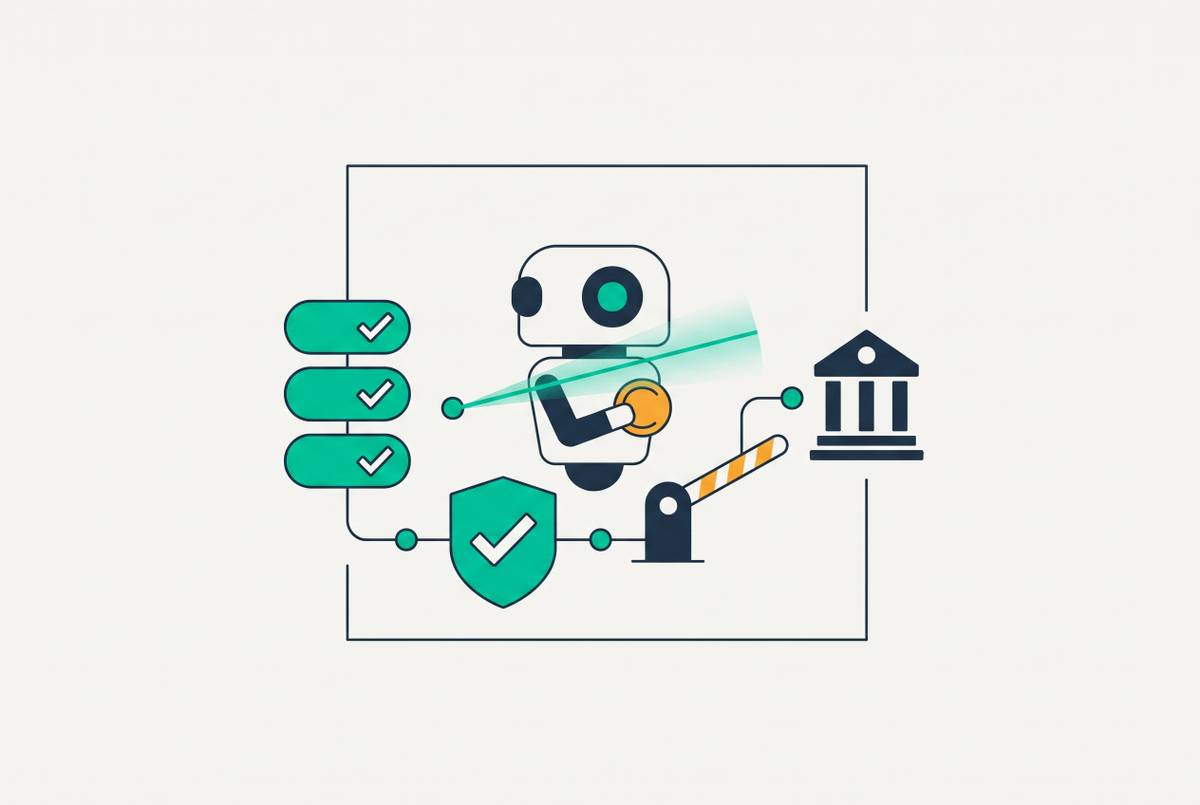
Deploying AI within that governed environment addresses the data-egress problem without requiring the institution to replace proven banking infrastructure. Existing rails also avoid the implementation risk, vendor dependency, and disruption of replacing core systems to accommodate AI. For agents, that distinction extends to execution. Institutions can keep payments and transfers under their controls with a complete audit trail, instead of allowing account access through credentials shared outside the institution’s perimeter.
SOC 2 certification and compliance-readiness are required from the start for AI that runs in regulated financial environments. They help provide the evidence institutions need, and action-level records must show how each AI action was authorized and logged. Configurable controls and visibility make deployment possible. Institutions that bring useful AI onto their own rails now can present a record when examiners ask about its use, rather than scramble to reconstruct one that was never kept.